 AI-powered, Human-reviewed.



What is a B2C Subscription Business?
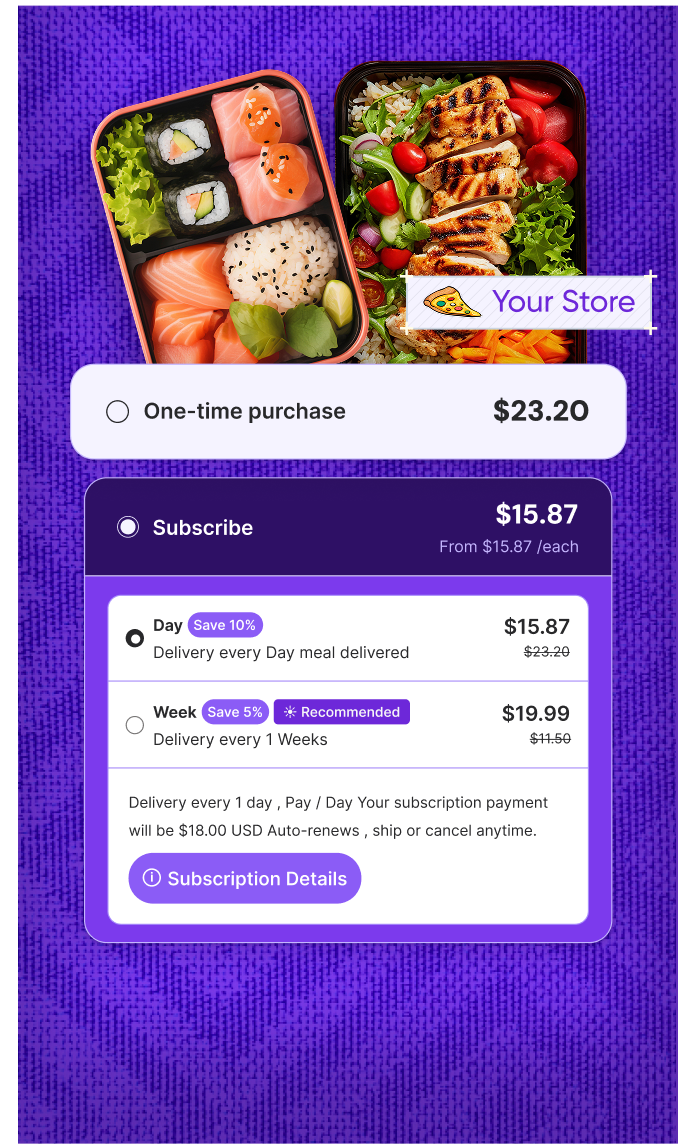
A B2C subscription business sells products or services on a recurring basis directly to individual consumers, not to other businesses.
The customer subscribes, pays automatically each cycle, and receives their product or access until they cancel. Examples range from monthly coffee deliveries to skincare replenishment boxes to digital wellness apps.
On Shopify, B2C subscriptions are the dominant model for DTC brands using recurring billing.
Why It Matters: The Business Case for B2C Subscriptions
The appeal of B2C subscriptions is straightforward: predictable, recurring revenue from customers you have already acquired.
Instead of chasing one-time purchases, you build a base of subscribers who pay automatically every month. This compounding effect is what makes subscription businesses grow faster than traditional retail.
Key business impacts:
- Revenue predictability: MRR (Monthly Recurring Revenue) gives you a reliable baseline to plan inventory, marketing spend, and hiring.
- Higher customer lifetime value: Subscribers generate more revenue over time than one-time buyers. Subscription businesses have been shown to achieve significantly higher CLV than transactional models.
- Lower re-acquisition costs: Keeping a subscriber is far cheaper than acquiring a new one. This makes customer retention the most important growth lever in B2C subscriptions.
- First-party data: Every subscription gives you direct access to purchase behavior, preferences, and feedback, without relying on third-party retailers.
B2C vs. B2B Subscriptions: Key Differences
Understanding the difference matters because the metrics, strategies, and challenges are not the same.
| B2C Subscriptions | B2B Subscriptions | |
| Customer | Individual consumer | Business or team |
| Decision speed | Fast, emotional | Slow, rational |
| Average order value | Lower | Higher |
| Churn rate | Higher (6.5-8% monthly avg.) | Lower (~3.5% monthly avg.) |
| LTV | Lower per customer | Higher per customer |
| Retention strategy | Personalization, loyalty, UX | Account management, ROI proof |
| Cancellation driver | Impulse, price, boredom | Budget cuts, switching costs |
B2C churn tends to be higher because individual consumers are more price-sensitive and make cancellation decisions emotionally and quickly. This is why customer loyalty programs and personalized experiences matter so much in B2C.
Real-World Examples: DTC B2C Subscription Brands on Shopify
Some of the most recognized B2C subscription brands run on Shopify or Shopify Plus:
- Coffee replenishment brands: customers subscribe to receive their preferred blend every 2-4 weeks. High retention because the product is a daily habit.
- Skincare and beauty boxes: curated monthly boxes with personalized product selections. Discovery-driven, strong unboxing experience.
- Pet food subscriptions: replenishment model for consumable products. Low churn because switching is inconvenient.
- Health and supplement brands: monthly auto-ship of vitamins or protein powders. Often paired with loyalty rewards to increase stickiness.
What these brands share: they sell consumable or habitual products, they invest heavily in the post-purchase experience, and they use subscriptions to lock in revenue that would otherwise be sporadic.
Key B2C Subscription Metrics to Track
These are the numbers that actually tell you if your B2C subscription business is healthy:
Monthly Recurring Revenue (MRR) The total predictable revenue from active subscribers each month.
MRR = Number of Active Subscribers × Average Revenue Per Subscriber
Churn Rate The percentage of subscribers who cancel in a given month.
Monthly Churn Rate (%) = (Subscribers Lost / Subscribers at Start of Period) × 100
B2C benchmark: aim to keep monthly churn below 5-6%. Top performers stay below 3-4%.
Customer Lifetime Value (CLV) How much revenue a subscriber generates before they cancel.
CLV = Average Monthly Revenue per Subscriber / Monthly Churn Rate
See the full breakdown in our Customer Lifetime Value guide.
Customer Acquisition Cost (CAC) What you spend on average to acquire one new subscriber.
CAC = Total Marketing & Sales Spend / Number of New Subscribers Acquired
LTV:CAC Ratio The most important health check for a B2C subscription business. A ratio of 3:1 or higher is the industry standard for sustainability.
Subscriber Retention Rate The inverse of churn. Track it monthly and by cohort to spot where subscribers drop off.
How to Optimize Your B2C Subscription Business
1. Nail the onboarding experience Most B2C subscription churn happens in the first 60 days. A strong welcome sequence, email, packaging, first-use guidance, dramatically reduces early cancellations.
2. Offer flexible subscription options Give subscribers control: let them pause, skip a delivery, or change frequency from their customer portal. Flexibility reduces cancellations triggered by temporary life changes.
3. Build a loyalty program Reward subscribers for staying. Points, exclusive discounts, and early access to new products all increase perceived value and reduce churn. See our guide on customer loyalty.
4. Personalize the product experience 64% of subscribers stay subscribed because the products feel personalized to them. Use purchase data and preference quizzes to tailor what subscribers receive.
5. Recover failed payments proactively A significant portion of B2C churn is involuntary, caused by failed payments, not dissatisfied customers. Set up a dunning sequence to recover these automatically.
6. Push annual plan upgrades Annual subscribers churn far less than monthly ones. Once a subscriber has completed 2-3 months, offer them an annual plan with a discount. It locks in revenue and removes 11 monthly renewal risk events.
Common Mistakes
- Focusing only on acquisition. B2C subscription growth comes from retention, not just new sign-ups. Acquiring subscribers who churn in month 2 is expensive and unsustainable.
- Making cancellation too hard. Hiding the cancel button or requiring a phone call to cancel frustrates customers, triggers chargebacks, and creates legal risk. Easy cancellation actually builds trust and reduces refund requests.
- Ignoring cohort analysis. Aggregate churn numbers hide the real story. Analyze churn by acquisition month, channel, and product to find where the real problem is.
- Treating all subscribers the same. High-LTV subscribers deserve more attention and personalization than low-value ones. Segment your retention efforts accordingly.
- Not tracking MRR movements. New MRR, churned MRR, and expansion MRR tell different stories. Watching only total MRR masks churn that is quietly eroding your base.
Pro Tips
- Replenishment subscriptions have the lowest churn. If you sell consumables (coffee, supplements, pet food), lean into the replenishment model, it aligns naturally with customer behavior and creates habit-based retention.
- Offer a “pause” option before cancellation. Many subscribers who want to cancel are just overwhelmed or overstocked. A pause option saves a significant portion of those would-be cancellations.
- Use post-cancellation surveys. The data from cancelled subscribers is some of the most valuable feedback you will ever get. Use it to fix the real reasons people leave.
- CAC is rising, retention is your moat. Customer acquisition costs have increased significantly over the past five years. B2C brands that invest in retention now are building a durable competitive advantage.
- Test introductory offers carefully. Discounted first orders attract bargain hunters who churn fast. Track cohort LTV by acquisition offer to find the offers that bring in subscribers who actually stay.
Running a B2C Subscription on Shopify
If you are building or scaling a B2C subscription brand on Shopify, the operational foundation matters as much as the product. Easy Subscriptions is built for Shopify DTC brands, handling recurring billing, customer portals, flexible subscription options, and payment recovery in one place, so you can focus on growing subscriber lifetime value instead of managing billing infrastructure.