 AI-powered, Human-reviewed.



What Is an Abandoned Cart?
An abandoned cart occurs when a customer adds one or more products to their shopping cart on an ecommerce store but exits the site before completing the checkout process.
The shopper showed clear purchase intent they browsed, selected a product, and added it to their cart but something stopped them from following through. That gap between “add to cart” and “order confirmed” is where most Shopify stores lose a significant portion of their potential revenue.
Formula: Cart Abandonment Rate = (Abandoned Carts / Carts Created) × 100
Abandoned Cart Rate: What to Expect on Shopify
The numbers are sobering for every store owner:
- ~70% average abandonment rate the Baymard Institute benchmark confirmed by Shopify’s own data
- Mobile is worse: mobile abandonment reaches approximately 78%, compared to ~65–68% on desktop
- $260 billion in lost orders is estimated to be recoverable in the US and EU through better checkout design alone
Anything below 70% is considered a good result for a Shopify store. The goal is not to reach zero that is impossible but to consistently beat your own baseline and recover as much revenue as possible.
Why Do Shoppers Abandon Their Carts?
Understanding the root causes is the first step to fixing them. Here are the most common reasons, backed by 2025 data:
The #1 culprit is always cost transparency. Shoppers who see a low product price and then encounter high shipping fees at checkout feel deceived and they leave.
Other key friction points include:
- Too many checkout steps every unnecessary field or page is a drop-off risk
- No guest checkout first-time buyers don’t want to create an account just to buy once
- Trust gaps missing security badges or unclear return policies create hesitation
- Price comparison some shoppers use the cart as a wishlist while they compare prices elsewhere
How to Recover Abandoned Carts on Shopify
A multi-channel recovery strategy consistently outperforms any single tactic. Here is what works, and what recovery rates to realistically expect:
1. Automated Email Sequences
Email remains the backbone of cart recovery. A well-structured 3-email sequence is the industry standard:
- Email 1 (1 hour after abandonment): A simple reminder showing the exact products left in the cart no discount needed. This email alone recovers 40–50% of all recoverable carts, since many shoppers were simply distracted.
- Email 2 (24 hours later): Add social proof, reviews, or a low-stock warning to create gentle urgency.
- Email 3 (72 hours later): Offer a discount or free shipping to close the hesitant buyer.
Abandoned cart emails achieve an average open rate of 39% and a click-through rate of 23% far above standard marketing email benchmarks.Tools to use on Shopify: Klaviyo, Omnisend, Shopify Email (built-in).
2. SMS Reminders
SMS is the fastest recovery channel. Text messages achieve open rates of 98%, with 90% read within 3 minutes of receipt compared to 20–30% for email.
SMS conversion rates for abandoned cart messages are typically 2 to 3 times higher than email, despite reaching a smaller audience (only opted-in subscribers).
Best practice timing: Send your first SMS within 30–60 minutes of abandonment, then sequence with email: SMS at 4 hours, Email 2 at 24 hours, Email 3 at 72 hours.
Keep messages short: include the product name, a direct link back to the cart, and an easy opt-out option.
3. Exit-Intent Popups
Exit-intent popups are triggered when a visitor’s behavior signals they are about to leave typically detected by cursor movement toward the browser’s close button. For stores using cursor-based tools, understanding cursor pricing can also help when choosing the right solution for detecting exit intent.
Cart abandonment popups (shown to visitors who already have items in their cart) achieve an average conversion rate of around 17% making them the highest-converting popup type available to ecommerce stores.
What works best in exit-intent popups:
- A free shipping offer (directly addresses the #1 abandonment cause)
- A time-limited discount code (10% off is the most common and effective offer)
- A “save your cart” option for shoppers not ready to buy today
- Showing the actual product image the shopper is about to leave behind
4. Discount Offers and Incentives
Strategic discounts can recover hesitant buyers but use them carefully. Offering a discount on every abandoned cart trains shoppers to abandon on purpose, knowing a coupon is coming.
Best practice: Reserve discounts for Email 3 or SMS Message 2, after a plain reminder has already been sent. This protects your margins while still recovering price-sensitive shoppers.
Other effective incentives include free shipping thresholds, bonus gifts, and loyalty points.
5. Prevent Abandonment at the Source
Recovery is important, but prevention is better. Quick wins for Shopify merchants:
- Enable guest checkout remove the forced account creation barrier
- Show all costs upfront display shipping estimates before the final checkout step
- Add a free shipping progress bar “You’re $12 away from free shipping” motivates shoppers to add one more item
- Offer multiple payment options Shop Pay, PayPal, Apple Pay, and Buy Now Pay Later (BNPL) options like Afterpay
- Display trust badges security seals near the checkout button address payment security concerns
- Speed up your checkout two in three consumers expect to check out in four minutes or less
Subscription Businesses: A Different Kind of Cart Abandonment
For Shopify stores selling subscriptions, cart abandonment has an extra layer of complexity. A shopper who abandons a subscription sign-up is not just a lost one-time sale it is a lost stream of recurring revenue.
The stakes are higher because:
- Subscription customers generate 3–5x more lifetime revenue than one-time buyers
- Subscription box churn averages 10–12% monthly, meaning every subscriber you fail to acquire is compounded revenue lost
- The first 90 days are the most critical 44% of subscription cancellations happen within the first 90 days
How Easy Subscription Helps Reduce Subscription Cart Abandonment
Easy Subscription App is a Shopify subscription app built to reduce friction at every stage of the subscriber journey from the first sign-up to long-term retention.
Key features that directly address subscription cart abandonment and churn:
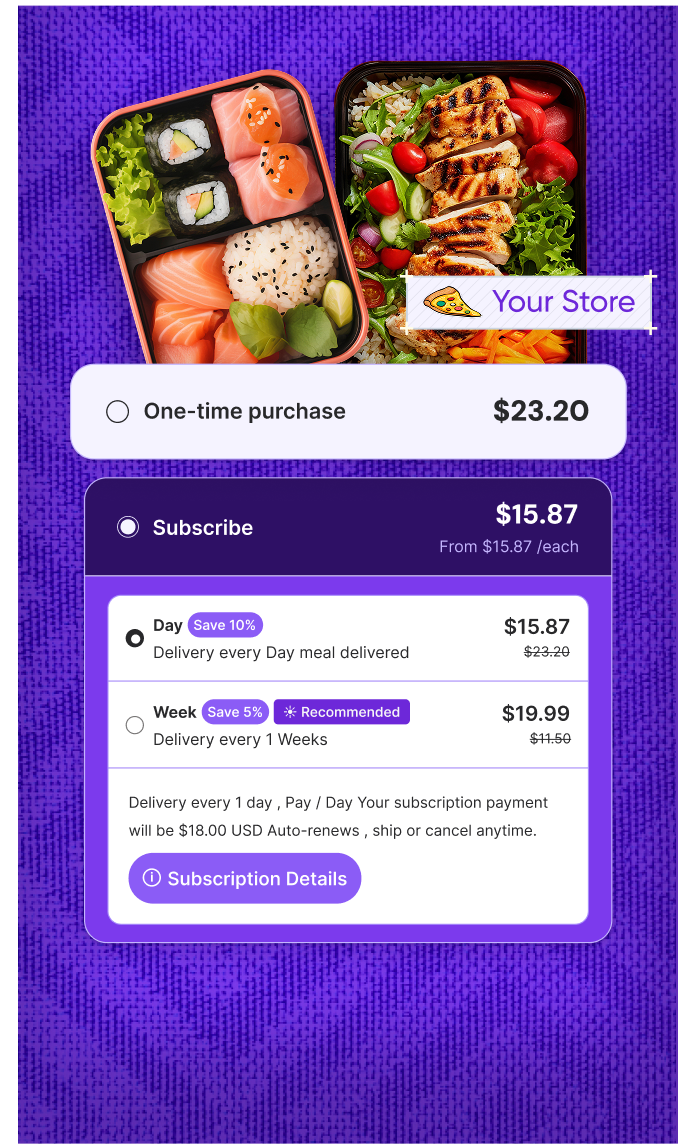
- Flexible subscription options at checkout: let shoppers choose their billing frequency (weekly, monthly, quarterly) directly on the product page, reducing decision fatigue
- Subscriber-only discounts: offer a first-order discount to convert hesitant one-time buyers into subscribers (limited-time subscription discounts boost conversion rates by up to 41%)
- Pause and skip options: giving subscribers control over their plan dramatically reduces cancellations driven by “I need a break” moments
- Dunning management: automatically retry failed payments and notify subscribers before their card is charged, recovering involuntary churn caused by expired cards
- Retention flows: present a cancellation save offer (discount, pause, or product swap) before a subscriber can cancel, keeping more customers active
- Annual plan incentives: subscribers on annual billing cycles show 51% lower churn than monthly subscribers; Easy Subscription App makes it easy to offer and promote annual plans
The result: fewer abandoned subscription carts, lower churn, and higher customer lifetime value all managed directly inside your Shopify admin.