 AI-powered, Human-reviewed.



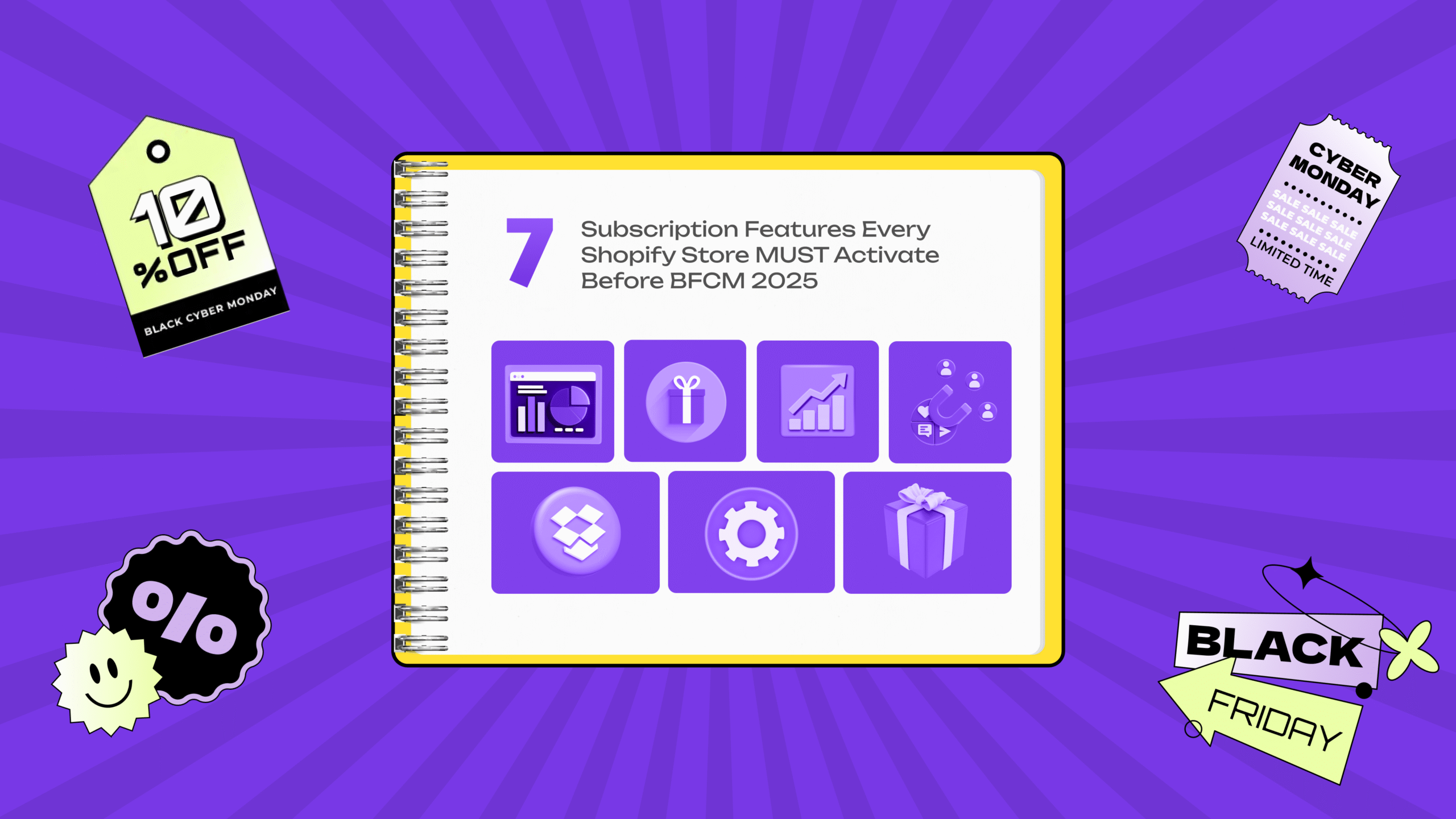


BFCM 2026: Black Friday is November 27; Cyber Monday is November 30. Most of what determines whether your subscription program has a good BFCM isn’t the discount you run, it’s whether the infrastructure behind it can handle a volume spike without leaking revenue. Here’s what to check before the traffic arrives.
Why Feature Prep Matters More Than Discount Depth
A deeper discount gets more people to check out. It does nothing to prevent failed payments in January, cart abandonment from a clunky subscription widget, or churn from customers who signed up without understanding what they were buying. The seven items below are infrastructure, not marketing, get them right and your discount strategy has something solid to convert against.
1. Subscription Analytics: Forecast Demand
Before BFCM hits, you want answers to three questions: which products will subscribers reorder during the promotional period, how many new subscribers you can realistically expect based on prior-year traffic and conversion rates, and which existing customers show early churn signals (skipped orders, support tickets, declining engagement) that predict a post-BFCM cancellation. Set this up now trying to build a dashboard mid-surge is too late. See our subscription analytics guide for the specific metrics worth tracking.
2. Loyalty & Rewards
Enrolling BFCM signups into a loyalty program at checkout not as an afterthought gives them a second reason to stick around once the discount expires. See how loyalty converts buyers into subscribers.
3. Bundle Quantity Breaks
Offering a discount that scales with quantity (“buy 2, save 10%; buy 3, save 15%”) increases average order value without deepening your baseline discount on a single unit; it rewards buying more rather than just buying cheaper. This is a meaningfully different mechanic from a blanket storewide discount and tends to protect margin better during high-traffic periods.
4. Customer Retention Flow
The point of a retention flow isn’t preventing cancellations during BFCM, it’s catching the wave of cancellations that typically follows in the 4–8 weeks after, once discounts end and first full-price renewals hit. A working flow includes:
- Automated payment retry (dunning) beyond Shopify’s default retry logic, to recover failed-card cancellations before they happen. Full mechanics in the dunning guide.
- Cancellation surveys a one-question survey at the cancel step tells you whether people are leaving over price, product fit, or something fixable.
- Save offers a modest, targeted offer at the cancellation step (not a blanket discount to everyone) and recovers a share of “on the fence” cancellations.
- Proactive communication of a reminder before the first full-price renewal reduces “I forgot I signed up for this” cancellations.
5. Integrations and Tech-Stack Stability
Confirm your subscription app, email platform, and payment gateway integrations are tested under load before BFCM. A broken integration during your highest-traffic week is far more costly than the same issue in a normal month. Run a checkout test end-to-end at least two weeks before the sale starts.
6. Widget Customization
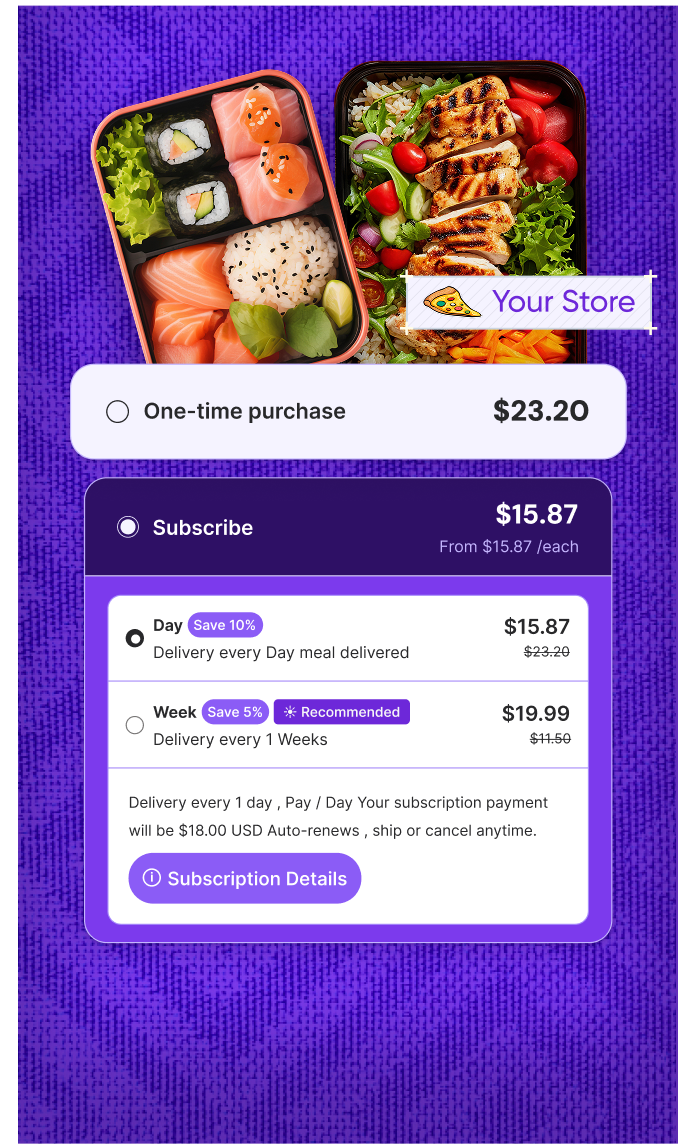
The subscription selection widget on your product page is where a shopper decides between one-time purchase and subscribing. During BFCM specifically, the highest-converting widgets clearly show the subscription discount alongside the one-time price, make the value of subscribing obvious at a glance, and don’t add friction to an already time-pressured checkout decision.
7. Gift Products as a BFCM Incentive
A free gift with a subscription purchase is frequently a stronger conversion lever than an equivalent-value discount, because customers tend to weigh a tangible free item differently than the abstract idea of “saving” the same amount. If you’re deciding between deepening a discount and adding a gift threshold, test the gift option; it also tends to protect margin better than an across-the-board price cut.
BFCM Feature-Activation Checklist
- Subscription analytics dashboard live and forecasting reorder demand
- Loyalty enrollment happens automatically at BFCM checkout
- Bundle quantity breaks configured and tested
- Dunning retry sequence extended beyond Shopify’s default
- Cancellation survey and save-offer flow live
- Full integration/checkout test completed at least 2 weeks pre-sale
- Subscription widget tested on mobile (majority of BFCM traffic is mobile)
- Gift-with-subscription threshold decided and configured
Conclusion: BFCM Success Comes From Retention, Not Just Discounts
The stores that come out of BFCM ahead aren’t the ones with the deepest discount, they’re the ones whose subscription infrastructure survives the traffic spike and holds onto the customers it acquires. Treat these seven items as pre-flight checks, not nice-to-haves, and build them into your October prep, not your November scramble.