 AI-powered, Human-reviewed.



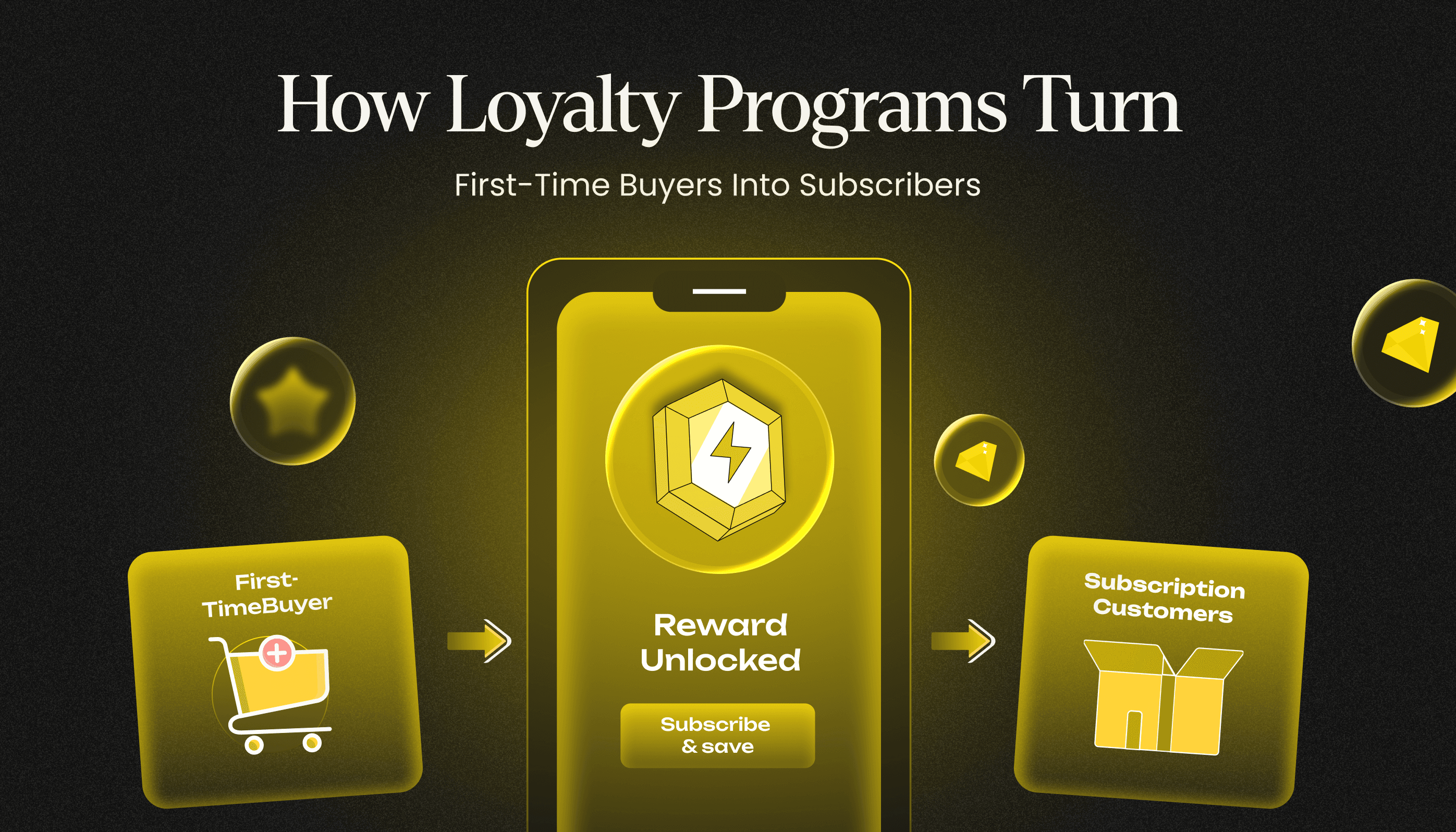


A first-time buyer rarely subscribes on their own initiative; subscribing is a bigger commitment than a single purchase. Loyalty mechanics, used deliberately, are one of the more reliable ways to close that gap. This covers the specific workflow, not the general case for loyalty (see our benefits breakdown for that).
Why First-Time Buyers Rarely Subscribe on Their Own
A one-time purchase requires one decision. Subscribing requires trusting you’ll want the product repeatedly, that managing it will be easy, and that the value holds up over time. A widely cited PYMNTS study found roughly 75% of loyalty program participants increase purchase frequency after joining directionally the mechanism this workflow relies on: get someone into loyalty first, and subscribing becomes a more natural next step rather than a cold ask.
The gap isn’t usually about product satisfaction; a customer who just bought and liked what they received has already cleared the hardest part. What’s missing is a low-pressure reason to make the second, bigger decision. A generic “subscribe and save” prompt asks a first-time buyer to trust an ongoing commitment based on a single transaction. Loyalty reframes that ask: instead of committing to a subscription cold, the customer is simply continuing to earn something they’ve already started earning.
Why Loyalty Is the Right Bridge
Loyalty and subscriptions solve adjacent but different problems, which is exactly why combining them works. A loyalty program gives customers a reason to come back without asking for a recurring commitment; a subscription locks in that recurring commitment but asks for more trust upfront. Sequencing loyalty first, subscription as the natural next step lets the customer build trust incrementally instead of being asked for the full commitment on day one.
This sequencing also has a practical advantage over an isolated subscription push: it gives you more touchpoints to make the case. A customer who never responds to a single post-purchase subscription email might still respond to a well-timed points-expiration nudge, simply because it’s a lower-stakes task framed around something they’re already participating in.
There’s also a compounding benefit worth calling out: even customers who never convert to a subscription through this workflow still benefit from being in the loyalty program in the first place; the 75% purchase-frequency lift cited above applies to loyalty participation generally, not just to eventual subscribers. In other words, this workflow doesn’t carry much downside risk. Worst case, a customer stays a more frequent one-time buyer instead of becoming a subscriber, which is still a better outcome than if they’d never been enrolled at all.
The 5-Step Conversion Workflow
1. Reward first-time buyers instantly. Enroll every first-time buyer into loyalty automatically at checkout with an immediate small reward; a separate sign-up step loses most of the opportunity, since most buyers won’t complete an extra action after they’ve already checked out.
2. Offer subscription-exclusive rewards. A points multiplier or exclusive tier for subscribers reframes subscribing as an upgrade within a system the customer already understands, not a separate commitment they have to evaluate from scratch.
3. Use expiring points to trigger action. Points expiring in 30–60 days create a genuine reason to return, and a well-timed email at the expiration window is a natural moment to present the subscription option far less intrusive than an unprompted subscription pitch.
4. Integrate loyalty and subscription workflows. Points should accrue automatically on recurring orders, not just one-time purchases; a disconnected system undercuts the whole mechanic and erodes trust the moment a subscriber notices they stopped earning.
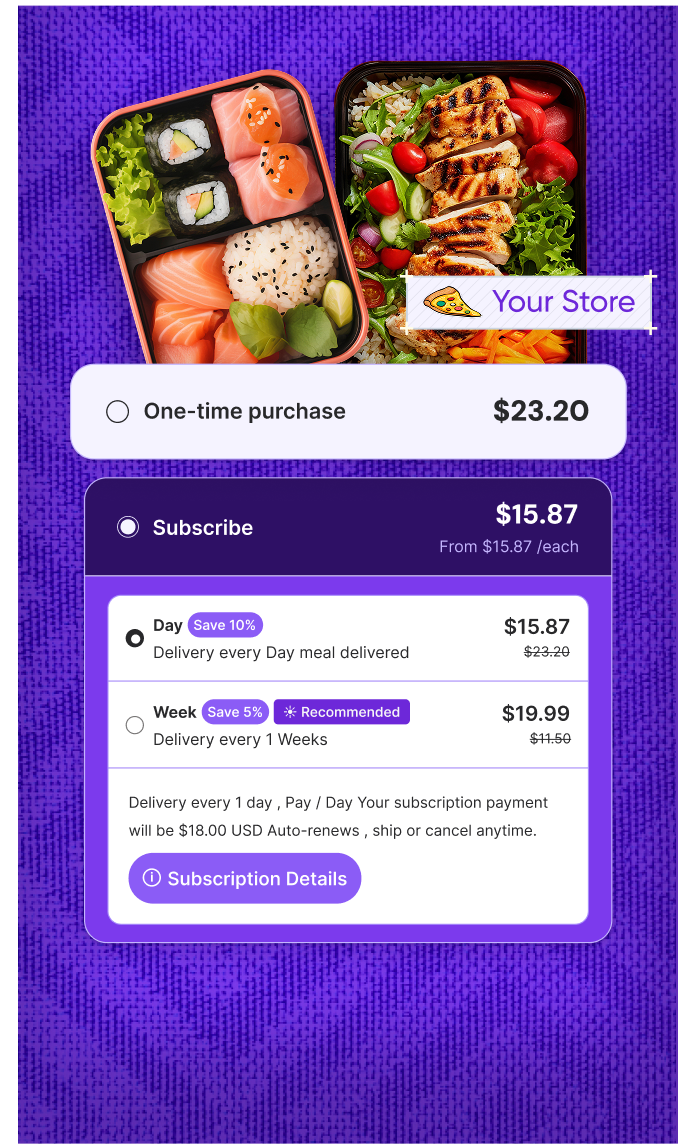
5. Promote loyalty benefits at subscription checkout. Show what a customer earns by subscribing at the exact moment they’re deciding this beats a generic loyalty mention elsewhere on the site because it answers “what’s in it for me” at the decision point, not before or after it.
| Step | What it removes | Where it lives |
| 1. Instant enrollment | The friction of a separate sign-up step | Checkout |
| 2. Subscriber-exclusive rewards | The “why subscribe instead of just buying again” question | Loyalty program structure |
| 3. Expiring points | The lack of a natural reason to return | Email/SMS automation |
| 4. Integrated accrual | Broken trust once a subscriber notices missing points | Loyalty + subscription app integration |
| 5. Checkout-moment promotion | The “what’s in it for me” gap at the actual decision point | Subscription checkout widget |
Each step reduces a specific piece of hesitation; skipping any one weakens the others. Subscription-exclusive rewards do nothing, for example, if they aren’t actually visible at the subscription checkout step the mechanic and the moment it’s shown have to line up.
Shopify Implementation
Set your loyalty app (like Easy Loyalty & Rewards) to auto-enroll at first purchase. Configure a multiplier or exclusive tier for active subscribers. Set a 30–60 day points expiration and build the re-engagement email around it. Confirm loyalty and subscription apps actually sync points on recurring orders, test this directly rather than assuming the integration works as documented. Add a loyalty-benefit callout to your subscription checkout widget so the value is visible at the exact decision point.
Metrics to Track
| Metric | What it tells you |
| First-purchase-to-subscription conversion rate | The core measure of whether this workflow is working at all |
| Loyalty enrollment rate at checkout | Whether the automatic enrollment step is actually capturing near-100% of eligible buyers |
| Subscription conversion rate around the points-expiration window | Whether the expiration trigger is doing its job as a re-engagement moment |
| Points accrual rate for subscribers vs. one-time buyers | Confirms the loyalty and subscription systems are actually integrated, not just configured to look integrated |
| Redemption rate on subscriber-exclusive rewards | Whether the exclusive tier is compelling enough to notice and act on |
If first-purchase-to-subscription conversion isn’t moving after this workflow is live, check the metrics above in order a low enrollment rate points to a checkout friction problem, while a low conversion rate around the expiration window with healthy enrollment points to a messaging or offer problem instead.
Common Mistakes
| Mistake | Why it fails |
| Requiring a separate loyalty sign-up step | Most buyers won’t complete an extra step post-checkout |
| Identical rewards for subscribers and one-time buyers | Removes the incentive to choose the subscription over repeat one-time purchases |
| No expiration on points | Removes the natural re-engagement trigger that step 3 depends on |
| Loyalty and subscription apps not integrated | Subscribers stop earning on recurring orders, undermining trust in the whole program |
| Subscription benefits not visible at checkout | The decision-point promotion step gets skipped, weakening the entire workflow even if the other four steps are configured correctly |
Conversion Workflow Checklist
- Automatic loyalty enrollment configured at first-purchase checkout
- Subscriber-exclusive multiplier or tier defined and distinct from standard rewards
- Points expiration set (30–60 days) with a re-engagement email built around it
- Loyalty and subscription point accrual tested directly on a real recurring order
- Loyalty-benefit callout added to the subscription checkout widget
- First-purchase-to-subscription conversion rate tracked as the primary success metric
Loyalty and subscriptions work better together than either does alone for converting a first-time buyer loyalty lowers the stakes of the ask, and the subscription is where that ongoing relationship actually gets captured. Implement all five steps together rather than partially; each one is designed to remove a specific piece of hesitation, and skipping any single step weakens the ones around it.