


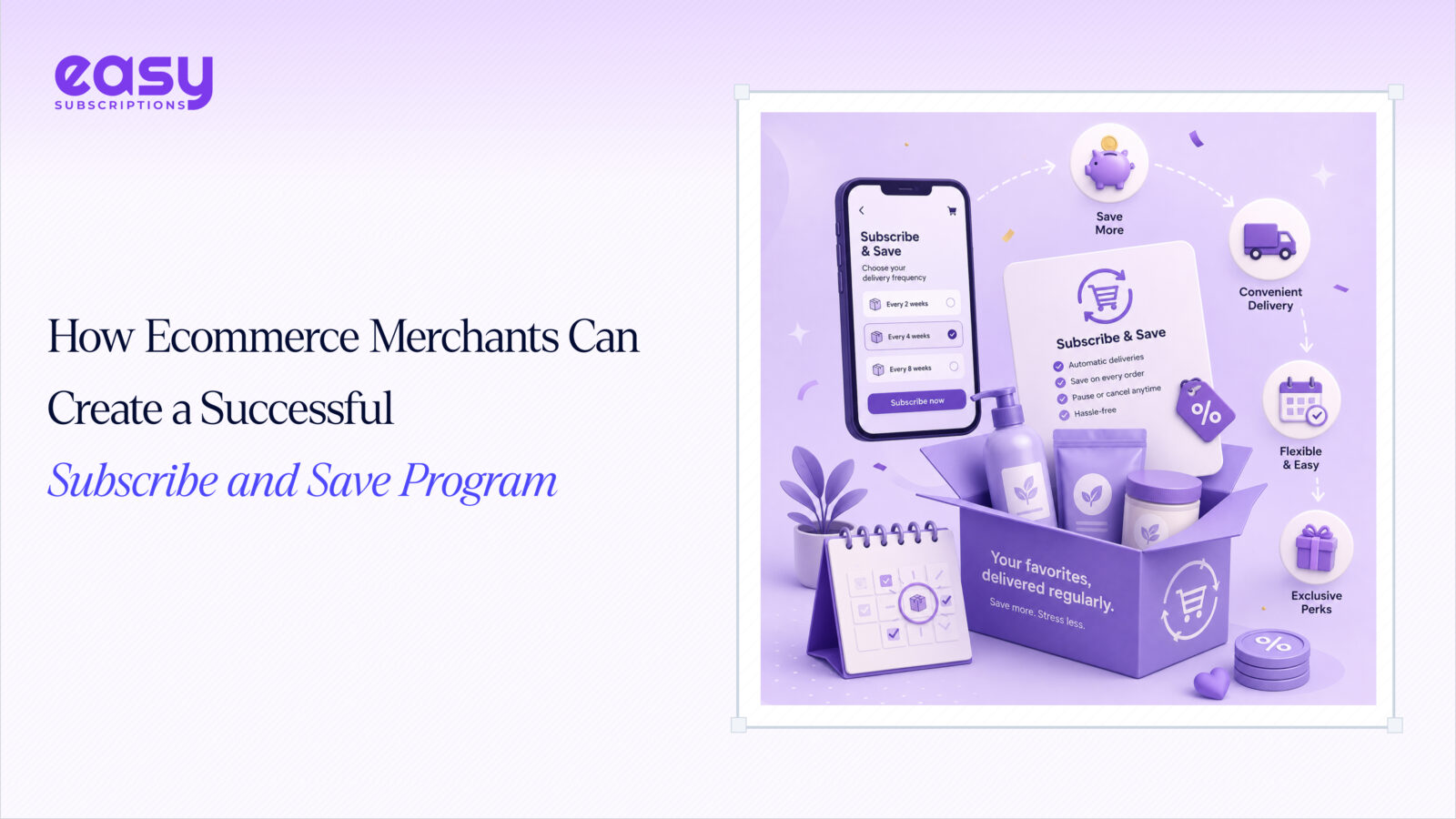


What Is a Subscribe and Save Program (And Why It Works)
A subscribe and save program is simple in concept: a customer commits to receiving a product on a recurring schedule, every 30, 45, or 60 days, for example, in exchange for a discount versus the one-time price.
No surprises. No curation. Just the same product, automatically, is cheaper than buying it one-off.
That’s what separates a Subscribe and Save program from a subscription box. A subscription box focuses on discovery, delivering a curated selection of products the customer didn’t choose individually. Subscribe and Save focuses on convenience by automatically delivering products customers already buy.
Why it works, in plain numbers:
A store with 500 active subscribers paying $35/month starts every month with $17,500 in committed revenue, before a single new sale. A store selling only one-time orders starts every month at zero.
That gap is why subscriber lifetime value runs 3–4x higher than one-time buyer LTV in comparable categories. A subscriber who stays 8 months at $35/month generates $280. A one-time buyer generates $35, maybe $70 if they come back once and most don’t.
Subscribe and save isn’t a marketing gimmick. It’s a mechanism for turning a habit your customer already has into a revenue line you can forecast.
Which Products Work Best for Subscribe and Save
Subscribe and save is a replenishment model. It works when a customer runs out of something and needs more, not when they’re hunting for variety.
Categories that consistently work:
| Category | Why it fits | Typical cadence |
| Supplements & vitamins | Fixed daily dose, predictable run-out date | 30 days |
| Coffee | High-frequency consumption, habitual repurchase | 30–45 days |
| Personal care (skincare, haircare) | Bottles run dry on a knowable timeline | 45–60 days |
| Pet food & treats | Non-negotiable, recurring need | 30–45 days |
| Household staples (cleaning, paper goods) | Bulky, annoying to reorder manually | 45–90 days |
Run this 4-question self-assessment before you launch:
- Does the customer run out of it? If it’s a one-time-use item (a lamp or a jacket), Subscribe & Save doesn’t apply.
- Is the usage rate predictable? If consumption varies wildly by customer, a fixed cadence will frustrate half your subscribers.
- Is the margin healthy enough to absorb a 10–15% discount? Low-margin products need volume math before you commit (more on this below).
- Would the customer buy it again anyway? Subscribe and Save should simplify an existing buying habit, not create a new one.
If you answer “yes” to all four, the product’s a strong candidate. If you’re only hitting two or three, test cautiously with a small SKU set first.
How to Design Your Subscribe and Save Program (3 Levers)
Every subscribe and save program is really just three dials. Get them right, and retention takes care of itself. Get them wrong and you’ll bleed subscribers no matter how good the product is.
Discount Strategy
The instinct is to offer one flat discount, say, 10% off, forever and call it done.
Resist that instinct.
A flat discount forever has two problems. First, it caps what you can offer new customers as an incentive, because you’ve already given your best number away on day one. Second, it gives long-term subscribers no reason to stay beyond inertia, there’s no growing reward for loyalty.
Better: milestone-based discounts. Structure it so the discount increases with tenure:
- Order 1–3: 10% off
- Order 4–6: 12% off
- Order 7+: 15% off
This rewards the customers who’ve proven they’ll stick around, without giving away margin on day one. It also gives your retention team something concrete to communicate, ” Your discount just went up” is a genuinely good win-back message.
Frequency Options
Rigid delivery windows are a churn generator. If a customer’s coffee runs out in 35 days but you’ve locked them into a 30-day cycle, they’ll cancel rather than deal with a pantry backlog.
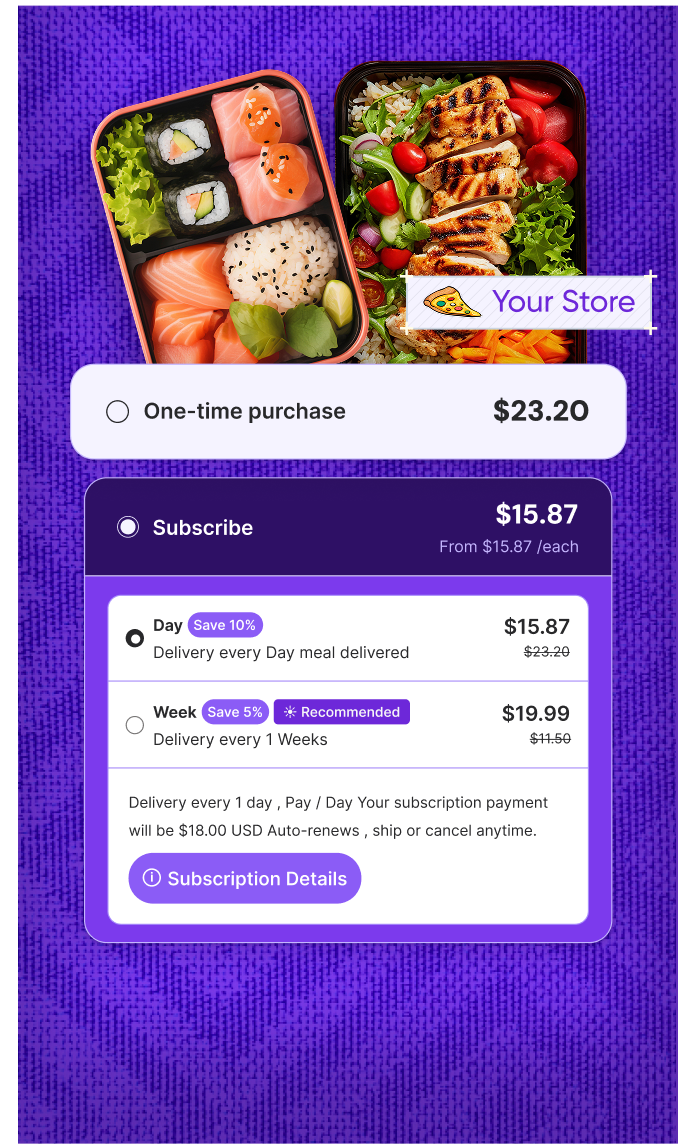
Offer a spread: 30, 45, 60, and 90-day intervals, and let the customer pick what matches their real consumption rate at checkout.
Two extra things worth doing:
- Let customers change frequency mid-subscription, not just at signup. Needs change; the program should flex with them.
- Watch frequency data by product if most subscribers on an SKU keep pushing their next order out, that’s a signal your default cadence is set too tight.
Flexibility
This is the lever most merchants underinvest in, and it’s the one with the biggest churn impact.
A subscriber who can’t easily pause, skip, or swap a delivery doesn’t email you to ask, they just cancel. “Hard to cancel” is consistently cited as a top churn driver in subscription commerce, and the workaround customers reach for isn’t calling support. It’s hitting cancel on their card statement.
The solution is a self-service customer portal backed by effective retention management, giving subscribers the flexibility to manage their own subscriptions. Learn more about how Retention Management helps reduce churn and improve subscriber lifetime value.
The fix is a self-service customer portal where subscribers can:
- Pause for a month (going on vacation, stockpiled already)

- Skip the next single delivery

- Swap products or sizes without contacting support

Merchants who add a pause option routinely see cancellations drop, because “pause” absorbs a huge share of what would otherwise be permanent churn. A customer who pauses for six weeks is still a customer. One who cancels is a reacquisition cost.
Pricing Your Subscribe and Save Discount
Most successful subscribe and save programs land in the 10–15% discount range. That’s wide enough to feel like a real deal and shallow enough to protect margin.
Quick margin math:
Say a product retails at $40 with 60% gross margin ($24 profit). A 15% subscribe and save discount brings the price to $34, cutting the per-unit profit to roughly $18.
That’s a real cost. But if the subscriber sticks around for 6 orders instead of buying once, you’ve turned $24 of one-time profit into $108 of subscription profit, even after the discount. The discount isn’t a cost you eat; it’s the price of retention, and retention is what makes the LTV math work.
Not sure how to determine the right discount for your subscription products? Read our guide to Shopify Subscription Pricing Strategy for practical tips on balancing customer incentives with healthy profit margins.
When higher discounts backfire:
- Above ~20% ongoing, you’re often training customers to see the discount, not the product, as the value proposition, and margin erosion starts to outpace retention gains.
- On already low-margin products, a steep discount can flip a subscription into a loss-maker the moment you account for payment processing fees and fulfillment costs per order.
- Steep discounts also attract deal-hunters who churn the moment the price normalizes or a competitor undercuts you, the opposite of the loyal, high-LTV subscriber you’re trying to build.
How to Launch on Shopify (4 Steps)
Setting up a subscribe and save program on Shopify is mechanically fast. The design decisions above are the actual work, the build itself is a few steps.
1. Choose your products. Start with 3–5 SKUs that pass the 4-question self-assessment above. Don’t launch Subscribe and Save storewide on day one; a focused pilot is easier to monitor and fix.
2. Set your discount and frequency rules. Decide your milestone discount structure and your available cadences (30/45/60/90 days). Configure these per product or per collection, not as a single blanket rule across the whole catalog.
3. Install a subscription app. Shopify doesn’t have subscribe and save built in natively, you need an app to manage recurring billing, customer portals, and discount logic. Easy Subscriptions is built specifically for this: milestone discounts, flexible frequency, and a self-service portal all live in one setup flow, without needing a developer to wire it together.
Prefer a visual walkthrough? Watch our step-by-step Easy Subscriptions setup tutorial to see how you can get your subscription program up and running in minutes.
4. Set up the customer portal and dunning. Turn on self-service pause/skip/swap so subscribers can manage their own plan. Then configure dunning, automatic retries and card-update prompts for failed payments, so subscriptions lost to an expired card don’t quietly disappear.
That’s it. Most merchants get from zero to a live program in under 10 minutes once products and rules are decided, the app work is genuinely the fastest part.
Common Mistakes Merchants Make
The flat discount forever covered above caps your incentive ceiling and gives long-term subscribers no growing reason to stay.
No pause option Forcing a binary choice between “keep paying” and “cancel” pushes hesitant customers straight to cancel. Pause is a churn escape valve, use it.
Ignoring failed payments, involuntary churn, subscriptions lost to expired cards or declined charges, not customer intent, is often the single biggest silent leak in a subscribe and save program. Recovering even 30–40% of failed payments through retries and update prompts is pure, no-acquisition-cost revenue.
Not tracking churn by cohort, aggregate churn hides the story. A cohort view, customers who joined in March vs. April vs. May, tells you whether a pricing change, a frequency default, or a shipping delay is quietly driving cancellations. Without cohort tracking, you’re optimizing blind.




 Subscription Audit