


What Is Ecommerce?
Ecommerce (short for electronic commerce) is any commercial transaction that happens online. For Shopify store owners, it means selling products or services through a digital storefront, without the need for a physical location.
In a subscription context, ecommerce goes further: instead of a customer buying once and leaving, they sign up for automatic recurring orders. That changes everything about how you run your business, from inventory planning to customer relationships.
Why Ecommerce Subscriptions Matter
The numbers speak for themselves. Subscription-based businesses have grown over 435% in the past decade, far outpacing traditional retail. The subscription ecommerce segment is projected to expand at a 9.36% CAGR through 2034.
For Shopify merchants, this shift matters because:
- Revenue becomes predictable. Recurring billing means you know what’s coming in each month.
- Customer value multiplies. Subscription customers generate significantly higher customer lifetime value (CLV) than one-time buyers.
- Retention replaces acquisition. Instead of constantly chasing new customers, you build a base that compounds over time.
- Inventory is easier to manage. Predictable orders mean less waste and smarter purchasing.
Traditional ecommerce is a treadmill. Subscription ecommerce is a flywheel.
Real-World Example
Dollar Shave Club started as a simple ecommerce brand selling razors. By switching to a subscription model, they turned a low-margin, one-time product into a recurring revenue machine, eventually selling for $1 billion.
On Shopify, brands in beauty, wellness, pet care, and food have done the same. A coffee brand selling 12-oz bags at $18 each might earn $18 per customer. With a monthly subscription, that same customer is worth $216 per year, and potentially much more over their lifetime.
That’s the power of ecommerce subscriptions.
The Subscription Ecommerce Formula
There’s no single formula for “ecommerce,” but the core metric that defines subscription ecommerce success is Monthly Recurring Revenue (MRR):
MRR = Active Subscribers × Average Revenue per Subscriber
From there, you can calculate growth:
Net MRR Growth = New MRR + Expansion MRR – Churned MRR
Track these numbers monthly. They tell you whether your subscription ecommerce business is actually growing or just spinning its wheels.
How to Build a Strong Ecommerce Subscription Business on Shopify
1. Choose the right subscription model for your product
Not every product suits every model. Replenishable goods (coffee, supplements, pet food) work well with subscribe-and-save. Curated experiences work better as subscription boxes. Pick the model that matches your customer’s natural buying behavior.
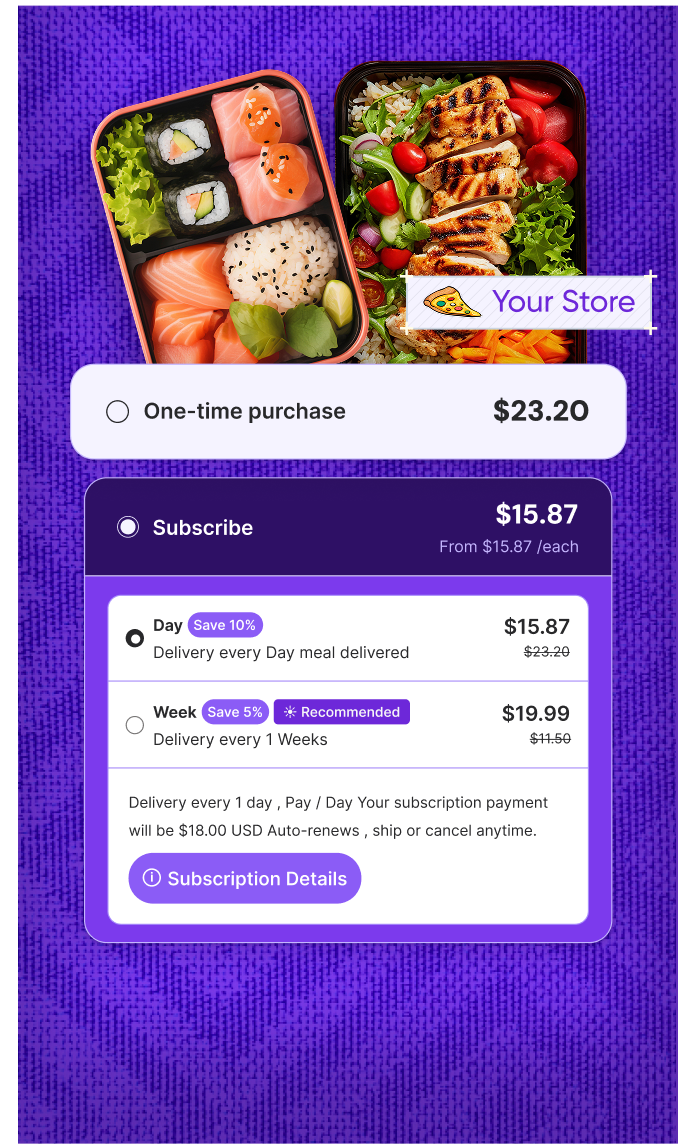
2. Make subscribing the obvious choice on your product page
Display the subscription option prominently. Show the savings clearly. Customers should immediately understand why subscribing beats buying once. A/B test your product page layout to find what converts best.
3. Invest in your customer portal
A self-service customer portal reduces cancellations. When subscribers can skip, pause, or swap products without contacting support, they’re far less likely to cancel outright.
4. Reduce involuntary churn with dunning
A huge portion of subscription cancellations happen because of failed payments, not because the customer wanted to leave. Set up dunning sequences to automatically retry failed payments and recover lost revenue.
5. Build retention into your onboarding
The first 30 days of a subscription are the highest-risk period. Send a welcome sequence, set expectations, and deliver early value. Strong onboarding dramatically improves long-term customer retention.
6. Measure churn relentlessly
Churn slowly hurts your subscription business. Track it monthly, segment it by cohort, and investigate spikes immediately. A 1% reduction in monthly churn can add tens of thousands of dollars in annual revenue.
Common Mistakes in Subscription Ecommerce
- Treating it like regular ecommerce. Subscriptions require different metrics, different flows, and a different mindset. MRR and churn matter more than conversion rate alone.
- Ignoring the post-purchase experience. The sale is just the beginning. Brands that neglect onboarding and communication lose subscribers fast.
- Offering too many options at launch. Too many frequencies, product variants, or tiers creates decision fatigue. Start simple, then expand.
- Underpricing to compete. Discounting too aggressively at sign-up attracts low-quality subscribers who churn quickly. Price for value.
- Not tracking cohort retention. Aggregate retention numbers hide the truth. Break down retention by acquisition month to find what’s actually working.
Pro Tips
- Shopify data shows a 33% increase in stores offering subscriptions in the first half of 2025 vs. 2024. The window to differentiate is now.
- Loyalist subscribers (roughly 30% of your base) typically drive close to 80% of subscription revenue. Identify them early and treat them differently.
- Pair your subscription business model with a customer loyalty program to increase average order value (AOV) and reduce churn simultaneously.
- Use exit surveys when subscribers cancel. The data is gold for improving your product and offer.
- Consider a hybrid model: a small membership fee plus subscribe-and-save pricing. The fee creates commitment and reduces casual churn.
Getting Started with Easy Subscriptions
If you’re running a Shopify store and want to add subscriptions, Easy Subscriptions makes it straightforward to set up recurring billing, manage subscriber portals, and track your MRR, without needing a developer.
Useful Sources
Shopify Help Center: Subscription Discounts
Shopify: How Brands Keep Customers Engaged With Subscription Models











 Subscription Audit