 AI-powered, Human-reviewed.



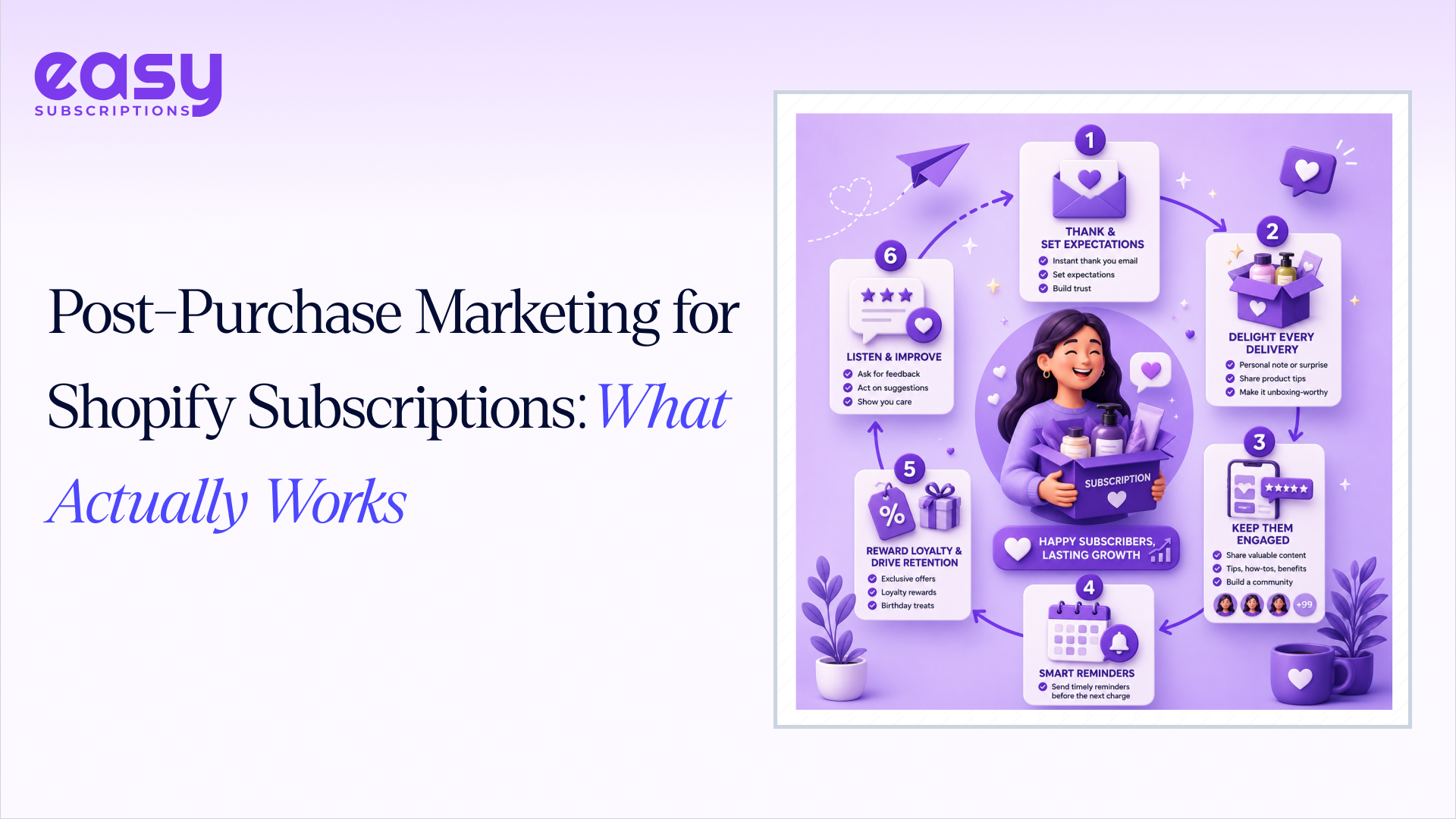


The sale isn’t the finish line for a subscription business, it’s closer to the starting gun. What happens in the days after checkout determines whether a one-time buyer becomes a recurring subscriber or a single transaction you paid to acquire and never hear from again. Most Shopify stores put real effort into the pre-purchase funnel and almost none into what comes after, which is exactly where the opportunity sits.
Why Post-Purchase Marketing Matters
A new customer is at their most engaged in the first few days after ordering. They’re anticipating delivery, they open shipping-related emails, and they’re forming their opinion of the brand. Most stores waste that window on purely transactional messages (order confirmation, shipping notice) and nothing else.
| Data point | Source |
| Acquiring a new customer typically costs 5–7x more than retaining an existing one | Widely cited across subscription/SaaS retention research verify current figure before quoting externally |
| A 5% improvement in retention can lift profits meaningfully (commonly cited range: 25–95%) | Bain & Company / Frederick Reichheld |
| Email marketing averages roughly $36 return for every $1 spent | Klaviyo |
| Post-purchase emails see meaningfully higher open rates than standard promotional sends | Klaviyo benchmark data |
Beyond the direct revenue case, post-purchase marketing is also where customer satisfaction actually gets shaped. A customer who hears from you helpfully in the first week forms a very different impression than one who hears nothing until the next sale.
5 Strategies That Drive Subscription Growth
| # | Strategy | What it does | Where it lives |
| 1 | One-click checkout upsells | Offers a relevant add-on the moment a purchase completes, no re-entry of payment details | Checkout / thank-you page |
| 2 | Automated email & SMS flows | A sequenced series not a single email triggered by delivery, not just order creation | Email/SMS platform |
| 3 | Loyalty and referral programs | Gives customers a reason to return and a reason to bring others | Loyalty app |
| 4 | Personalized post-purchase pages | Replaces a generic “thank you” with product-specific usage tips or next steps | Thank-you/order-status page |
| 5 | Flexible subscription management | Self-service pause, skip, and swap reduces the “cancel because it’s easier than adjusting” reflex | Customer account portal |
On strategy 1 (checkout upsells): relevance matters more than aggressiveness; an unrelated upsell at checkout reads as generic upselling and cross selling noise rather than a helpful suggestion, and tends to convert worse than a genuinely complementary offer. See our AOV and upsells guide for the full mechanics.
On strategy 2 (email/SMS flows): a single “thanks for your order” email isn’t a flow the sequences that actually move retention typically run three to five touches: order confirmation, a delivery/usage-tip email, a check-in a week or two after delivery, and (for consumables) a reorder or subscription prompt once the product would reasonably be running low.
For the SMS side, tools like TxtCart help Shopify brands automate post-purchase follow-ups, relevant cross-sell messages and win-back flows based on customer behavior and purchase history.
On strategy 3 (loyalty and referral): enrolling a customer in loyalty at their first purchase, not weeks later, captures more of the engagement window. A well-structured referral program costs nothing until it converts a real new customer, which makes it one of the more efficient acquisition channels available. See loyalty program benefits for the fuller case.
On strategy 4 (personalized pages): a thank-you page that shows how to use the product, what to expect on delivery, and what happens next does more retention work than the same content buried in an email the customer may not open.
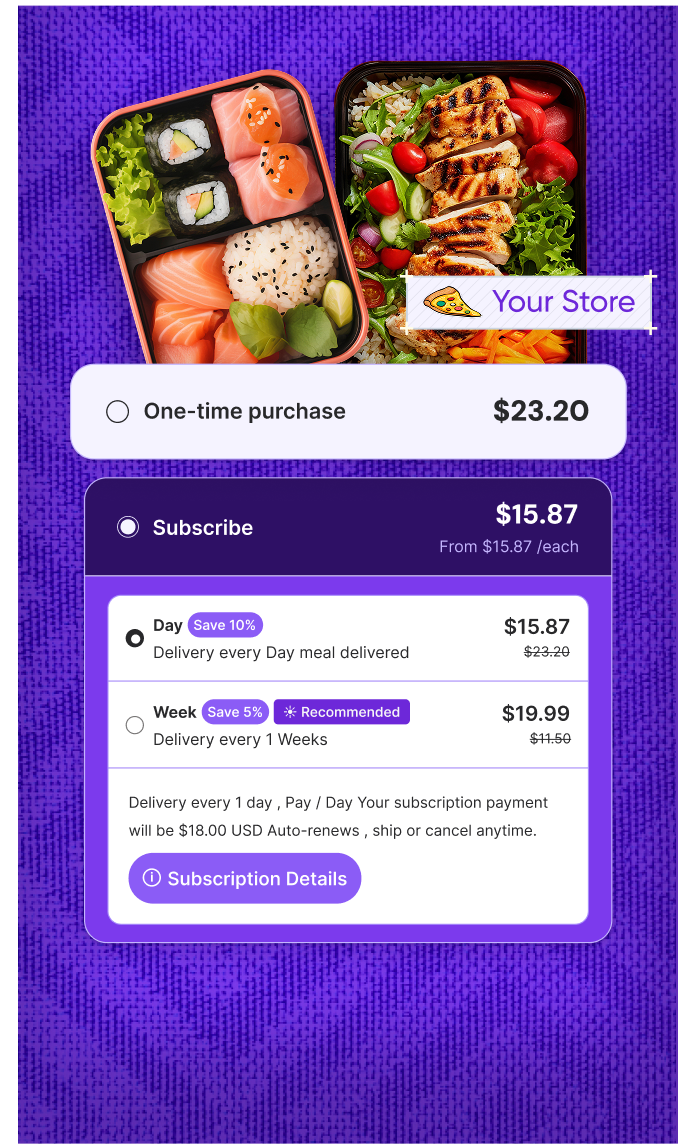
On strategy 5 (flexible management): this is arguably the highest-leverage item on the list for subscription businesses, specifically a customer portal that lets someone pause or skip a delivery removes the single most common reason a subscriber cancels outright rather than simply adjusting their plan.
How to Automate This on Shopify
Building this manually for every order doesn’t scale; the goal is a system that triggers automatically off real events, not a series of one-off campaigns.
- Trigger flows off fulfillment status, not order creation: a “your order shipped” email that goes out before the item actually ships undermines trust in every message that follows.
- Segment subscribers separately from one-time buyers from day one the messaging each group needs diverges quickly (a subscriber needs management tips; a one-time buyer needs a reason to subscribe).
- Use a subscription app with a native customer portal, such as Easy Subscriptions, so pause/skip/swap doesn’t require a developer to build from scratch.
- Layer loyalty enrollment into the same automation, rather than running it as a separate, disconnected system, a disjointed loyalty and subscription setup is one of the more common reasons this strategy underperforms in practice.
Key Metrics to Track
| Metric | What it tells you |
| Post-purchase email/SMS open and click rate | Whether the content is actually being seen and engaged with |
| One-click upsell acceptance rate | Whether checkout-moment offers are relevant enough to convert |
| Subscription opt-in rate (post-purchase) | Whether the subscription offer is reaching customers at the right moment |
| Self-service portal usage (pause/skip vs. cancel) | Whether flexible management is actually reducing outright cancellations |
| 90-day repeat purchase or retention rate | The real, lagging measure of whether the whole system is working |
A commonly cited healthy churn benchmark for B2C subscription businesses sits roughly in the 3–8% monthly range, though this varies significantly by category. Treat it as a rough compass, not a target, and prioritize your own trend over time.
Common Mistakes to Avoid
- Sending only transactional emails (confirmation, shipping) and calling it a post-purchase strategy misses the entire engagement window.
- Making the upsell irrelevant to the original purchase this reads as generic selling rather than a helpful next step, and depresses acceptance rates.
- Treating loyalty as a separate initiative from the subscription and email flows, rather than one integrated system.
- Hiding the self-service portal or making pause/skip harder to find than cancel customers will take the path of least resistance, which should be adjusting, not leaving.
- Never measuring which flow step actually drives retention without step-level tracking, it’s impossible to know whether the third email in a sequence is helping or just adding noise.
Post-Purchase Checklist
Post-purchase email/SMS open, click, and conversion rates tracked monthly
Automated flow triggers on fulfillment, not order creation
Subscribers segmented separately from one-time buyers
At least one relevant, checkout-moment upsell live
Loyalty enrollment happens automatically at first purchase
Self-service portal supports pause/skip/swap, not just cancel