 AI-powered, Human-reviewed.



What Is a Subscription Trial Period?
A subscription trial period is a limited window of time during which a new customer can access your product or service at no cost, or at a heavily reduced price, before being charged the regular subscription fee.
It removes the risk of commitment for the buyer. Instead of charging customers immediately, you allow them to try the product experience first. The goal is simple: show enough value during the trial that converting to paid feels like the obvious next step.
Why It Matters for Your Subscription Business
A well-structured trial period directly impacts your revenue, retention, and growth.
It lowers the barrier to entry. Customers who might hesitate to commit are far more likely to sign up when there is no immediate financial risk. More sign-ups mean more chances to convert.
It filters for high-intent buyers. Trial users who actively engage with your product are your warmest leads. They already know what you offer. Converting them costs far less than acquiring a brand new customer.
It affects long-term retention. Subscribers who see clear value during a trial are more likely to remain subscribed, helping increase Customer Lifetime Value (CLV) while lowering churn.
Getting the trial structure right is not optional. It is one of the highest-leverage decisions in your subscription business model.
Free Trial vs. Paid Trial: What Is the Difference?
These two models work differently and attract different types of customers.
| Free Trial (Opt-In) | Paid/Discounted Trial (Opt-Out) | |
| Credit card required | No | Yes |
| Barrier to entry | Low | Higher |
| Volume of sign-ups | High | Lower |
| Conversion rate | Lower | Higher |
| Risk of dissatisfaction | Low | Higher if not transparent |
Free trial (opt-in): No credit card needed. Anyone can sign up. Great for volume, but you will need strong onboarding to convert.
Paid/discounted trial (opt-out): Requires a payment method upfront. The subscription auto-renews unless cancelled. Fewer sign-ups, but those who do sign up tend to be more serious.
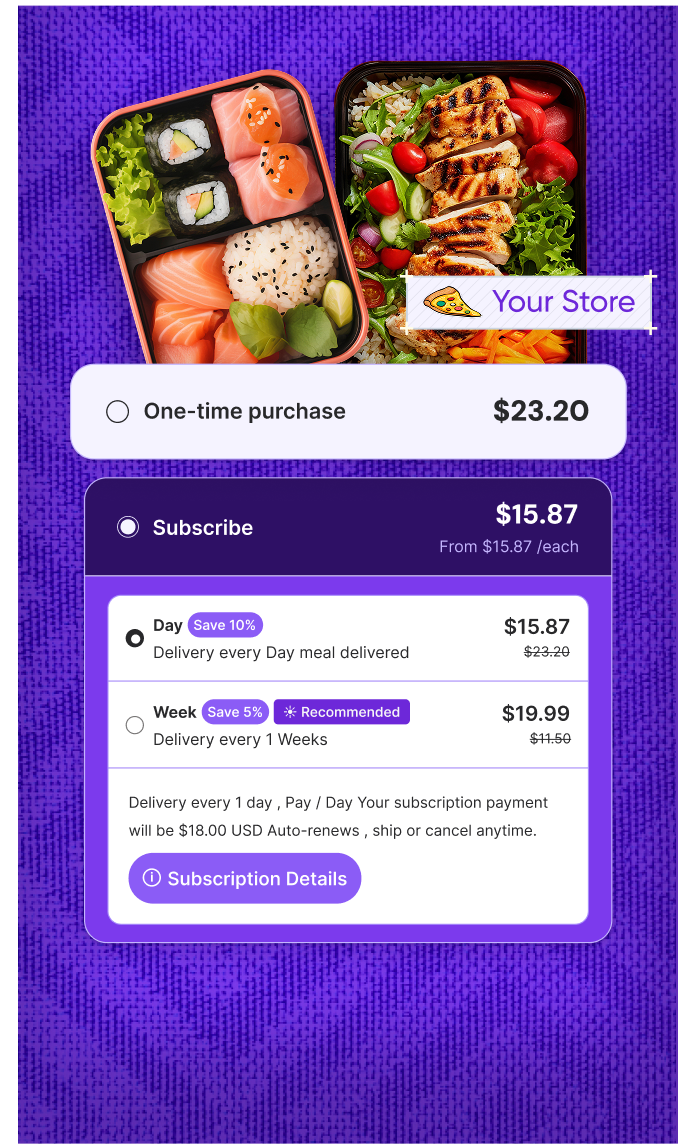
For physical product subscriptions on Shopify (like a coffee subscription or skincare box), a discounted first order (e.g. first box for $1) is the most common format. For digital or SaaS products, a free access window is more typical.
Real-World Example
Dollar Shave Club famously used a $1 trial razor kit to get customers into their subscription. The low price removed all friction. Once customers experienced the product, the vast majority converted to a full recurring plan.
On Shopify, a supplement brand might offer the first subscription box at 80% off. The customer enters their card, receives the product, and is automatically billed at full price the following month unless they cancel. This is a classic opt-out trial structure.
Trial-to-Paid Conversion: Formula & Benchmarks
Formula
Trial Conversion Rate = (Number of trial users who converted to paid ÷ Total trial users) × 100
Example: 500 trial users, 90 convert to paid = 18% trial conversion rate
Benchmarks to Know
Conversion rates vary significantly depending on your trial model:
- Opt-in trials (no credit card): typically 18-25% conversion
- Opt-out trials (credit card required upfront): can reach 48% or higher
- General subscription benchmark: 8-12% is considered good, 15-25% is great
Keep in mind: the trial length itself has less impact than most people think. What matters most is how fast customers experience real value.
How to Structure a Trial That Actually Converts
1. Deliver value in the first 48 hours
Do not wait until day 7 to impress your trial user. Send a welcome email immediately. Show them the best of what you offer right away. The faster someone reaches their “aha moment,” the more likely they are to convert.
2. Use a targeted onboarding sequence
Set up an automated email flow for trial users only. Day 1: welcome + quick-start guide. Day 3: highlight a key benefit. Day 6: social proof or testimonial. Day 8 (before trial ends): clear reminder with a reason to stay.
3. Make the upgrade path obvious
Do not hide the paid plan. Show a clear comparison of what they get when they convert. Use urgency (trial ending soon) without being pushy.
4. Choose the right trial length
Shorter is not always better. Trials under 4 days tend to convert at lower rates. A 7-14 day window is a solid starting point for most subscription products. Give customers enough time to form a habit.
5. Require a payment method for higher-intent sign-ups
If your product allows it, asking for a card upfront filters out low-intent users and significantly boosts conversion rates. Be transparent about when billing starts.
6. Track engagement, not just sign-ups
Monitor which trial users are actually using your product. Reach out personally to engaged users who have not converted yet. Ignore users who never logged in after day 1 – more time will not help them.
Common Mistakes to Avoid
- Starting the trial clock too early. If users sign up but do not engage for 2-3 days, they lose valuable trial time. Consider starting the clock on the first meaningful action, not sign-up date.
- No onboarding sequence. Sending zero emails during the trial is the fastest way to lose a potential subscriber. Silence feels like abandonment.
- Making cancellation feel risky. If customers feel trapped, they will not sign up in the first place. Be upfront about how billing works and how easy it is to cancel.
- Offering too long a trial. Trials beyond 30 days can actually hurt conversion. The longer the trial, the more likely users are to cancel before it ends or simply forget about you.
- Measuring only the conversion rate. A high conversion rate with low retention is a problem. Track how long trial-converted subscribers stay. That is the real signal.
Pro Tips
- Segment your trial users by behavior. Users who engage with core features in their first 3 days convert at significantly higher rates. Use separate email flows for each customer group.
- Offer a trial extension only to engaged users. If someone is logging in daily but has not converted, an extra week can tip them. If they have not engaged at all, more time changes nothing.
- Test opt-in vs. opt-out. Opt-out trials convert at much higher rates, but they attract fewer sign-ups. Run both and compare the net number of paying customers per 1,000 visitors.
- Use social proof during the trial. A well-timed testimonial email on day 5 can be the nudge that converts a hesitant user.
- Align your trial length with your billing cycle. If you bill monthly, a 7-14 day trial makes sense. If you bill annually, a longer trial (up to 30 days) helps justify the bigger commitment.
Related Concepts
Understanding trial periods works best alongside these core subscription concepts:
- Churn: High trial-to-paid churn often signals a mismatch between trial experience and actual product value.
- Customer Retention: A strong trial sets the foundation for long-term retention.
- Customer Lifetime Value (CLV): Subscribers who convert from a well-structured trial tend to have higher CLV.
- Dunning: Once a trial converts to paid, failed payments become a risk. Dunning management protects that revenue.
- Customer Loyalty: Trial users who feel genuinely helped (not tricked) become your most loyal subscribers.
A Note on Tools
If you run a Shopify store and want to offer trial periods as part of your subscription setup, Easy Subscriptions lets you configure free trials, discounted first orders, and automated billing transitions without any custom code. It is worth exploring if you want a clean, flexible trial setup that works out of the box.