 AI-powered, Human-reviewed.



What is customer retention?
Customer retention is a business’s ability to keep existing customers buying from it over time. It’s measured with the customer retention rate (CRR): the percentage of customers who stay with you over a set period.
For a Shopify store, customer retention shows up as reorders, renewals and returning visits. For a subscription brand, it’s the number of subscribers still active month after month.
Quick answer
- Definition: Customer retention = keeping existing customers buying again.
- Formula: CRR = ((End customers − New customers) ÷ Start customers) × 100
- Why it matters: Keeping a customer costs 5–25× less than winning a new one.
- Best levers: Subscriptions, loyalty rewards, personalization, failed-payment recovery, great support, feedback loops.
Why customer retention matters
Growth that relies only on new customers is expensive and fragile. Customer retention is where profit compounds.
| Stat | What it means for your store | Source |
| Acquiring a new customer costs 5–25× more than retaining one | Every customer you keep is budget you don’t spend on ads | Harvard Business Review |
| A 5% lift in retention can raise profits by 25–95% | Small retention gains have outsized profit impact | Bain & Company |
| Chance of selling to an existing customer: 60–70% vs 5–20% for a new prospect | Repeat buyers convert far more easily | Marketing Metrics |
| 71% of consumers expect personalized interactions | Generic post-purchase emails leave retention on the table | McKinsey |
For subscription businesses, retention is everything:
- Every cancellation removes future monthly recurring revenue (MRR), not just one order.
- If churn outpaces new sign-ups, revenue shrinks no matter how much you spend on acquisition.
- Higher retention raises customer lifetime value (CLV), so you can afford to bid more for new customers.
How to calculate customer retention rate
The customer retention rate formula shows what percentage of the customers you had at the start of a period are still with you at the end.
CRR = \frac{E – N}{S} \times 100
- S = customers at the start of the period
- E = customers at the end of the period
- N = new customers acquired during the period
Subtracting new customers is the key step: it measures who stayed, not who joined.
Worked example
| Step | Value |
| Customers at start of quarter (S) | 500 |
| New customers acquired (N) | 100 |
| Customers at end of quarter (E) | 520 |
| Calculation | ((520 − 100) ÷ 500) × 100 |
| Customer retention rate | 84% |
| Churn rate (100% − CRR) | 16% (80 customers lost) |
Related retention metrics
| Metric | Formula | What it tells you |
| Churn rate | Customers lost ÷ Start customers × 100 | The flip side of retention |
| Repeat purchase rate | Customers with 2+ orders ÷ Total customers × 100 | How many buyers come back at all |
| Customer lifetime value (CLV) | Avg. order value × Purchase frequency × Customer lifespan | Total revenue a customer brings |
| Purchase frequency | Total orders ÷ Unique customers | How often customers reorder |
| MRR churn | MRR lost to cancellations ÷ Starting MRR × 100 | Revenue impact of churn for subscriptions |
Tip: Always use the same period length (monthly, quarterly or yearly) so your numbers are comparable over time.
What is a good customer retention rate?
A good customer retention rate depends on what you sell and how often customers naturally need it. Use this table to see where your category typically sits.
| Product category | Typical retention | Why | Best retention lever |
| Coffee, tea, supplements | High | Customers run out and reorder on a cycle | Subscribe & save |
| Pet food & supplies | High | Predictable, recurring need | Auto-delivery subscriptions |
| Beauty & skincare | Medium–high | Routine products, but lots of brand switching | Refills + loyalty points |
| Apparel & accessories | Medium | Repeat buying is driven by style, not need | Early access, VIP perks |
| Home goods & decor | Low–medium | Infrequent purchases | Post-purchase cross-sell |
| Electronics | Low | Long replacement cycles | Accessories, warranties, support |
How to benchmark yourself:
- Compare against your own past periods first; that’s the most reliable benchmark.
- Track retention by cohort (sign-up month or acquisition channel).
- For subscriptions, measure monthly retention and churn, not just annual.
- Aim for steady quarter-over-quarter improvement rather than a single target number.
6 customer retention strategies that work
These are the most effective ways to improve customer retention for a Shopify store, ranked roughly by impact for consumable and subscription brands.
| # | Strategy | Main benefit | Effort | Best for |
| 1 | Offer subscriptions | Automates repeat purchases | Low (with an app) | Consumables, refills |
| 2 | Reward loyalty | Gives customers a reason to return | Medium | Most stores |
| 3 | Personalize post-purchase | Timely, relevant reorders | Medium | Stores with email/SMS |
| 4 | Recover failed payments | Stops involuntary churn | Low | Subscription brands |
| 5 | Deliver fast support | Turns problems into loyalty | Ongoing | All stores |
| 6 | Act on feedback | Fixes the real reasons people leave | Low | All stores |
1. Offer subscriptions
Subscriptions remove the need to remember to reorder, so staying is the default.
- Add subscribe & save options on product pages (a 10–15% discount is common).
- Let customers choose their own delivery frequency.
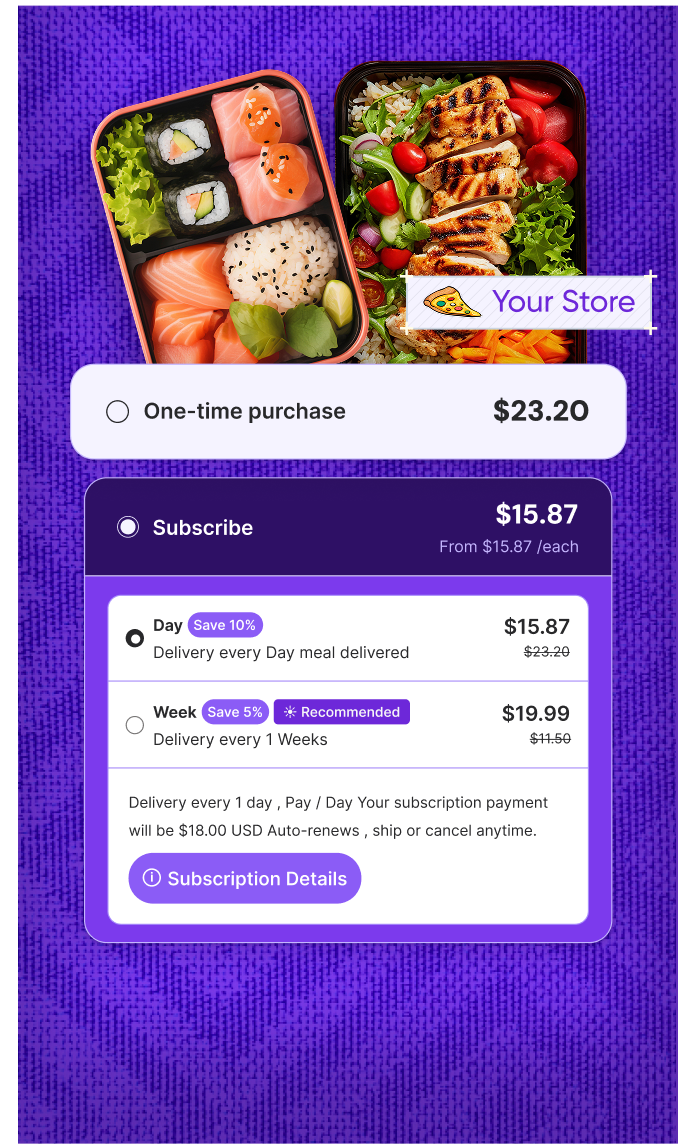
- Give subscribers a self-serve portal to skip, swap, pause or reschedule instead of cancelling.
- Easy Subscriptions lets Shopify merchants set all of this up without code.
2. Reward loyalty
A loyalty program gives customers a reason to come back to you instead of a competitor.
- Points for purchases, reviews and referrals
- Member-only discounts and free-shipping thresholds
- Early access to new launches and limited drops
- Tiered perks that reward your best customers most
3. Personalize the post-purchase experience
Use purchase history to make every message relevant.
- Reorder reminders timed to when the product runs out
- Product recommendations based on what they bought
- How-to content so customers get value from the product
- Thank-you and onboarding emails in the first week after purchase
4. Recover failed payments (dunning)
A large share of subscription churn is involuntary: the customer didn’t mean to leave, their card failed.
- Retry failed payments automatically on a smart schedule
- Send card-expiry reminders before renewal
- Email and SMS with a one-click link to update payment details
- Pause rather than cancel while payment is being recovered
5. Deliver fast, helpful support
A well-handled problem can increase loyalty.
- Set a response-time target (for example, under 24 hours)
- Offer live chat on high-intent pages
- Empower agents to issue refunds, replacements or credits quickly
- Track repeat issues and fix their root cause
6. Ask for feedback and act on it
Customers stay when they see their input change things.
- Short post-purchase surveys (1–3 questions)
- Cancellation surveys to learn exactly why subscribers leave
- Monitor reviews and reply publicly
- Tell customers what you changed because of their feedback
Common customer retention mistakes
| Mistake | Why it hurts | How to fix it |
| Spending everything on acquisition | Creates a “leaky bucket”: you keep refilling, it keeps draining | Set a retention budget and KPI alongside acquisition |
| Missing early churn signals | Longer order gaps, smaller baskets and skipped deliveries go unnoticed | Set up automated alerts and win-back flows |
| Treating every customer the same | First-timers, lapsed buyers and VIPs need different messages | Segment by behavior, order history and subscription tier |
| Going silent after checkout | The first week is when customers are most engaged | Send thank-you, onboarding and usage emails |
| Ignoring failed payments | Every declined card becomes a lost subscriber | Turn on automated dunning and payment retries |
| Making cancellation the only option | Customers who need a break leave for good | Offer skip, pause and swap in the subscriber portal |
Pro tips to boost customer retention
- Track retention by cohort. Compare customers by sign-up month and channel to find your most loyal sources.
- Test subscriptions on consumables. Offer a subscription on your top reordered product and compare retention with one-time buyers.
- Tie retention to CLV. A few points of retention can noticeably raise lifetime value and how much you can spend to acquire customers.
- Run win-back campaigns. A targeted offer to lapsed customers is one of the cheapest ways to recover revenue.
- Audit friction quarterly. Review checkout speed, mobile experience and how easy it is to manage a subscription.