 AI-powered, Human-reviewed.



What Is Delivery Frequency?
Delivery frequency (also called subscription delivery schedule) defines the interval between each recurring shipment in a subscription. When a customer subscribes to a product, they agree to receive it at a set cadence every week, every month, every 3 months, etc.
Getting the frequency of delivery right matters because it determines whether customers feel they’re getting too much product, too little, or just the right amount. A mismatch is one of the top reasons subscribers cancel.
Delivery frequency vs. billing frequency what’s the difference?
These two terms are often confused but are not the same:
- Delivery frequency = how often the customer receives their order
- Billing frequency = how often the customer is charged
In most cases, they are aligned (e.g., billed and shipped monthly). But some merchants offer prepaid subscriptions where a customer pays upfront for 3 months and receives a delivery each month. In that case, billing is quarterly but delivery is monthly.
Example: A coffee brand ships a 250g bag every week to heavy drinkers, but offers a monthly option for casual coffee lovers. Same product, different delivery schedules both valid.
Delivery Frequency Options in Shopify
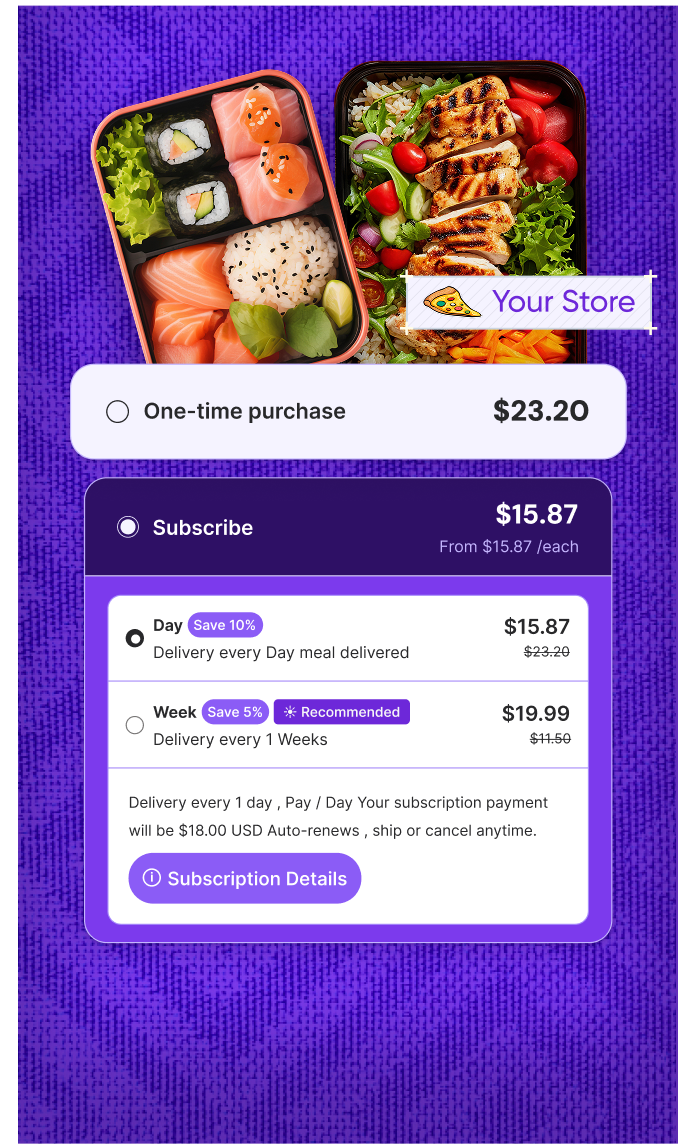
Shopify subscriptions support a wide range of delivery intervals. Here’s an overview of the most common options and what they’re best suited for:
| Frequency Type | Interval | Best For | Example Products |
| Daily | Every 1 day | High-consumption consumables | Fresh juice, meal prep |
| Weekly | Every 7 days | Fast-use products | Coffee, protein powder |
| Bi-weekly | Every 14 days | Moderate-use products | Supplements, pet food |
| Monthly | Every 30 days | Standard replenishment | Skincare, cleaning supplies |
| Every 2 months | Every 60 days | Slow-use products | Candles, specialty teas |
| Quarterly | Every 3 months | Curated or seasonal boxes | Lifestyle boxes, gifts |
| Custom | Any interval | Tailored to usage | Any product with variable consumption |
Easy Subscriptions supports all of these delivery intervals, including custom frequencies giving merchants full flexibility to match their product’s natural consumption rate.
How to Set Delivery Frequency in Easy Subscriptions
Setting up your Shopify subscriptions delivery frequency in Easy Subscriptions takes just a few minutes.
Step 1: Go to your Easy Subscriptions dashboard Open the Easy Subscriptions app from your Shopify admin.
Step 2: Select your subscription product Navigate to the product you want to configure and open its subscription plan settings.
Step 3: Choose your delivery frequency interval Select the interval that matches your product’s typical consumption rate weekly, monthly, or a custom period.
Step 4: Add multiple frequency options Let customers choose their preferred cadence. Click “Add option” to include additional intervals (e.g., offer both bi-weekly and monthly). Giving customers control over their schedule is one of the most effective ways to reduce cancellations.
Step 5: Save and publish Confirm your settings and publish. The frequency selector will appear on your product page immediately.
Customers can also manage their own frequency through the Easy Subscriptions self-serve portal. They can switch between available intervals at any time no need to contact support. This flexibility is key to keeping subscribers happy long-term.
Best Delivery Frequency by Product Type
Not all products are consumed at the same rate. Here are practical recommendations based on typical usage patterns:
| Product Type | Recommended Frequency | Why |
| Coffee / Tea | Weekly or bi-weekly | High daily consumption; running out causes immediate frustration |
| Vitamins & Supplements | Monthly | Standard 30-day supply aligns with most product formats |
| Pet Food | Bi-weekly to monthly | Depends on pet size and food type; flexibility is key |
| Skincare | Monthly | Most routines use one product per month |
| Baby Products | Bi-weekly | Diapers and formula run out fast; parents need reliability |
| Meal Kits | Weekly | Fresh ingredients require frequent delivery |
| Cleaning Supplies | Every 1-2 months | Slower consumption; over-delivery is a common complaint |
Pro tip: If you’re unsure about the right frequency for your product, start with monthly and let customers adjust. Monitor skip and cancellation patterns they’ll tell you if your default is off.
How Delivery Frequency Affects Churn
Delivery frequency is one of the most direct levers you have on churn. Get it wrong in either direction and subscribers leave.
Too frequent = subscriber fatigue
Customers end up with a stockpile of product they can’t use. This is one of the most avoidable reasons subscribers cancel receiving orders too frequently leads directly to cancellations. When customers feel overwhelmed, they cancel rather than adjust.
Too infrequent = disengagement
If deliveries are too spread out, customers forget about the subscription, lose the habit, or simply find another solution in the meantime.
Finding the sweet spot
The best approach is to let customers choose their own delivery frequency from a set of options you define. This puts control in their hands and dramatically reduces the risk of cancellation due to over- or under-delivery.
Subscription flexibility including the ability to change delivery frequency is consistently cited as one of the top drivers of retention. When customers can adjust their plan instead of canceling, most of them do exactly that.
Easy Subscription App lets you offer multiple frequency options on the same product, so every subscriber can find the cadence that works for them. Combined with the self-serve portal, this gives customers the control they need to stay subscribed through lifestyle changes, vacations, or shifts in usage.