

What Is an Upsell?
An upsell is a sales technique that encourages customers to purchase a more expensive or premium version of a product or service they are already buying. The goal is simple: increase the value of each transaction without acquiring a new customer.
In practice, an upsell might look like:
- Offering a larger size of a product at checkout
- Suggesting an annual subscription instead of a monthly one
- Presenting a premium product tier with added benefits
- Recommending an upgrade with more features or higher quantity
The primary goal of upsells is to increase average order value (AOV), revenue, and customer lifetime value (CLV) all without spending more on customer acquisition.
Upsell vs Cross-sell vs Downsell
These three terms are often confused. Here’s a clear breakdown:
Key difference: An upsell is an upgrade or replacement (a better version of the same thing). A cross-sell is an addition or complement (something extra that pairs well). A downsell is a safety net a lower-priced option offered after a customer says no, designed to save the sale rather than lose it entirely.
Why Upselling Matters for Shopify Merchants
Upselling is one of the highest-ROI strategies available to Shopify store owners. Here’s why:
- Lower cost than acquisition. You’ve already paid to bring the customer to your store. Maximizing their order value costs a fraction of acquiring a new visitor.
- Higher conversion probability. The probability of selling to an existing customer is significantly higher than converting a new prospect.
- Compounds over time for subscriptions. For subscription businesses, every customer who upgrades to a higher tier raises your baseline recurring revenue month after month.
- Improves retention. A subscriber who chose a premium tier from the beginning has more invested in staying than one who took the cheapest option.
Shopify-Specific Upsell Examples
Here are practical upsell scenarios relevant to Shopify merchants running subscription products:
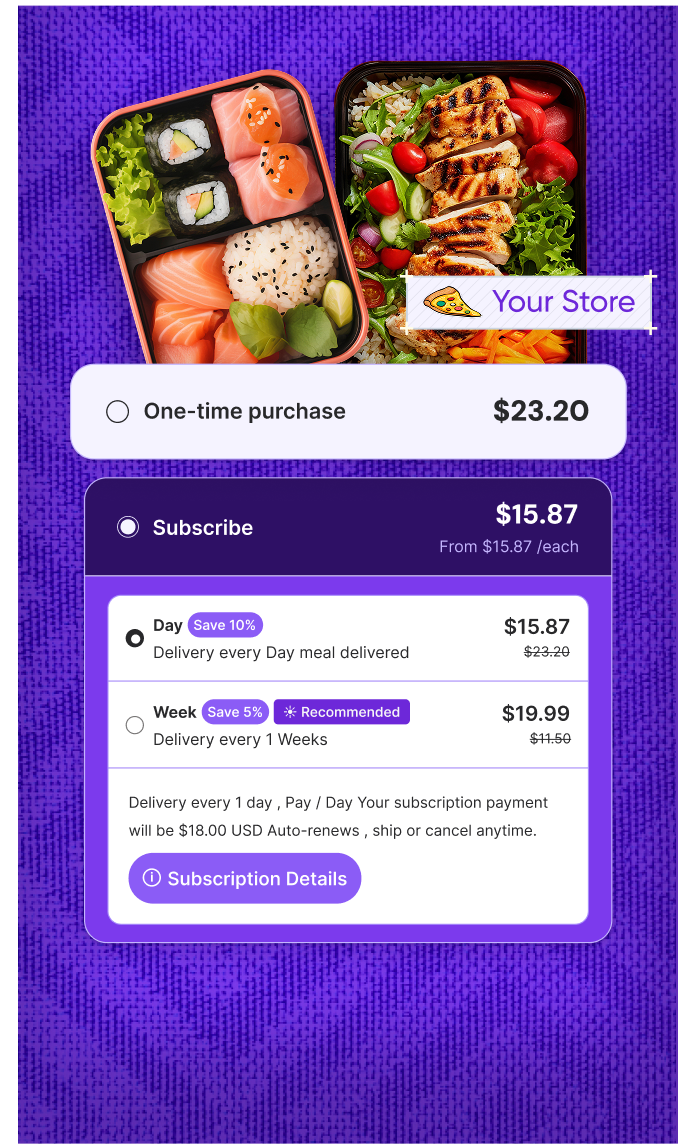
- Monthly to annual plan upgrade: Offer subscribers a discounted annual plan at checkout or inside their account portal. Highlight the savings clearly (e.g., “Save 20% by switching to annual”).
- Standard to premium product tier: If you sell a hair care subscription, you might upsell from a “Healthy Hair” box (shampoo + conditioner) to a “Luscious Locks” box that adds leave-in conditioner and a weekly hair mask.
- Subscription upsell on the thank-you page: After a one-time purchase, present a subscription option for regular deliveries at a slight discount. The customer is already in a positive mindset right after checkout conversion rates are higher here.
- Larger quantity or bundle upgrade: Offer “Buy 2, Save 10%” or “Buy 3, Save 20%” volume deals that nudge customers to increase their order size.
- Premium add-on at renewal: At subscription renewal time, offer an upgrade to a higher-tier plan. Customers who have experienced your product’s value are most receptive to upgrading at this moment.
Upsell Strategies for Subscription Businesses
Subscription businesses have a unique advantage: an ongoing relationship with their customers. Here’s how to make the most of it:
Offer upsells at the right moment: Upselling works best when the customer is already committed to buying but still open to upgrading right before checkout, during onboarding, or at contract renewal. Avoid pushing upgrades before the customer has experienced your product’s value.
Keep it relevant and close in price: Customers feel more comfortable when the upgrade isn’t a dramatic price jump. A good rule of thumb: cap the upsell at roughly 25% above the original cart value. Irrelevant or overpriced upsells are ignored or create friction.
Use clear value comparisons: Side-by-side plan comparisons work well. Clearly outline what the premium tier includes that the base plan doesn’t. Checklists and feature tables make the decision easy.
Limit choices to avoid decision paralysis: Too many options cause anxiety. Present
Two clear choices: the current plan and the upgrade rather than a full menu of options.
Leverage urgency (authentically): Limited-time pricing or a “Most Popular” label on your premium tier can encourage action. These cues work best when they feel genuine, not manufactured.
Use post-purchase emails: After a customer’s first order, follow up with a targeted email highlighting the benefits of upgrading. This is especially effective for subscription businesses where the customer has had time to experience your product.
Real Brand Examples of Effective Upselling
Spotify: Spotify’s freemium model is a masterclass in upselling. The free version limits offline listening, skips, and includes ads while consistently highlighting Premium’s ad-free, unlimited experience through well-timed in-app prompts. When a free user hits their skip limit, Spotify frames it as “You discovered a Premium feature” rather than a restriction.
Apple: Apple frequently offers upsells at checkout upgrading to more iCloud storage, adding AppleCare+, or choosing higher-spec devices. The pricing strategy does most of the work: each model is priced so that spending a little more feels rational and easy.
Dropbox: Dropbox proactively reminds free-plan users about the benefits of upgrading for more storage and features like Smart Sync. These reminders keep the upsell top of mind without feeling aggressive.
The New York Times: The NYT acquires subscribers with one simple offer, then progressively introduces upsells Games, Cooking, The Athletic each one presented when data suggests the subscriber is most likely to care about it. One offer at a time, always tailored to where the customer is in their journey.
OLLY (vitamins): The vitamin brand grew subscription revenue by 63% with in-cart subscription upsells, using variant selectors that let customers choose serving sizes without leaving the cart.
How Easy Subscription Helps You Set Up Upsells
Easy Subscription App is built for Shopify merchants who want to grow subscription revenue and upselling is a core part of that.
With Easy Subscription App, you can:
- Present plan upgrade offers directly within the subscription flow, prompting customers to switch from monthly to annual billing
- Configure product tier upsells so customers are shown a premium subscription option before or after checkout
- Set up cross-sell add-ons alongside subscription products, letting customers add complementary items to their recurring order
- Trigger post-purchase upsell flows that appear on the thank-you page after a one-time purchase, converting buyers into subscribers
- Personalize offers by customer segment targeting subscribers based on their plan, order history, or purchase behavior
The result: more revenue per subscriber, higher CLV, and a subscription experience that feels helpful rather than pushy.