 AI-powered, Human-reviewed.



A subscription business model is a business model where customers pay a recurring fee to regularly access a product, service, or other ongoing value. Payments may be collected weekly, monthly, quarterly, or annually, depending on the business and subscription plan.
Unlike a traditional one-time purchase, a subscription creates an ongoing relationship between the customer and the business. For ecommerce brands, this can mean automatically delivering products customers regularly need, offering curated products, or providing members with exclusive benefits.
For Shopify merchants, subscriptions can be an effective way to turn one-time buyers into repeat customers while creating more predictable recurring revenue. Shopify identifies replenishment, curation, and access as key subscription models for ecommerce businesses.
What Is a Subscription Business Model?
A subscription business model allows customers to pay repeatedly in exchange for continued access to a product, service, or benefit.
For example, a skincare store could allow customers to subscribe to a moisturizer every 30 days. Instead of remembering to place another order, the customer receives the product automatically according to their selected schedule.
The business benefits from recurring purchases, while the customer gets convenience and, in many cases, subscription discounts or other benefits.
Subscription models are used across many industries, including:
- Ecommerce and retail
- Food and beverages
- Beauty and skincare
- Health and wellness
- Memberships
- Digital products and content
The model works particularly well when customers have an ongoing need for a product or service.
How Does a Subscription Business Model Work?
The basic subscription process is simple:
Choose a product or service → Select a subscription plan → Make the first payment → Receive the product or service → Renew automatically → Continue until the subscription is changed or canceled
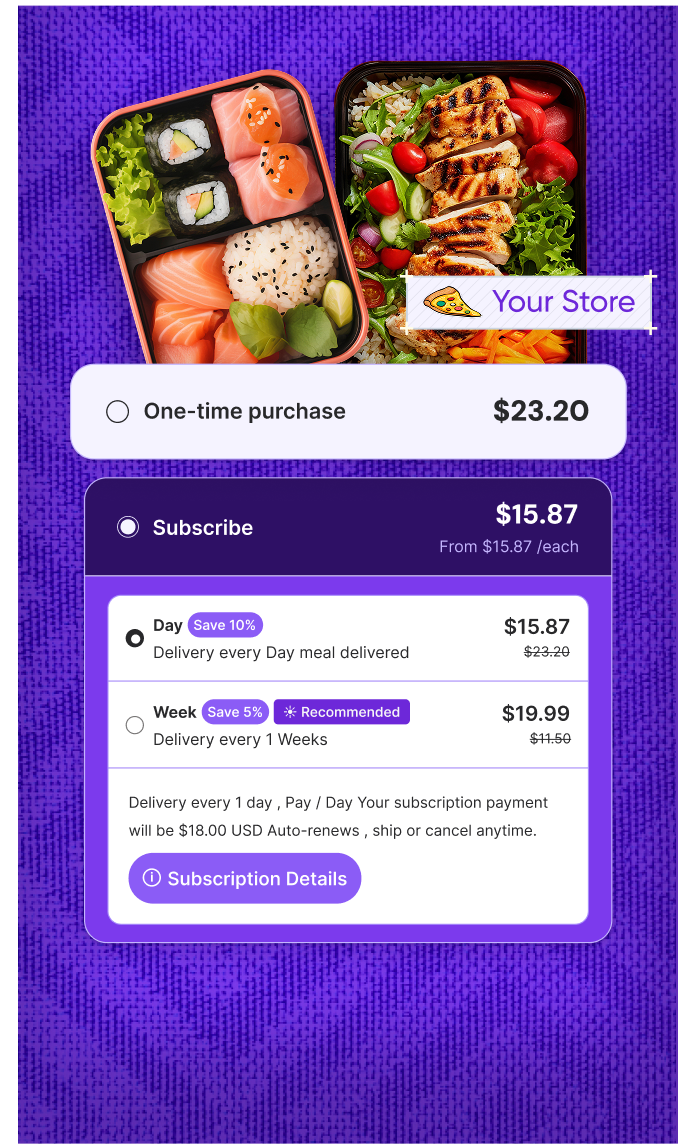
For an ecommerce store, the process may look like this:
- A customer visits the online store.
- They select a product that supports subscriptions.
- They choose a delivery or billing frequency.
- The customer completes the checkout process.
- The subscription renews according to the selected schedule.
- The business processes the recurring order.
- The customer can manage, pause, skip, modify, or cancel the subscription depending on the available options.
This recurring relationship means businesses need to focus on the customer experience beyond the first purchase. Continuous value, convenient management, reliable fulfillment, and transparent pricing all influence whether customers continue their subscriptions.
Shopify supports recurring subscription products through subscription apps and APIs, with options for different billing frequencies and subscription plans.
Types of Subscription Business Models
There isn’t one subscription model that works for every business. The right model depends on what customers need and how the business delivers value.
1. Replenishment Subscription
A replenishment subscription automatically sends customers products they regularly use.
Common examples include:
- Coffee
- Skincare
- Supplements
- Pet food
- Household essentials
- Personal care products
This model focuses on convenience and repeat purchasing. Customers don’t need to remember to reorder products they use frequently.
For Shopify stores, replenishment can be especially useful for consumable products where customers naturally purchase the same item again.
2. Curation Subscription
A curation subscription delivers a selected collection of products on a recurring basis.
Examples include:
- Beauty boxes
- Snack boxes
- Clothing boxes
- Food boxes
- Hobby products
- Lifestyle products
Instead of simply receiving the same product every month, customers receive a curated selection based on their interests.
This model can create excitement and personalization, but businesses need to consistently provide enough value to prevent cancellations.
3. Access or Membership Subscription
An access subscription charges customers for ongoing access to exclusive benefits.
Benefits can include:
- Member-only discounts
- Early access to products
- Exclusive products
- Premium content
- Special events
- Free or discounted shipping
- Community access
Membership subscriptions work particularly well when customers perceive the benefits as valuable enough to justify a recurring payment.
4. Service or Software Subscription
Many digital businesses use subscriptions to provide ongoing access to software or services.
Examples include:
- SaaS platforms
- Design tools
- Marketing software
- Online education
- Streaming services
- Productivity tools
Customers generally pay monthly or annually to continue using the service.
Subscription Business Model Examples
Subscription businesses exist across almost every major industry.
Ecommerce Subscriptions
An online store may offer customers recurring delivery of products such as coffee, vitamins, cosmetics, or pet supplies.
Subscription Boxes
A brand may send customers a curated box of products every month. The value comes from discovery, convenience, and personalization.
SaaS Subscriptions
Software companies commonly charge customers monthly or annually for continued access to their platforms.
Streaming Services
Entertainment platforms use subscriptions to provide ongoing access to movies, television shows, music, or other digital content.
Food and Meal Subscriptions
Businesses can offer recurring meal kits, snacks, beverages, or prepared meals.
Health and Wellness
Gyms, fitness platforms, wellness programs, and other services can use recurring memberships to maintain long-term customer relationships.
The common factor across these examples is that customers receive ongoing value instead of making only one transaction.
Benefits of a Subscription Business Model
A subscription business model can provide advantages for both customers and businesses.
Predictable Recurring Revenue
Recurring subscriptions can make revenue more predictable because businesses can estimate future income based on active subscribers, renewals, and historical data.
This can also help with inventory planning, budgeting, and forecasting.
Higher Customer Retention
A subscription gives businesses more opportunities to maintain relationships with customers instead of relying entirely on new purchases.
However, retention isn’t automatic. Businesses need to continually provide value and make the subscription easy to manage.
Increased Customer Lifetime Value
A customer who purchases repeatedly over several months or years can generate significantly more revenue than a customer who makes only one purchase.
Businesses can use retention strategies, personalized offers, upgrades, and cross-selling to increase customer lifetime value.
More Opportunities for Upselling and Cross-Selling
Once customers are subscribed, businesses can introduce relevant complementary products, higher subscription tiers, or additional services.
For example, a skincare brand could recommend a cleanser to a customer already subscribed to a moisturizer.
Better Demand Forecasting
Subscription data can help businesses understand expected demand and plan inventory more effectively.
This is especially useful for businesses selling products that customers consume regularly.
Greater Convenience for Customers
Customers don’t need to repeatedly remember to place orders for products they use regularly.
A flexible subscription can allow them to select their preferred frequency and manage their subscription according to their needs.
Shopify notes that subscriptions can support predictable revenue, customer loyalty, and opportunities for cross-selling and upselling.
Challenges of a Subscription Business Model
Although subscriptions offer significant opportunities, they also come with challenges.
Customer Churn
Churn occurs when customers cancel their subscriptions.
A high churn rate can quickly reduce recurring revenue, so businesses need to understand why customers leave and identify ways to improve retention.
Subscription Fatigue
Customers may eventually feel overwhelmed by the number of subscriptions they are paying for.
Offering flexibility, clear value, easy cancellation, and useful subscription options can help reduce this problem.
Continuous Value Delivery
The customer needs a reason to remain subscribed.
A discount may attract the first purchase, but long-term retention usually requires consistent product quality, convenience, service, or exclusive value.
Failed Payments
Expired cards, insufficient funds, or payment issues can interrupt recurring orders.
Businesses should have processes in place to recover failed payments and communicate clearly with customers.
Operational Complexity
Physical product subscriptions require businesses to manage inventory, fulfillment, shipping, billing, and customer support on an ongoing basis.
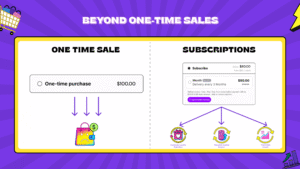
Subscription Model vs. One-Time Purchase
| Factor | Subscription Model | One-Time Purchase |
|---|---|---|
| Payment | Recurring | One-time |
| Revenue | Recurring | Transaction-based |
| Customer relationship | Ongoing | Usually transactional |
| Retention | Very important | Less central |
| Forecasting | More predictable | Can be less predictable |
| Customer lifetime value | Can increase through renewals | Depends on repeat purchases |
| Best suited for | Ongoing needs | One-off purchases |
A subscription model isn’t automatically better than a one-time purchase model. The right approach depends on the product, customer behavior, margins, and value the business can provide repeatedly.
Subscription Pricing Models
Pricing plays an important role in subscription success. Common subscription pricing models include:
Flat-Rate Pricing
Customers pay one fixed price for access to a product or service.
This approach is easy to understand and works well when most customers receive a similar level of value.
Tiered Pricing
Businesses offer multiple plans at different price points.
For example:
- Basic
- Standard
- Premium
Each tier can provide different features, quantities, or benefits.
Per-User Pricing
Customers pay according to the number of users or seats using a product. This is particularly common in software businesses.
Usage-Based Pricing
Customers pay according to how much of a product or service they use.
The best pricing model depends on customer expectations, costs, competitors, product value, and business goals.
How to Start a Subscription Business on Shopify
Shopify merchants can introduce subscriptions when their products or services are suitable for recurring purchases.
1. Choose a Subscription-Friendly Product
Look for products customers naturally purchase repeatedly.
Consumables and frequently used products are often good candidates.
2. Choose Your Subscription Frequency
Offer frequencies that make sense for your customers, such as:
- Weekly
- Every two weeks
- Monthly
- Every two months
- Quarterly
- Annually
Avoid forcing customers into a schedule that doesn’t match their actual usage.
3. Create a Clear Pricing Strategy
Decide whether you want to offer subscription discounts, different subscription tiers, prepaid plans, or other incentives.
The goal should be to create value for the customer without damaging your margins.
4. Make Subscription Management Easy
Customers should be able to manage their subscriptions without unnecessary friction.
Depending on your setup, useful options may include:
- Pause subscription
- Skip an order
- Change frequency
- Change products
- Update payment details
- Cancel subscription
5. Add Subscription Functionality to Your Shopify Store
Shopify merchants can use subscription apps or build a custom subscription solution using Shopify’s subscription APIs.
A Shopify subscription app can help merchants create recurring purchase options without building the entire subscription infrastructure themselves.
How to Reduce Subscription Churn
Reducing churn should be a major priority for subscription businesses.
Here are some practical strategies:
- Offer flexible subscription frequencies.
- Let customers skip an order instead of canceling.
- Allow customers to pause subscriptions.
- Provide relevant subscriber discounts.
- Make cancellation and subscription management simple.
- Send useful renewal notifications.
- Recover failed payments.
- Ask customers why they cancel.
- Improve product quality and fulfillment.
- Provide personalized recommendations.
One important principle is to avoid making cancellation unnecessarily difficult. A flexible customer experience can build more trust than forcing customers to remain subscribed.
Subscription Business Metrics to Track
Subscription businesses should monitor metrics that show both growth and customer health.
Monthly Recurring Revenue (MRR)
Monthly Recurring Revenue represents recurring revenue expected from active monthly subscriptions.
Customer Lifetime Value (CLV)
Customer Lifetime Value estimates the revenue or value a business can generate from a customer over the relationship.
Customer Acquisition Cost (CAC)
CAC measures how much it costs to acquire a new customer.
Churn Rate
Churn measures the percentage of customers who cancel during a specific period.
Retention Rate
Retention measures how many customers continue their subscriptions over time.
Average Revenue Per User (ARPU)
ARPU measures the average revenue generated per customer during a specific period.
Looking at these metrics together gives businesses a better understanding of whether subscription growth is sustainable.
How a Shopify Subscription App Can Help
Managing recurring purchases manually can become difficult as a Shopify store grows.
A subscription solution can help merchants create recurring purchase options, manage subscription plans, and provide customers with more control over their recurring orders.
With Easy Subscription App, Shopify merchants can offer subscription purchasing options while creating a more convenient subscription experience for their customers.
For stores selling consumable, replenishable, or regularly purchased products, adding subscriptions can create another way to encourage repeat purchases and build recurring customer relationships.
Is a Subscription Business Model Right for Your Business?
A subscription model can be a good fit if customers:
- Need your product regularly
- Receive ongoing value from your service
- Benefit from automatic delivery
- Appreciate convenience
- Are willing to pay repeatedly
- Have a reason to remain loyal to your brand
Before launching, consider your product margins, customer demand, fulfillment capabilities, pricing, churn risk, and ability to deliver consistent value.
A successful subscription isn’t simply about charging customers every month. It’s about creating a product or service experience that customers want to continue paying for.
Final Thoughts
The subscription business model has changed the way businesses build relationships with customers. Instead of depending entirely on one-time transactions, businesses can create recurring revenue by delivering ongoing value.
For ecommerce brands, subscriptions can provide convenience to customers while helping merchants improve retention, forecasting, and customer lifetime value.
However, successful subscription businesses need more than recurring billing. They need the right products, pricing, customer experience, flexibility, and retention strategy.
For Shopify merchants, the opportunity is particularly strong when products naturally fit recurring purchasing behavior. By combining a valuable subscription offer with flexible management and a reliable customer experience, merchants can turn repeat purchases into a sustainable recurring revenue channel.