 AI-powered, Human-reviewed.



What Is Dynamic Pricing?
Dynamic pricing is a strategy where prices change based on real-time factors like demand, customer behavior, or market conditions, rather than staying fixed.
In ecommerce, this can mean offering a lower price to first-time subscribers, charging more for premium tiers, or adjusting prices by volume or usage. It’s not about random price swings; it’s about matching price to perceived value at the right moment.
Why Dynamic Pricing Matters for Subscription Businesses
Static pricing leaves money on the table. Some customers are willing to pay more for premium features. Others will only convert at a lower entry price. A one-size-fits-all approach serves neither group well.
For subscription businesses specifically, dynamic pricing helps you:
- Convert price-sensitive customers with lower entry tiers
- Capture more revenue from power users via premium plans
- Reduce churn by offering flexible options instead of cancellations
- Increase Average Order Value (AOV) through upsells and plan upgrades
- Improve Customer Lifetime Value (CLV) by keeping subscribers at the right price point longer
The key is transparency. Customers accept price variation when they understand why it exists.
Real-World Example
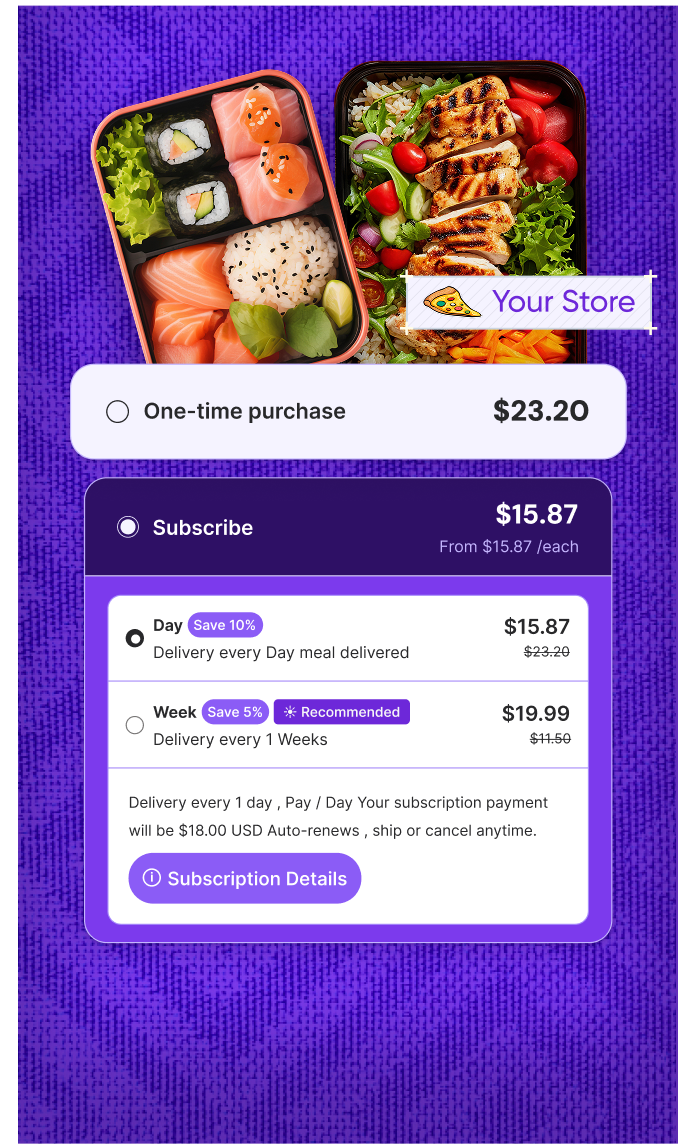
A Shopify skincare brand offers three subscription tiers:
- Basic ($19/mo): 1 product, standard shipping
- Standard ($34/mo): 2 products + free shipping
- Premium ($59/mo): 4 products + early access + free shipping
This is tiered dynamic pricing in action. Each plan targets a different willingness to pay. Subscribers self-select into the tier that fits them, and the brand earns more from those who want more.
A SaaS-style variation: a supplement brand charges based on quantity ordered per month (usage-based pricing). The more boxes per delivery, the lower the per-unit cost, rewarding loyalty while increasing order size.
Formula: Price Elasticity of Demand
Before adjusting prices, it helps to understand how sensitive your customers are to price changes.
Price Elasticity of Demand = (% Change in Quantity Demanded) ÷ (% Change in Price)
- Elasticity > 1: Customers are price-sensitive. Small increases may cause cancellations.
- Elasticity < 1: Customers are less sensitive. You have room to test higher prices.
Use this to guide tier pricing decisions, not just gut feeling.
How to Implement Dynamic Pricing Without Hurting Retention
1. Start with tiered plans, not volatile prices
Tiered subscription plans are the safest form of dynamic pricing for DTC brands. They give customers control and make value differences obvious. Avoid changing prices on existing subscribers without notice.
2. Use usage-based pricing for high-volume customers
If your product is consumable (supplements, pet food, coffee), offer discounts at higher quantities. This rewards loyal buyers and raises AOV naturally.
3. Grandfather existing subscribers
When you raise prices, protect current subscribers for 3-6 months. This signals respect for customer loyalty and dramatically reduces churn spikes.
4. Be transparent about why prices differ
Customers accept price variation when it’s explained. A simple note “pricing reflects your plan features” builds trust. Hidden or unexplained price differences erode it fast.
5. A/B test new pricing on new subscribers only
Never test price changes on your existing base. Run experiments on new sign-ups to validate willingness to pay before rolling out broadly.
6. Set price floors and ceilings
If you use automated pricing tools, always define a minimum and maximum price. This prevents accidental underpricing or overcharging that damages your brand.
Common Mistakes
Changing prices on existing subscribers without warning This is the fastest way to trigger cancellations. Always give advance notice and explain the reason.
Treating all customers the same Not all subscribers have the same needs or budget. Flat pricing ignores this reality and leaves revenue on the table.
Overcomplicating your tier structure Too many plans create decision paralysis. Three tiers (Basic, Standard, Premium) is the sweet spot for most Shopify subscription stores.
Ignoring the impact on churn Aggressive price increases without added value will spike churn. Always pair a price increase with a clear value upgrade.
Confusing dynamic pricing with price discrimination Targeting customers with different prices based on demographics (age, gender, location) can be legally risky and damages trust. Stick to behavior- and value-based differentiation.
Pro Tips
- Offer an annual plan at a discount: this locks in revenue, reduces churn risk, and gives customers a reason to commit. It’s one of the simplest forms of dynamic pricing.
- Use free trials or lower entry tiers to reduce friction: once customers are in, upgrading is far easier than acquiring new ones.
- Monitor expansion revenue: track how many subscribers upgrade over time. This is a direct signal that your tier structure is working.
- Combine dynamic pricing with a strong dunning strategy: recovering failed payments protects the revenue your pricing strategy generates.
- Align pricing tiers with your subscription business model: your pricing structure should reflect the core value you deliver, not just what competitors charge.
A Note on Tools
If you’re running subscriptions on Shopify, Easy Subscriptions lets you set up tiered plans, manage billing cycles, and give subscribers the flexibility to upgrade or downgrade, all without coding. It’s a practical starting point for implementing dynamic pricing in a way that protects retention.
Useful Sources
Mercury: Dynamic Pricing Strategies for Ecommerce
Shopify: What Is Dynamic Pricing?