


What Is a Trial Subscription?
A trial subscription is a short-term, introductory offer that gives new customers access to a recurring product or service at a reduced price (or for free) before the regular billing cycle kicks in.
On Shopify, this usually takes one of two forms: a free trial period (no charge for X days, then full price) or a discounted first order (e.g. first box for $1, then regular price from month 2). Both are designed to lower the barrier to entry and get customers into your subscription funnel.
Why It Matters for Shopify Subscription Stores
Trial subscriptions are one of the most effective acquisition tools for subscription-based Shopify stores.
They reduce purchase hesitation. A customer who is unsure about committing to a $40/month coffee subscription is much more likely to try it for $5. Once they love the product, cancelling feels harder than staying.
They accelerate subscriber growth. A well-promoted trial offer can significantly increase sign-up rates compared to asking for full price upfront.
They set the foundation for long-term retention. Subscribers who convert from a trial tend to have stronger product attachment. That translates directly into better customer retention and higher Customer Lifetime Value (CLV).
The risk? If your trial does not deliver clear value quickly, you will see high early churn right after the trial ends.
Free Trial vs. Discounted First Order: What Is the Difference?
These two approaches are often confused. Here is how they actually differ:
Free Trial
- Customer pays nothing for a set period (e.g. 7 or 14 days)
- Most common for digital products, SaaS, or content subscriptions
- Requires a payment method upfront (opt-out) or not (opt-in)
- Billing starts automatically when the trial ends
Discounted First Order
- Customer pays a reduced price for the first shipment (e.g. first box for $1 or 50% off)
- Most common for physical product subscriptions (food, beauty, supplements)
- No “free” period – the customer is already a paying subscriber from day one
- Full price kicks in from the second order onward
Which one should you use?
For physical goods, a discounted first order usually works better. It confirms purchase intent and covers at least part of your fulfillment cost. For digital or software products, a free trial window makes more sense since there is no cost-per-unit to worry about.
Real-World Example
A Shopify skincare brand offers a “starter kit” subscription: first box for $5 (normally $45), then $45/month from month 2. Customers enter their card at checkout, receive the box, and are automatically billed the following month unless they cancel.
The brand sends a 3-part email sequence during the trial window: a welcome email on day 1, a “how to get the most out of your kit” email on day 5, and a “your next box ships in 3 days” reminder before the second charge. This sequence alone significantly reduces early cancellations.
How to Set Up a Trial Subscription on Shopify
Shopify does not natively support free trial periods for product subscriptions. You need a subscription app to handle this. Here is the general setup process:
Step 1: Choose a subscription app
Install a Shopify subscription app that supports trial periods and discounted first orders. Look for one that lets you configure trial length, billing transitions, and automated customer communications.
Step 2: Create your subscription plan
Set up your recurring product with a trial option. Define:
- Trial length (in days) or first-order discount
- What happens when the trial ends (auto-charge at full price)
- Cancellation policy
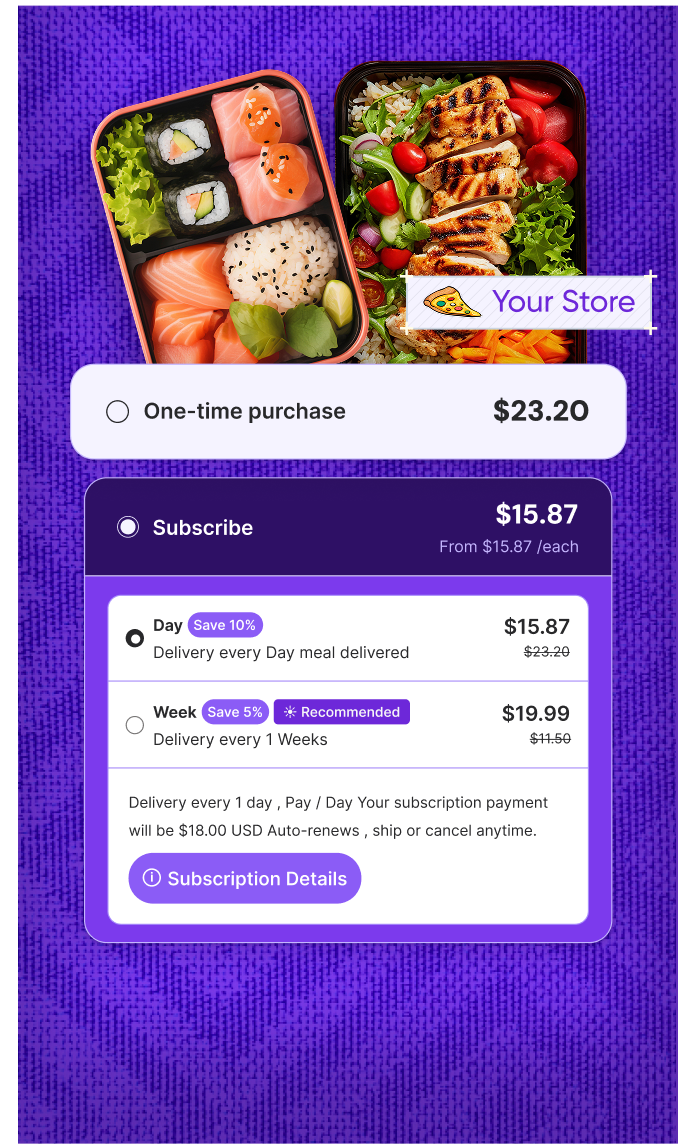
Step 3: Configure your checkout
Make sure the trial terms are clearly visible at checkout. Customers should know exactly when they will be charged and how much. Transparency here reduces disputes and dunning issues later.
Step 4: Set up your onboarding emails
Do not rely on a single confirmation email. Build a short sequence (3-5 emails) that guides trial users toward their first positive experience with your product.
Step 5: Monitor and optimize
Track your trial-to-paid conversion rate weekly. If it drops below your benchmark, look at your onboarding sequence, your product experience, and your pricing transition.
Trial Conversion Rate Formula
Trial Conversion Rate = (Trial users who converted to paid ÷ Total trial users) × 100
Example: 300 trial subscribers, 72 convert to full-price plan = 24% trial conversion rate
This is the single most important metric for your trial subscription program. Track it by cohort (sign-up week) for the most accurate picture.
How to Convert More Trial Users to Paid Subscribers
1. Show value before the trial ends
Do not wait for the billing date to remind customers why they signed up. Send a “look what you have already experienced” email mid-trial. Highlight the specific benefit they received.
2. Make the transition frictionless
The move from trial to paid should be invisible. No extra steps, no new forms, no re-entering card details. The smoother the transition, the less time customers have to second-guess.
3. Use a pre-billing reminder
Send a clear email 2-3 days before the first full charge. Include the amount, the date, and an easy way to manage or cancel the subscription. This builds trust and reduces chargebacks.
4. Offer a loyalty incentive at conversion
Give trial users a reason to stay beyond the trial. A small perk for continuing (e.g. free shipping on the next 3 orders, a bonus product) can tip undecided customers toward staying. This also supports long-term customer loyalty.
5. Segment by engagement
Not all trial users are equal. Identify who opened your emails, who used the product, and who went silent. Send a targeted “last chance” message to engaged users who have not converted. Do not waste effort on users who never engaged.
6. Make cancellation easy but add a save flow
Counterintuitively, making cancellation easy increases trust and sign-ups. But add a save flow: when someone tries to cancel, offer a pause option, a discount, or a swap to a different product before they leave. This is a key part of customer retention strategy.
Common Mistakes to Avoid
- Not being transparent about billing. If customers feel surprised by the first charge, they will dispute it and cancel. Always show the trial end date and billing amount clearly at checkout and in your confirmation email.
- Sending only one email during the trial. One welcome email is not enough. Most conversions happen because of consistent, value-driven follow-up during the trial window.
- Offering a trial that is too long. For physical subscriptions, a trial longer than 30 days creates cash flow problems and increases the chance customers forget they signed up. Keep it tight.
- Ignoring failed payments after conversion. When a trial converts to paid, the first real charge is where payment failures spike. Have a dunning sequence ready to recover failed payments automatically.
- No clear value proposition at checkout. If a customer cannot immediately understand why they should try your subscription, they will not. Your trial offer needs a clear, benefit-focused headline. See our guide on value proposition for help here.
Pro Tips
- Test your trial price point. $1 vs. free vs. 50% off can produce very different conversion rates and subscriber quality. Run a simple A/B test before committing to one model.
- Track trial-to-paid retention separately. Subscribers who came through a trial often churn faster in months 2-3. Monitor this cohort separately and adjust your post-trial onboarding accordingly.
- Use the customer portal to build trust. Give trial users access to a self-service customer portal from day one. Seeing that they can pause or cancel easily makes them more comfortable converting to paid.
- Align your trial with your subscription model. A replenishment subscription (e.g. monthly coffee) suits a discounted first order. A curated box subscription suits a longer free trial window. Match the format to the product.
- Collect feedback from trial users who did not convert. A simple one-question exit survey (“Why did you decide not to continue?”) gives you more actionable data than any analytics dashboard.
A Note on Tools
Easy Subscriptions is a Shopify app built for subscription businesses that want flexible trial setups. You can configure free trial periods, discounted first orders, and automated billing transitions directly from the app, without touching any code. If you are setting up trial subscriptions on Shopify, it is worth a look.









 Subscription Audit