

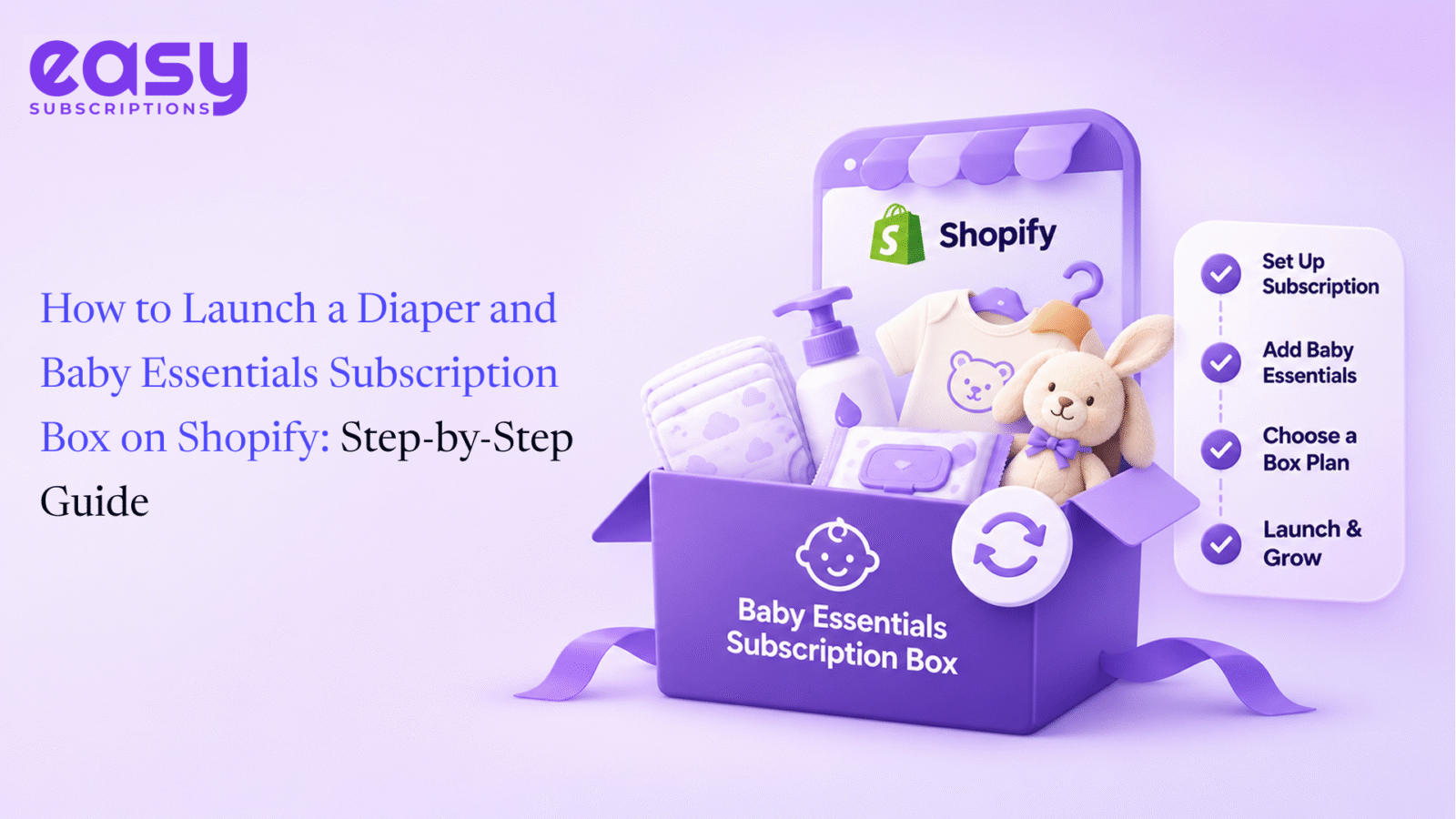


A diaper and baby essentials subscription box delivers products such as diapers, wipes and skincare to parents on a recurring schedule, so they never run short of the basics. For parents of infants, convenience matters enormously, and a subscription takes one more errand off a very long list. For merchants, it creates repeat revenue from a product customers need again and again.
The wider market is growing. It is projected that by 2033, the worldwide subscription box market will grow from USD 38.9 billion in 2023 to USD 139.2 billion. Shopify is well suited to this kind of business, with strong inventory and order management that integrates easily with other systems, plus apps for subscriptions, payments and customer support.
This guide walks you through seven steps to launch, plus the safety, sizing and pricing issues that are specific to baby products.
Quick Answer: To launch a diaper and baby essentials subscription box on Shopify, research your niche, choose safe, in-demand products and reliable suppliers, build a mobile-friendly store, install a subscription app for recurring billing, price for profit, market to new parents, and track churn, CAC and lifetime value. Offer size swaps and skip or pause options, because babies grow quickly.
Key takeaways
- Baby essentials are consumables parents reorder, which makes them a strong fit for subscriptions.
- Safety and compliance matter more here than in most categories.
- Babies outgrow sizes, so size swaps, skip and pause options are essential.
- Shipping bulky products affects margins, so model your unit economics first.
- Track churn, CAC and LTV, ideally by the baby’s age group.
Which Type of Baby Subscription Box Should You Launch?
Before you start, choose a model. You can combine them.
| Box model | What parents receive | Best for |
| Replenishment | Diapers and wipes in the right size, on a set schedule | Parents who want reliable essentials |
| Curated baby box | A hand-picked mix of skincare, accessories and extras | Brands built on discovery and gifting |
| Stage-based box | Products matched to the baby’s age or milestone | Brands that guide parents through each stage |
| Build-your-own box | Parents choose their own items through a bundle builder | Stores with a wide range |
Stage-based boxes can use series subscriptions, where each shipment follows a planned sequence.
Step 1: Research and Planning
The growing subscription market offers a good opportunity for diaper and baby essentials boxes, particularly among first-time parents looking for convenience. To differentiate, study competitors: compare their products, prices and reviews to identify gaps in the market.
Establish a distinct value proposition, such as eco-friendly products, an international brand selection or customised choices. Focus on customer needs and offer useful, desirable solutions. For a general overview of the model, see our guide to starting a subscription box business.
Questions to answer before you build:
- Who is your customer: first-time parents, parents of newborns or parents of toddlers?
- Will you focus on diapers and wipes, or a broader box?
- What will make you different: eco-friendly materials, fragrance-free options, premium brands or lower prices?
Step 2: Product Selection and Sourcing
Selecting the right items is crucial. Start with in-demand products, and consider eco-friendly options for customers who are becoming more environmentally conscious.
| Product | Why parents buy it | What to watch |
| Diapers | Needed every day, in the right size | Multiple sizes, fit and leak performance |
| Wipes | Used constantly | Fragrance-free and sensitive-skin options |
| Diaper cream and skincare | Protects delicate skin | Ingredient labels and regulatory rules |
| Changing essentials | Pads, disposal bags, covers | Material safety |
| Bath and body care | Regular repeat use | Gentle ingredients and allergens |
| Feeding basics | Bibs, burp cloths | Material and size safety |
Source Carefully and Stay Compliant
Use trade shows, established wholesalers and direct brand partnerships to find trustworthy suppliers, and negotiate competitive prices to protect your margin. Parents place a very high priority on product safety, so vet every supplier before you sell their products.
- Ask for safety certifications, ingredient lists and testing documentation.
- Order samples and test them yourself.
- Check storage and expiry details for wipes, creams and similar items.
Rules for baby products vary by country and by product type, and categories such as skincare, wipes and feeding items can have specific requirements. Confirm what applies in each market you sell to with the relevant authority or a compliance adviser before you launch. This is general guidance, not legal advice. Building a reputation for quality and reliability fosters loyalty and trust.
Step 3: Building Your Shopify Store
A well-designed Shopify store is the first step in starting a profitable subscription box. Here is how to set it up:
- Set up a Shopify account. Create an account and select a plan based on the size of your business. Use any free trial to get a feel for the platform.
- Design a user-friendly store. Choose a responsive, streamlined theme that captures your brand’s identity. Many parents browse and shop on their phones, often at night, so make sure the site works well on mobile.
- Add products and subscription options. List what is in your box with detailed descriptions and high-quality photos. Offer a range of options, such as monthly, quarterly or customised plans, and let parents pick the diaper size at sign-up. Keep checkout efficient to reduce cart abandonment.
Step 4: Subscription Management
Managing your subscription service well keeps operations smooth and customers happy.
- Use Shopify apps for subscriptions. Leverage Shopify apps like Easy Subscriptions to manage subscriptions, automated renewals and recurring billing with ease. Features such as subscription management and a customer portal let parents change details themselves.
- Choose the right pricing strategy. Review your costs and set a price that is profitable for you and attractive to customers. Use tiered pricing or reward longer commitments to build loyalty.
- Manage shipping and inventory efficiently. Work with reliable shipping partners and suppliers to guarantee on-time delivery, and keep inventory at a level that meets demand without overstocking.
Handle the Things That Make Baby Boxes Different
| Situation | What to offer |
| Baby outgrows a diaper size | Easy size swaps in the customer portal |
| Parents have enough stock for now | Skip or pause options through retention management |
| Needs change over time | Flexible frequency and product swaps |
| Baby shower or new-parent gifts | A gift option, see our guide to subscription gifting |
| Payment fails | Automated dunning management to recover the order |
A Simple Unit Economics Example (Illustrative)
Diapers are bulky, so shipping can take a large share of the price. Here is a made-up example for a monthly box:
| Line item | Amount |
| Subscription price | $50 |
| Product cost | −$28 |
| Shipping and packing | −$8 |
| Payment fees and support (assumed) | −$3 |
| Contribution per box | $11 (22%) |
If it costs $30 to acquire a subscriber, you recover that cost after roughly three boxes ($30 ÷ $11). Run your own numbers before you set prices or discounts.
Step 5: Marketing and Promotion
Gaining subscribers requires building awareness. Use social media platforms like Facebook, Instagram and Pinterest to post engaging content, such as parenting advice, product highlights and customer reviews, to build visibility and trust.
Work with parenting bloggers and influencers through sponsored posts or guest features to reach existing audiences. Use limited-time discounts, exclusive promotions or incentives such as a freebie or introductory price to attract new members.
Other ideas that suit this audience:
- Target expecting parents with a starter box.
- Offer a baby shower gift option.
- Partner with parenting communities and local groups.
For seasonal campaigns, see our BFCM playbook for Shopify subscription stores.
Step 6: Providing Stellar Customer Service
Excellent customer service builds loyalty and differentiates you from competitors.
- Build a support system. Respond to questions and problems quickly via chat, email or phone. Parents of young babies value fast, empathetic answers.
- Collect feedback and act on it. Email subscribers for feedback on your service and products, and make changes based on what you learn.
- Build a community. Engage customers through an online group or forum and a regular newsletter.
Step 7: Analyzing and Growing Your Business
Regular assessment is critical to growth and sustainability.
| Metric | What it tells you | Simple formula |
| Customer acquisition cost (CAC) | Cost to win one subscriber | Sales and marketing spend ÷ new subscribers |
| Churn rate | Share of subscribers lost in a period | Subscribers lost ÷ subscribers at start × 100 |
| Customer lifetime value (LTV) | Total value of a subscriber | Average revenue per subscriber × gross margin ÷ churn rate |
| Retention by baby age | Whether parents stay as the baby grows | Subscribers still active ÷ starting subscribers, grouped by baby’s age at sign-up |
Track these in a subscription analytics dashboard. Retention by baby age is especially useful, because many parents stop buying diapers as their child grows, so understanding where churn happens helps you plan.
Once your subscriber base is stable, think about scaling by adding new products or entering new markets, such as toddler essentials, to keep customers longer. Stay alert to industry trends and customer feedback, and adjust your products and promotion as market needs shift. Our guide to scaling a subscription business has more ideas.
Common Challenges and How to Overcome Them
| Challenge | Why it happens | How to overcome it |
| High shipping costs | Diapers are bulky and light | Model shipping in your price, set order minimums or use larger multi-month packs |
| Babies outgrow sizes | Rapid growth | Offer size swaps and reminders before the next shipment |
| Natural churn | Children eventually stop needing diapers | Expand into toddler products and reward loyalty |
| Sensitive skin and allergies | Babies react to some ingredients | Offer fragrance-free options and clear ingredient lists |
| Safety and compliance | Strict expectations for baby products | Vet suppliers, keep documentation and check local rules |
| Failed payments | Expired or declined cards | Use automated payment recovery |
Conclusion
Launching a diaper and baby essentials subscription box on Shopify is a practical way to build recurring revenue in a category where parents value reliability and convenience. If you choose your product mix carefully, put safety first, design an easy-to-use Shopify store, manage subscriptions well and follow a clear marketing plan, you set yourself up for long-term growth.
To simplify the work and manage subscriptions without the stress, try Easy Subscriptions. This Shopify app automates payments and customer plan management so you can scale your subscription service and focus on delighting parents.