 AI-powered, Human-reviewed.



What Is a Prepaid Order?
Prepaid order meaning: a transaction where payment is collected before the goods are shipped or the service is delivered.
In standard ecommerce, that’s straightforward, the customer pays at checkout, the order ships later. But in a subscription context, prepaid orders take on a more specific meaning: the customer pays for several future deliveries upfront, in a single charge.
Example: A customer subscribes to a coffee brand and pays $90 upfront for 3 months of deliveries, instead of being billed $30 each month.
That’s what prepaid order means in practice, commitment and payment now, fulfillment spread over time.
A prepaid subscription is a subscription model where the billing cycle is paid in advance for a defined period (3 months, 6 months, 1 year), rather than charged on each delivery date.
Prepaid Orders vs Pay-Per-Delivery Subscriptions
This is the core distinction most merchants need to understand.
| Prepaid Orders | Pay-Per-Delivery | |
| When payment is collected | Upfront, in one charge | At each delivery cycle |
| Cash flow impact | Immediate revenue | Spread over time |
| Churn risk | Lower during the prepaid term | Higher – customer can cancel before next charge |
| Customer commitment | High | Low to medium |
| Typical discount offered | Yes (incentive to prepay) | Less common |
Pay per delivery vs prepaid subscription orders comes down to risk and commitment. Pay-per-delivery is more flexible for the customer. Prepaid locks in revenue for the merchant – and loyalty for both sides.
Why Prepaid Orders Matter for Shopify Merchants
1. Immediate Cash Flow
You collect the full subscription value upfront. That cash is available now for inventory, marketing, or operations, instead of trickling in month by month.
2. Lower Churn During the Term
A customer who’s already paid for 6 months isn’t going to cancel before month 3. Prepaid plans effectively pause the churn clock for the duration of the term. This gives you time to build genuine loyalty before renewal comes up.
3. Higher Customer Lifetime Value
Ordergroove reported that a 3-month prepaid plan increased LTV by 30%, and a 6-month plan doubled it. Customers who commit longer tend to spend more overall and the upfront payment itself represents a larger revenue event per customer.
4. Better Inventory Planning
Knowing exactly how many deliveries are scheduled over the next 3–6 months makes procurement and fulfillment far more predictable. Less guesswork, less waste.
5. Reduced Payment Failures
With pay-per-delivery, every billing cycle is a new opportunity for a card to decline. Prepaid orders eliminate that risk for the entire term – one successful charge covers multiple deliveries.
How Prepaid Orders Work on Shopify
Shopify’s native subscription infrastructure supports prepaid plans through the Subscription API. In practice, most merchants use a subscription app to configure and manage them.
Here’s how the flow works:
- Customer selects a prepaid plan at checkout (e.g., “Pay for 3 months, save 10%”)
- A single charge is processed for the full prepaid amount
- Fulfillment orders are produced and scheduled for each delivery date
- The merchant ships on the agreed schedule without triggering new payments
- At renewal, the customer is notified and billed again for the next prepaid term
The recurring billing logic is handled by the subscription app, not Shopify’s core checkout, which is why choosing the right app matters.
Easy Subscriptions supports prepaid subscription plans natively, letting you configure the number of deliveries, the prepaid discount, and the renewal behavior directly from your Shopify admin.
Benefits for Customers
Prepaid orders aren’t just merchant-friendly – customers get real value too:
- Lower price per delivery (the discount incentive)
- No monthly billing anxiety – one charge, done
- Guaranteed supply for the prepaid period
- Simpler experience – no recurring card charges to track
The key is making the value proposition clear at the point of subscription. If customers don’t understand what “prepaid” means, they won’t choose it.
How to Set Up Prepaid Orders on Shopify
Step 1: Choose a subscription app that supports prepaid plans
Not all Shopify subscription apps offer prepaid options. Confirm the feature before committing.
Step 2: Define your prepaid tiers
Common options: 3-month, 6-month, 12-month. The longer the term, the larger the discount you can offer while still improving unit economics.
Step 3: Set the discount
A 10–15% discount for a 3-month prepaid plan is a common starting point. Run the numbers against your margins before going live.
Step 4: Configure fulfillment scheduling
Make sure your fulfillment workflow can handle scheduled deliveries tied to a single prepaid order – not triggered by new payments.
Step 5: Set up renewal notifications
Customers should receive a reminder 7–14 days before their prepaid term ends. This is your time to re-sell the value of renewing.
Conversion Tips: Getting Customers to Choose Prepaid
- Lead with the savings: “Save 15% – pay for 6 months upfront” is more attractive than “prepaid plan available”
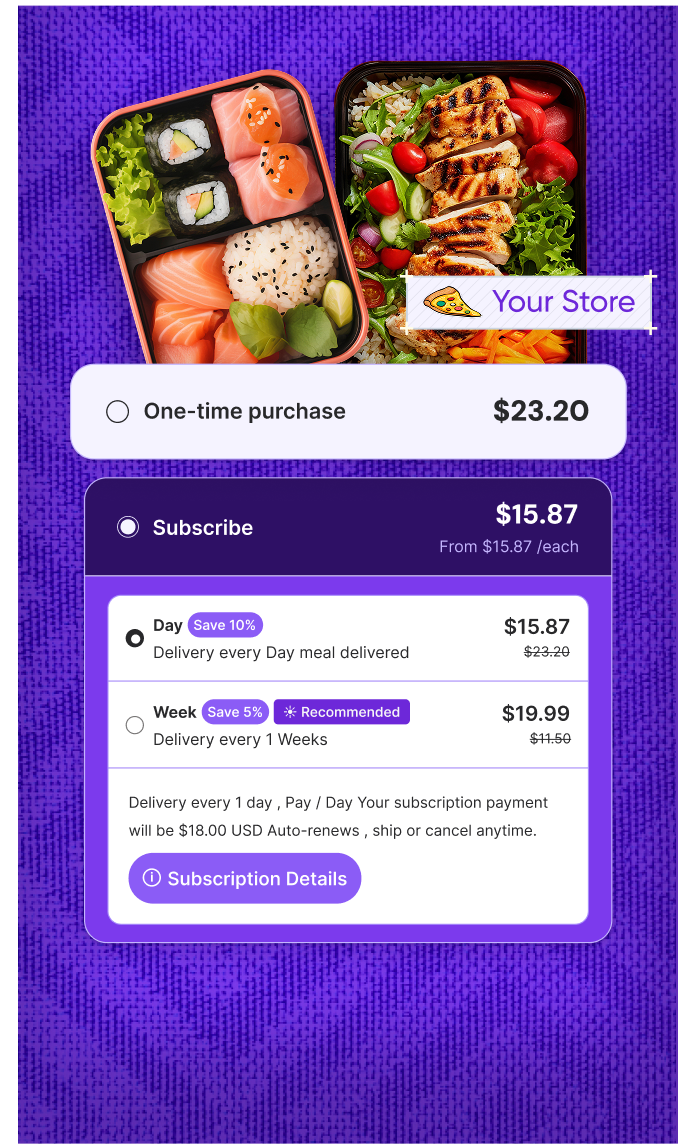
- Show the math: Display the per-delivery price for both options side by side
- Add social proof: “X customers chose this plan” or a short testimonial
- Use urgency sparingly: “Limited prepaid spots” works for some categories (specialty food, limited-edition boxes)
- Offer a hybrid: Let customers try pay-per-delivery for one cycle, then offer an upgrade to prepaid with a discount
Common Mistakes with Prepaid Orders
1. Offering too steep a discount A 30% prepaid discount might win the conversion but destroy your margin. Model the break-even point before setting rates.
2. No renewal communication Letting a prepaid term expire silently is a churn event waiting to happen. Automate renewal reminders.
3. Poor fulfillment tracking If your team doesn’t know which orders are tied to prepaid subscriptions, deliveries get missed. Tag prepaid orders clearly in your system.
4. Ignoring the cancellation policy What happens if a prepaid customer wants to cancel mid-term? Define the policy upfront: partial refunds, store credit, or no refunds. Ambiguity creates disputes.
5. Only offering one prepaid option gives customers a choice. A 3-month and a 6-month plan let different customer segments self-select based on their commitment level.
Pro Tips
Consider gifting. Prepaid subscriptions are natural gift products. A 3-month prepaid coffee subscription is a much easier gift purchase than a recurring monthly plan.
Test prepaid as an upsell, not the default. Show the pay-per-delivery option first, then offer prepaid as an upgrade. This works better than leading with prepaid for cold traffic.
Prepaid plans pair well with a strong onboarding flow. If customers get a great first delivery experience, they’re far more likely to renew the prepaid term.
Use prepaid to smooth seasonal revenue. If your product has seasonal demand, a prepaid subscription model can spread that revenue more evenly across the year.
Track prepaid renewal rate separately from overall churn. It’s a distinct metric, and a leading indicator of long-term customer lifetime value.