 AI-powered, Human-reviewed.



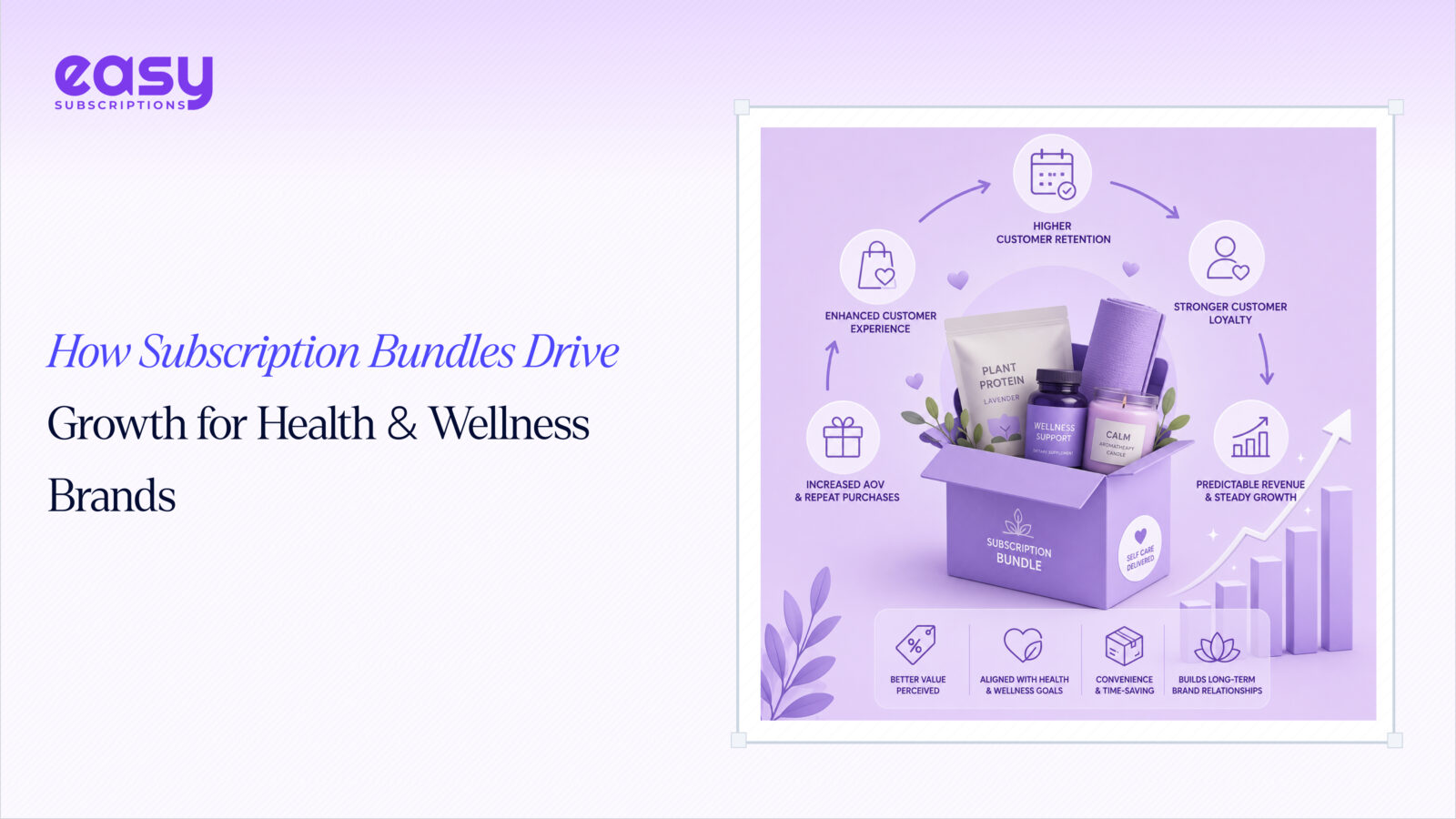


Subscription bundles ecommerce strategies lift AOV by 20–30% without increasing acquisition costs.
Health and wellness is one of the best-fit categories for subscriptions; products are consumable, habitual, and replenishment-driven.
The right bundle type (fixed, build-a-box, replenishment, or tiered) depends on your product mix and customer behavior.
What Is a Subscription Bundle?
A subscription bundle is a group of products sold together on a recurring billing cycle. Instead of buying one item once, the customer subscribes to a curated or self-selected set of products – and gets charged automatically on a schedule they choose.
This is different from a one-time bundle offer. The recurring element is what makes it powerful: it locks in revenue, builds habit, and gives you predictable cash flow.
Common formats include:
A fixed box of curated products shipped monthly
A build-your-own box that lets customers select their preferred items
An auto-refill bundle for consumables (protein powder + collagen, for example)
A tiered plan (Starter / Pro / Premium) with escalating product counts or frequencies
Why Subscription Bundles Work Especially Well in Health & Wellness
Health and wellness isn’t just a good category for subscriptions, it’s arguably the best category. Here’s why.
Predictable Replenishment = Natural Subscription Fit
Supplements run out. Skincare products get used up. Protein powder disappears fast. These aren’t one-and-done purchases; they’re part of a daily routine.
That replenishment cycle maps perfectly onto subscription billing. The customer doesn’t have to remember to reorder, and you don’t have to win them back every month. According to Recharge’s 2024 data, health and wellness subscribers placed 21% more orders year over year, confirming that this audience is already in a repeat-purchase mindset.
The bundle layer adds another dimension: instead of subscribing to one product, the customer subscribes to a routine, which is far stickier.
Higher AOV Without Higher Acquisition Cost
Acquiring a new customer costs the same whether they buy one item or five. Bundles let you monetize that acquisition more efficiently.
Industry data consistently shows that product bundling lifts AOV by 20–30% on average. For health and wellness brands, where the average subscriber AOV sits around $63 (SUBTA 2024 Annual Report), even a 20% lift brings that to ~$76 per order – with zero extra ad spend.
Pair that with a subscription cadence and the compounding effect on lifetime value becomes significant. Customers who purchase bundles can generate up to 2.7x higher lifetime value than single-product buyers, according to ecommerce benchmarks.
Reduced Churn Through Perceived Value
McKinsey’s subscription ecommerce research identifies lack of perceived value as the #1 cancellation driver. Bundles directly counter that: when a subscriber gets four or five products they use every day, canceling feels like a bigger loss than canceling a single-item plan.
The math is visible to the customer too. If the bundle saves them $15 versus buying each item separately, they see that saving every billing cycle. That’s a recurring reason to stay.
Flexibility amplifies this further. Letting subscribers swap products, pause, or adjust frequency – instead of facing a binary “keep or cancel” – dramatically reduces involuntary churn. Brands using Easy Subscriptions can configure these options natively, without workarounds.
4 Types of Subscription Bundles for Wellness Brands
Not every bundle strategy fits every brand. Here’s a breakdown of the four main formats and when each one makes sense.
Fixed Bundles (Curated Boxes)
What it is: You decide the contents. The customer subscribes to receive the same (or seasonally rotated) box each cycle.
Best for: Discovery-driven brands, supplement stacks, skincare routines.
Example: A “Morning Wellness Box” with a greens powder, collagen, and a sleep supplement – pre-selected, branded, and shipped monthly.
Pros: Streamlined scaling, enhanced brand storytelling, and reliable inventory management.
Cons: Less personalization. Customers who don’t love every item may churn faster.
Build-a-Box (Customer-Curated)
What it is: The customer picks which products go into their bundle, then subscribes to receive that custom selection on a recurring basis.
Best for: Brands with a wide SKU range – vitamins, supplements, skincare lines.
Example: A customer selects their own combination of 4 supplements from a catalog of 20, then subscribes monthly.
Pros: High personalization = higher satisfaction = lower churn. Customers feel ownership over their routine.
Cons: More complex to set up. Requires a bundle builder tool – Easy Subscriptions includes a native build-a-box feature that handles this without custom development.
Replenishment Bundles (Auto-Refill)
What it is: A subscription bundle built around consumable products that run out at a predictable rate.
Best for: Protein powder, collagen, vitamins, skincare essentials – anything with a clear usage cycle.
Example: A 30-day supply of whey protein + creatine, auto-shipped every 4 weeks.
Pros: Extremely low friction. The customer sets it and forgets it. High retention because the need is real and recurring.
Cons: Customers may pause if they over-accumulate product. Frequency flexibility is essential.
Tiered Bundles (Starter / Pro / Premium)
What it is: Multiple bundle tiers at different price points, each offering more products or higher quantities.
Best for: Brands that want to upsell subscribers over time or serve different budget segments.
Example:
Starter ($39/mo): 2 core supplements
Pro ($69/mo): 4 supplements + a shaker bottle
Premium ($99/mo): The entire collection, fast-track shipping, and early access to new products.
Pros: Natural upgrade path. Higher-tier subscribers have significantly higher LTV. Works well for skincare brands offering basic vs. full regimen plans.
Cons: Requires clear differentiation between tiers, if the value gap isn’t obvious, customers default to the cheapest option.
How to Set Up Subscription Bundles on Shopify (Step-by-Step)
Setting up flexible subscription bundles on Shopify is straightforward with the right app. Here’s the process:
- Define your bundle strategy
Decide which bundle type fits your catalog. Start with one format, replenishment bundles are usually the easiest entry point for wellness brands.
- Map your products to bundle slots
Identify which SKUs belong together. Group by routine (morning / evening), by goal (energy / recovery / sleep), or by usage rate (30-day / 60-day supply).
- Set pricing and discount rules
A practical starting point: 10–15% off the sum of individual item prices for mid-margin wellness products. Show the savings explicitly at checkout – “Save $14 vs. buying separately” converts better than a percentage alone.
- Configure subscription frequency options
Give subscribers at least two frequency choices (e.g., every 30 days and every 60 days). This reduces over-accumulation complaints and pause requests.
- Install a subscription app with bundle support
Easy Subscriptions lets merchants offer fixed bundles, build-your-own-box subscriptions, and tiered plans in Shopify without any custom development. You can set up bundle rules, manage subscriber portals, and configure pause/swap options from one dashboard.
- Set up the subscriber portal
Subscribers need to be able to manage their bundle themselves: swap products, skip a cycle, change frequency, or upgrade their tier. A self-serve portal reduces support tickets and churn.
- Test before launch
Run a test subscription through the full cycle – signup, billing, fulfillment, and cancellation flow. Check that bundle discounts apply correctly and that the subscriber portal reflects the right products.
Real Metrics: What Subscription Bundles Do for AOV and LTV
Here’s what the data actually shows when brands add subscription bundles to their ecommerce strategy.
Metric | Benchmark (no bundles) | With subscription bundles |
Average Order Value | $63 (H&W avg, 2024) | +20–30% lift typical |
Customer LTV | Baseline | Up to 2.7x higher |
Churn rate | ~6–8%/month (typical DTC) | Lower with high perceived value |
Orders per subscriber/year | Baseline | +21% YoY (H&W category) |
A few things worth noting:
AOV lift depends heavily on bundle composition. Bundles that combine a hero product with logical add-ons convert better than random groupings.
LTV gains compound over time. A subscriber who stays 3 months longer because they’re on a bundle plan is worth significantly more than the AOV difference alone.
The wellness subscription box market was valued at $780 million globally in 2025 and is projected to reach $1.43 billion by 2034 – brands that build bundle infrastructure now are positioning ahead of that growth curve.
Common Mistakes to Avoid
- Bundling products that don’t belong together
Customers can tell when a bundle is assembled for your convenience, not theirs. Stick to products that form a logical routine or solve a related problem.
- Pricing the bundle too aggressively
Deep discounts hurt margins and attract deal-seekers who churn fast. A 10–15% saving is enough to feel meaningful without eroding profitability.
- No flexibility in the subscriber experience
A rigid bundle with no swap, pause, or frequency options will drive cancellations. The #1 reason subscribers cancel is feeling trapped – give them control.
- Ignoring inventory implications
Subscription bundles create predictable demand – use that data to plan inventory. Stockouts on a bundle item break the subscriber experience and spike churn.
- Launching too many bundle types at once
Start with one format, measure retention and AOV, then expand. Brands that launch four bundle types simultaneously often end up with a confusing product page and diluted conversion.
- Skipping the post-purchase experience
The first 30 days after a subscriber joins are the highest-churn window. Send a welcome sequence, explain how to use the products in the bundle, and check in before the second billing cycle.