 AI-powered, Human-reviewed.



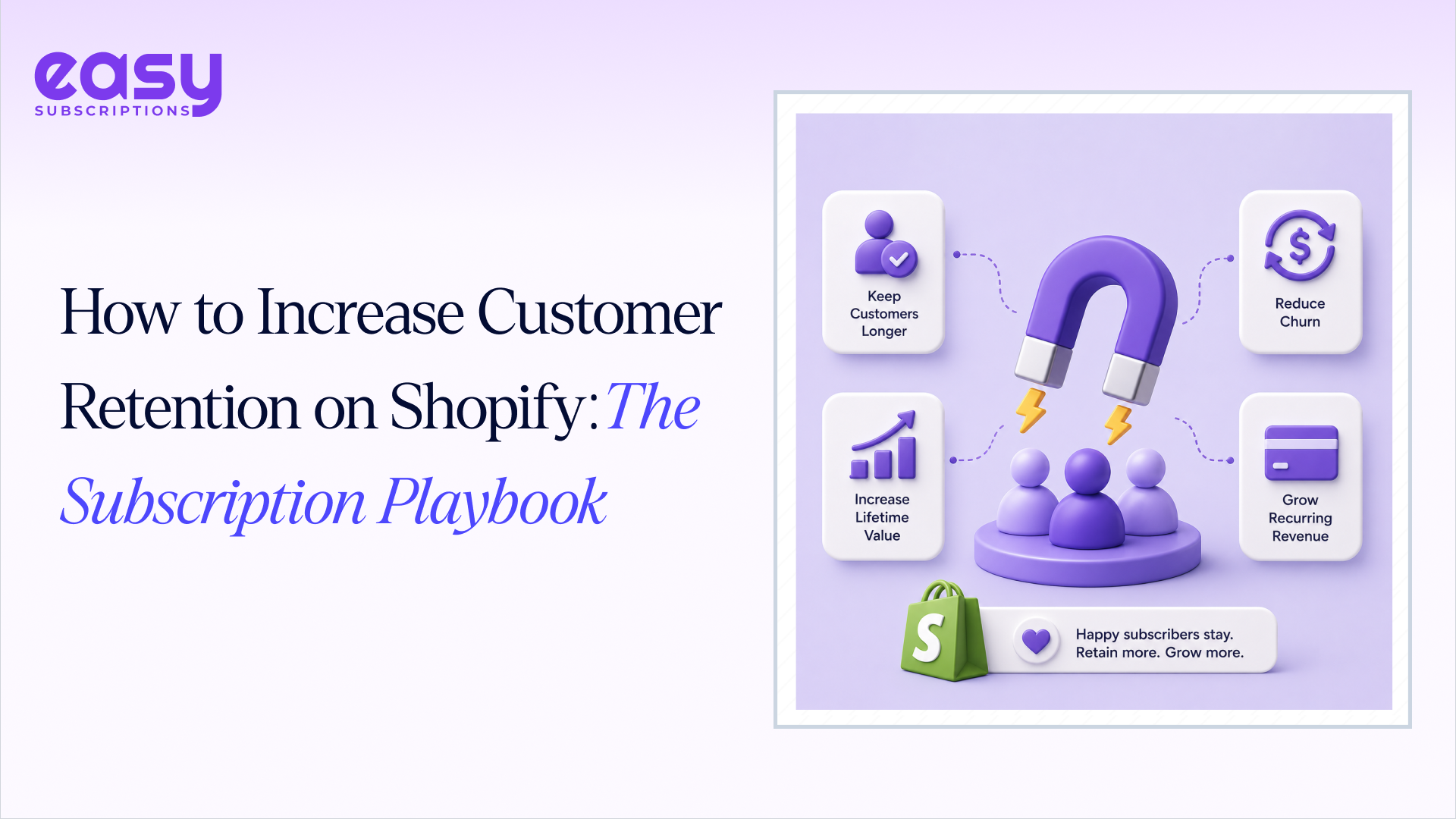


Why customer retention is the highest-ROI lever for Shopify stores
Most Shopify store owners spend the bulk of their budget on paid ads, influencer deals, and SEO to bring in new customers. That’s not wrong, but it’s expensive.
Acquiring new customers can cost between 5 and 25 times more than retaining existing ones. Research from Bain & Company also shows that increasing customer retention by just 5% can boost profits by 25% to 95%.
The math gets even clearer when you look at spending behavior. Repeat customers spend 67% more than first-time buyers. In merchant data analyzed by Opensend, repeat customers made up just 21% of the customer base but drove 44% of revenue and 46% of orders.
That’s where customer lifetime value (LTV) becomes the metric that actually matters. A 10-percentage-point lift in repeat purchase rate can drive a 25–40% increase in average LTV. Subscriptions are the fastest way to engineer that lift – not through discounts or one-off campaigns, but through the structure of the model itself.
How subscriptions increase customer retention on Shopify
A subscription doesn’t just generate recurring revenue. It changes the relationship between your brand and your customer.
When someone subscribes, they’re not deciding to buy again every month – the decision is already made. That’s the core mechanic. Recurring orders create habitual purchasing, which is structurally different from hoping a one-time buyer comes back.
Here’s what that looks like in practice:
- Predictable touchpoints: every delivery or renewal is a brand interaction. Done well, it reinforces trust.
- Reduced decision fatigue: subscribers don’t re-evaluate competitors every cycle. Inertia works in your favor.
- Earlier churn signals: subscription data tells you exactly when someone is at risk – before they leave, not after.
The numbers back this up. Subscription box models see 40–55% repeat purchase rates over 12 months, versus a DTC ecommerce average of 25–30%. Replenishment subscriptions (supplements, pet food, coffee) can hold monthly churn below 5% when managed well.
One-time purchase models don’t offer the same tools to encourage retention and reduce churn. You can’t pause, skip, or save a customer who never committed in the first place. That’s why increasing retention with subscriptions on Shopify isn’t just a tactic – it’s a structural advantage.
8 retention strategies for Shopify subscription brands
1. Offer flexible subscription options (pause, skip, swap)
The number one reason subscribers cancel is “I have too much product” or “I need a break.” If your only option is to cancel, they cancel.
Give subscribers the ability to pause, skip a delivery, or swap to a different product. This alone can recover a significant share of would-be cancellations. Flexibility signals respect for the customer’s situation, and it keeps them in your ecosystem.
2. Build a loyalty and rewards program
83% of consumers say a loyalty program makes them more likely to keep doing business with a brand, per Rivo’s 2026 retention data. McKinsey found that 59% of paid loyalty members are more likely to choose that brand over competitors.
For Shopify subscription brands, the most effective loyalty programs reward subscription tenure (e.g., points for every active month), not just purchase volume. Tie rewards to milestones – 3 months, 6 months, 1 year – and you give subscribers a reason to stay beyond the product itself.
3. Automate personalized communication
Generic “your order is on its way” emails don’t build relationships. Personalized, behavior-triggered flows do.
Set up automations for: renewal reminders with product recommendations, post-delivery check-ins, low-engagement alerts, and birthday or anniversary messages. The goal is to make subscribers feel seen – not marketed to.
4. Make cancellation a save opportunity
Most stores treat the cancel button as a dead end. It shouldn’t be.
A well-designed cancellation flow asks why the customer is leaving, then responds with a relevant offer: a pause option, a discount, a product swap, or a smaller plan. This is one of the highest-leverage moments in the entire subscriber journey. A 10–15% save rate on cancellations compounds significantly over 12 months.
5. Launch a branded mobile app
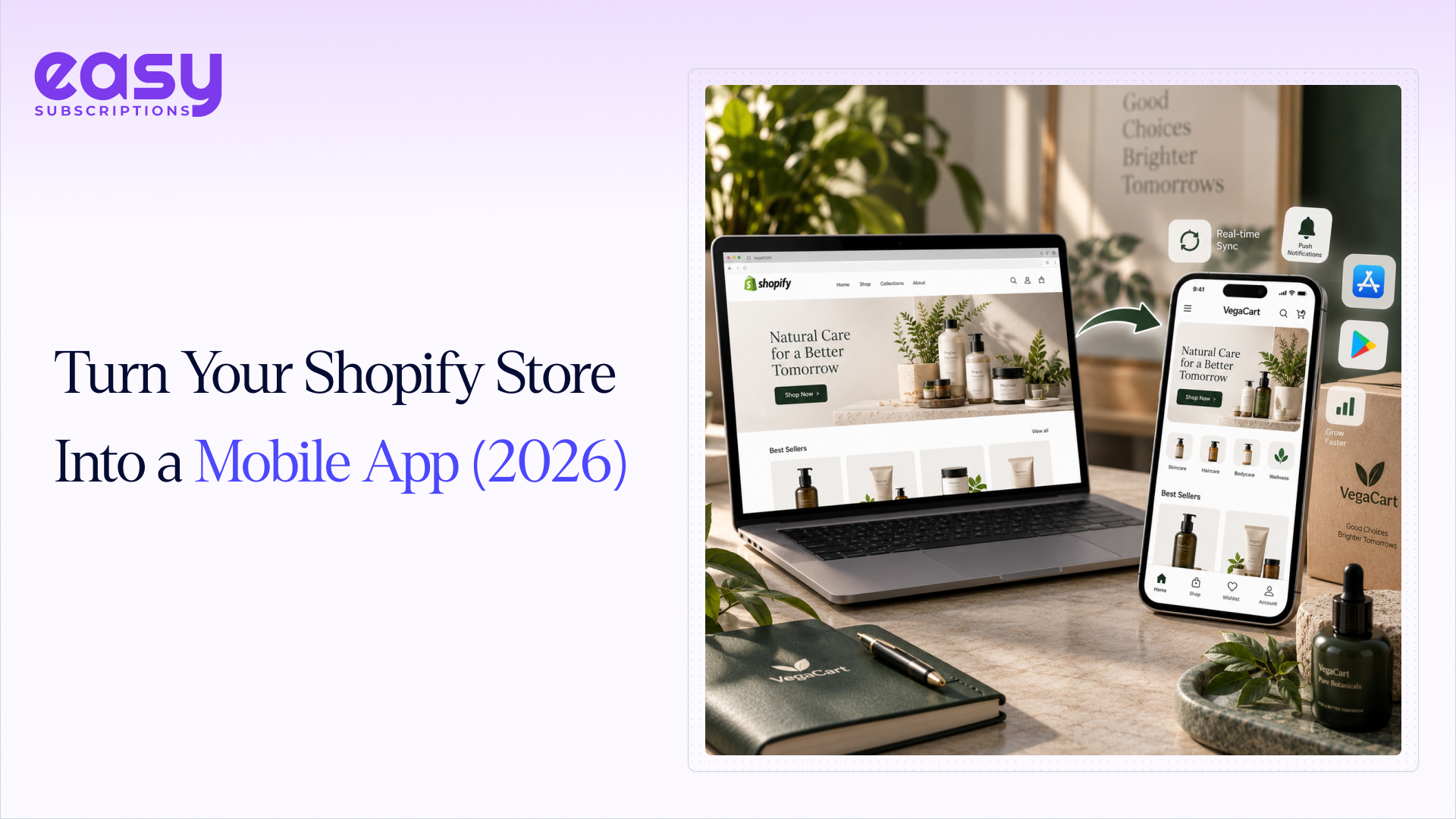
Email and SMS still work, but they’re competing for attention in a crowded inbox. A mobile app skips that problem – it sits right on the home screen as a direct line to your subscribers.
And the impact is real: app-based retention can drive up to 5x higher customer retention and a 60% repeat purchase rate compared to web-only stores.
You don’t need a dev team to do this. A Shopify mobile app builder like Vegacart turns your store into a native iOS and Android app with a simple drag-and-drop setup – so this becomes something you can launch this month, not a future project.
6. Deliver a seamless customer portal experience
If a subscriber has to email support to change their delivery date, they’re going to cancel. Full stop.
A self-service customer portal, where subscribers can manage everything without friction, is non-negotiable in 2026. It reduces support tickets, increases perceived control, and directly impacts subscription management on Shopify satisfaction scores.
7. Use data to identify at-risk subscribers
Don’t wait for cancellations. Look for early signals: skipped deliveries, reduced engagement with emails, declining order frequency.
Good Shopify apps for customer retention surface these signals automatically through churn analytics dashboards. When you can flag at-risk subscribers 30–60 days before they cancel, you have time to intervene with a targeted offer or outreach.
8. Run post-purchase win-back flows
Even with the best retention stack, some subscribers will churn. That’s not the end.
A structured win-back sequence; triggered 7, 30, and 60 days after cancellation, can recover a meaningful share of lapsed customers. The key is making the offer relevant to why they left. If they cited the price, offer a discount. If they cited product fit, highlight new options or let them try a different variant.
Key retention features to look for in a Shopify subscription app
Not all subscription apps are built with retention in mind. When evaluating a Shopify subscription app, here’s the checklist that matters:
- Flexible billing options: pause, skip, swap, frequency changes; all manageable by the subscriber without contacting support.
- Self-service customer portal: branded, mobile-friendly, and frictionless. This is table stakes.
- Dunning management: automated failed-payment recovery with smart retry logic. Involuntary churn from failed cards is often 20–30% of total churn – don’t ignore it.
- Cancellation save flows: customizable exit surveys with conditional offers based on cancellation reason.
- Loyalty program integration: native or third-party, so you can reward subscription tenure and milestones.
- Churn and LTV analytics: cohort-level data, not just MRR. You need to see when subscribers leave and why.
- Automated communication tools: renewal reminders, win-back flows, and personalized triggers built into the platform.
Easy Subscriptions is built specifically for Shopify merchants who want all of these features without stitching together five different apps. It covers flexible billing, a branded customer portal, dunning, cancellation flows, and analytics; in one native Shopify integration.
When doing a Shopify subscription apps comparison for retention features, prioritize apps that treat churn reduction as a core product feature, not an afterthought.
How to measure customer retention on Shopify
You can’t improve what you don’t measure. These are the five metrics every Shopify subscription brand should track:
Metric | Formula | What it tells you |
Customer Retention Rate | ((Customers at end – New customers) ÷ Customers at start) × 100 | % of customers you kept over a period |
Churn Rate | (Customers Lost ÷ Starting Customers) × 100 | % of subscribers who cancelled in a period |
Customer Lifetime Value (LTV) | AOV × Purchase Frequency × Customer Lifespan | Total revenue expected from one customer |
Repeat Purchase Rate | (Customers with 2+ orders ÷ Total customers) × 100 | How often one-time buyers come back |
Net Promoter Score (NPS) | % Promoters – % Detractors | Proxy for loyalty and word-of-mouth potential |
A healthy ecommerce retention rate sits around 30–38% annually. For subscription models, aim for monthly churn below 5% – top performers get it under 3–4%.
Track these monthly. If churn spikes, trace it back to a cohort: when did those subscribers join, what product were they on, and what was their cancellation reason?