

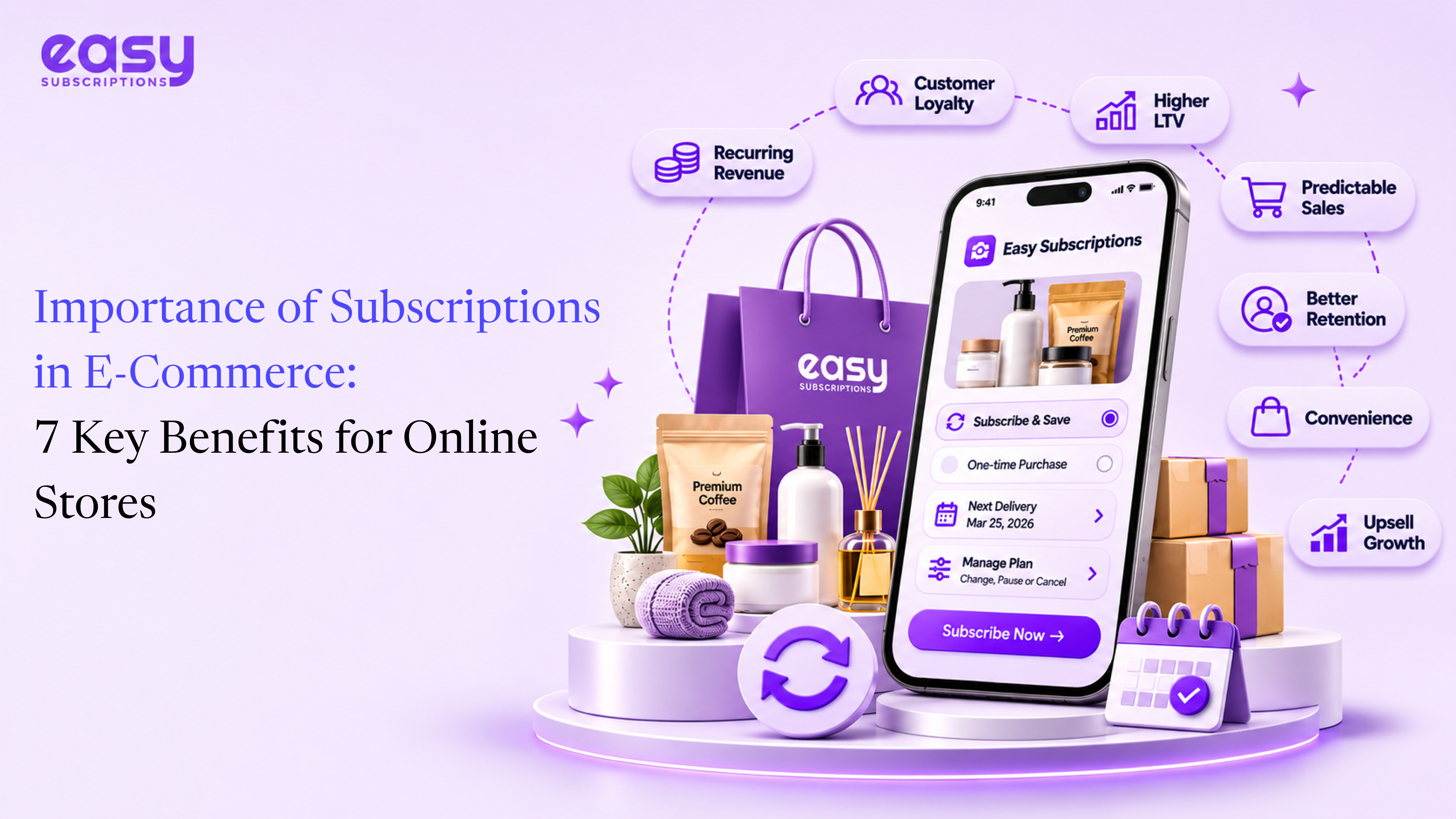


The importance of subscriptions in e-commerce comes down to one shift: instead of chasing every sale from scratch, you win a customer once and keep earning from them. Consumer behavior is changing, and subscription models are becoming a key part of successful e-commerce businesses.
Industry forecasts have projected the global subscription e-commerce market to reach roughly $904 billion by 2026, and the reason is simple. Shoppers want convenience, merchants want predictable revenue, and subscriptions deliver both.
In this guide you will learn what a subscription model is, the seven biggest benefits for your business, the metrics to track, how to launch on Shopify, and the challenges to plan for.
Quick Answer: Subscriptions are important in e-commerce because they turn one-time buyers into repeat customers. They deliver predictable recurring revenue, higher retention and greater customer lifetime value, while giving merchants better demand forecasting and first-party data. Customers gain convenience, savings and personalisation without having to reorder manually.
Key takeaways
- Subscriptions create recurring, forecastable revenue instead of unpredictable one-off sales.
- Retention and customer lifetime value (CLV) rise because customers buy on autopilot.
- Three models dominate: curated boxes, replenishment and memberships.
- Track four metrics: MRR, churn rate, CAC and CLV.
- A Shopify subscription app lets you launch without custom development.
What Is a Subscription Model in E-Commerce?
A subscription model in e-commerce is a business model where customers pay a recurring fee, weekly, monthly or annually, to receive products or access to a service automatically. It gives the merchant a repeatable revenue stream and gives the customer a convenient, hands-off buying experience.
Types of E-Commerce Subscription Models
Most subscription stores fall into one of three categories. Choosing the right one depends on what you sell and how often customers need it.
| Model | How it works | Best for | Example |
| Curated box | Customers receive a themed, hand-picked selection each cycle | Beauty, fashion, food, product discovery | Birchbox, Stitch Fix |
| Replenishment | Everyday products ship automatically at a set interval | Pet food, supplements, coffee, toiletries, razors | Dollar Shave Club |
| Access or membership | A recurring fee unlocks content, services or perks | Streaming, software, VIP programmes | Netflix, Spotify |
Brands such as Dollar Shave Club and Blue Apron have built multi-million dollar businesses on this idea, which shows the model works well beyond niche products.
7 Key Benefits of Subscriptions for E-Commerce Businesses
Here is why so many online stores are adding subscriptions to their growth strategy.
1. Predictable and Recurring Revenue
Recurring payments make cash flow far easier to forecast. When you know roughly how much recurring revenue arrives each month, you can plan hiring, ad spend and inventory with confidence. One-time purchases, by contrast, swing with seasons, promotions and ad performance.
2. Higher Customer Retention and Loyalty
Subscriptions build long-term relationships. Instead of depending on new customers every month, you earn repeat orders automatically, and subscribers tend to stay longer when the product is useful, convenient and fairly priced. Strong retention management tools, such as pause, skip and swap options, help keep them there.
3. Greater Customer Lifetime Value (CLV)
Because subscribers order repeatedly, each customer generates more revenue over time. A subscription also opens the door to upselling and cross-selling: add-on items, larger sizes or premium tiers can be offered at the moment the customer is most engaged. Read more about post-purchase marketing for subscriptions to see how this works in practice.
4. Lower Dependence on Paid Acquisition
Acquiring a new customer usually costs more than keeping an existing one. When a growing share of your revenue comes from subscribers who reorder automatically, you rely less on expensive ads to hit monthly targets, and your marketing budget goes further.
5. Better Inventory and Demand Planning
Active subscriptions tell you how many units you will ship in the coming weeks. That visibility reduces the risk of overstocking, cuts waste on perishable goods and helps you avoid stockouts that frustrate customers. Smoother demand also strengthens your negotiating position with suppliers.
6. Richer First-Party Customer Data
Subscribers share preferences, delivery frequency and purchase history over time. With third-party cookies fading, this first-party data is valuable for personalising offers, building bundles and deciding what to launch next.
7. A Stronger Competitive Advantage
A competitor can match your price, but it is harder to match a habit. Once a customer has set up automatic deliveries, switching means effort, so subscriptions create a natural moat around your brand, especially when paired with a smooth customer portal and flexible bundles.
Benefits of Subscriptions for Customers
A subscription only succeeds when shoppers see clear value. The main customer benefits are:
- Convenience: no need to remember to reorder essentials.
- Savings: many brands offer a recurring-order discount or free shipping.
- Personalisation: products, sizes and delivery schedules can match individual preferences.
- Reliability: customers avoid running out of products they depend on.
- Control: modern portals let subscribers skip, pause, swap or cancel in a few clicks.
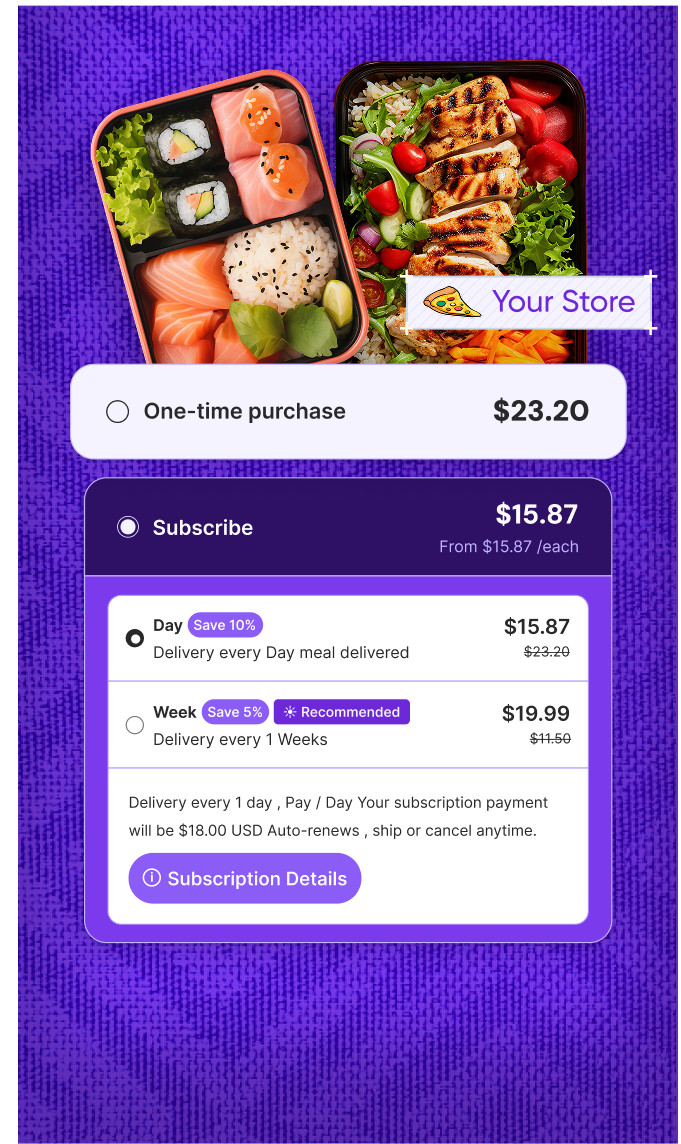
Tools such as a Shopify subscription app let merchants customize plans around these preferences, which makes the experience feel tailored rather than automated.
Subscriptions vs One-Time Purchases
The table below shows how the two models compare across the factors that matter most to a growing store.
| Factor | One-time purchase | Subscription |
| Revenue pattern | Irregular, depends on new orders | Recurring and forecastable |
| Customer relationship | Transactional | Ongoing |
| Marketing cost | Pay to win each repeat sale | Acquire once, then retain |
| Inventory planning | Mostly guesswork | Based on active subscriptions |
| Customer data | Limited to checkout | Continuous and detailed |
| Lifetime value | Lower | Higher |
The best strategy for many merchants is not to replace one-time sales but to offer subscriptions alongside them, giving shoppers a choice at the product page.
Key Metrics to Track for a Successful Subscription Business
What gets measured gets improved. These four metrics give you a clear view of subscription health.
| Metric | What it measures | Simple formula | Why it matters |
| Monthly Recurring Revenue (MRR) | Predictable revenue from active subscriptions each month | Sum of all monthly subscription revenue | Shows growth and revenue stability |
| Churn rate | Share of subscribers who cancel in a period | Subscribers lost ÷ subscribers at start × 100 | High churn quietly erodes growth |
| Customer Acquisition Cost (CAC) | Cost to win one new subscriber | Sales and marketing spend ÷ new subscribers | Keeps acquisition profitable |
| Customer Lifetime Value (CLV) | Total revenue a customer generates over the relationship | Average revenue per subscriber × gross margin ÷ churn rate | Guides how much you can spend to acquire |
A healthy subscription business keeps CLV comfortably above CAC while pushing churn down. A built-in subscription analytics dashboard saves you from calculating these by hand.
How to Set Up a Subscription Model for Your E-Commerce Store
Launching subscriptions does not require a rebuild. Follow these steps:
- Choose your subscription strategy. Decide between curated boxes, replenishment or memberships based on how customers use your products.
- Pick the right products. Start with items customers already reorder, such as consumables, essentials or regularly refreshed products.
- Set pricing and incentives. Offer a modest subscriber discount, free shipping or an exclusive perk so the value is obvious.
- Install a subscription app. A Shopify subscription app such as Easy Subscriptions handles recurring billing, plan management and customer accounts. Compare options in our guide to the best Shopify subscription apps.
- Give customers control. A simple customer portal lets subscribers manage their plan without contacting support.
- Promote your plans. Use email, social media, on-site messaging and targeted ads, and personalise offers to encourage sign-ups. See our subscription marketing tips for seasonal ideas.
- Measure and optimize. Review MRR, churn, CAC and CLV monthly, then test new plans, bundles and upsell offers.
- Marketing and Customer Engagement Tips: Promote your subscription models through email campaigns, social media, and targeted ads using predis.ai. Engage customers with personalized offers to encourage sign-ups.
Common Challenges in Subscription E-Commerce and How to Overcome Them
Subscriptions are powerful, but they come with predictable obstacles. Plan for these from day one.
| Challenge | Why it happens | How to fix it |
| Churn | Customers lose interest, see low value or have no flexibility | Offer skip, pause and swap options, add loyalty perks and respond quickly to support requests |
| Failed payments (involuntary churn) | Expired cards or declined transactions | Use automated dunning management with smart payment retries and reminders |
| Lack of variety | Customers get bored of the same items | Refresh products regularly, rotate limited editions and let subscribers customise |
| Subscription fatigue | Customers feel overwhelmed by too many recurring charges | Be transparent about billing, send pre-charge reminders and keep value high |
| Poor customer experience | Hard-to-find cancel or edit options | Provide a self-service portal that makes managing plans effortless |
Treat churn as a product and experience problem, not just a marketing one. Merchants who make cancelling or pausing easy often keep customers who would otherwise leave angry.
Conclusion
The importance of subscriptions in e-commerce is clear: they replace unpredictable one-time sales with recurring revenue, deepen customer loyalty, raise lifetime value and give you the data to plan smarter. Customers benefit too, enjoying convenience, savings and a personalised experience.
Success depends on choosing the right model, tracking MRR, churn, CAC and CLV, and removing friction with flexible plans and a strong customer portal. Ready to build recurring revenue for your store? Start with the Easy Subscriptions app and turn first-time buyers into long-term subscribers.