




What Is Gamification in Ecommerce?
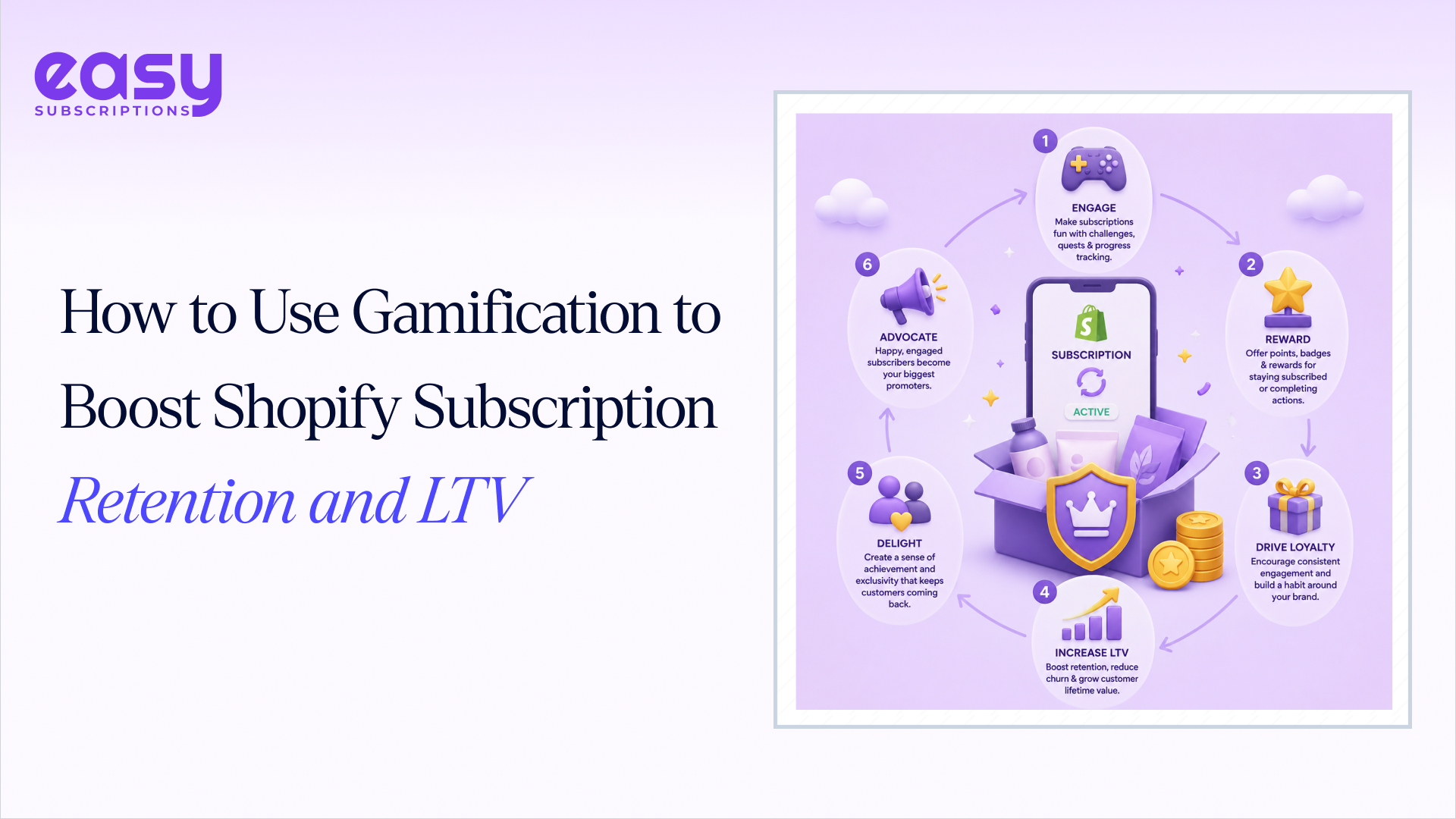
Gamification in e-commerce is the practice of applying game design mechanics; points, levels, challenges, badges, leaderboards, and rewards, to the shopping and subscription experience. The goal is simple: make buying (and staying subscribed) feel like progress, not just a transaction.
It works because it taps into psychology that’s been wired into us long before smartphones existed.
Three mechanisms drive the effect:
- Variable reward schedules. Unpredictable or surprise rewards – a mystery add-on, a spin-to-win moment – create a “what happens next?” loop that sustains attention far better than fixed, predictable discounts. This is the same principle behind slot machines and social media feeds.
- Progress loops. A visible progress bar toward the next tier or milestone creates what psychologists call the “endowed progress effect” – once someone has started moving toward a goal, they’re far more likely to finish it.
- Status signaling. Reaching Gold tier or earning a “Loyal Customer” badge isn’t just functional. It signals identity. Customers who feel recognized by a brand are emotionally invested in a way that a 10%-off coupon simply can’t replicate.
The global gamification market hit $19.42 billion in 2025 and is projected to reach $92.5 billion by 2030, growing at a 26% CAGR. That’s not a trend – it’s a structural shift in how brands build retention.
Ecommerce gamification, done right, transforms a passive subscriber into an active participant. And active participants don’t cancel.
Why Gamification Works Especially Well for Subscriptions
A one-time purchase ends at checkout. A subscription is a relationship, and like any relationship, it needs reasons to stay interesting.
The danger zone for subscription churn isn’t the first order. The highest-risk period is often between orders #3 and #5, when subscribers are no longer motivated by novelty and haven’t yet developed a strong renewal habit. Gamified subscriptions address this directly by creating micro-engagement moments between renewals.
Three specific ways gamification fights cancellation intent:
- It rewards loyalty milestones. When a subscriber hits their 6th consecutive renewal and unlocks a free product, that moment reframes the relationship. They’re not just paying a recurring charge – they’ve achieved something. That framing makes cancellation feel like giving up a reward they’ve already earned.
- It turns renewals into achievements. A streak counter (“You’ve renewed 4 months in a row – keep it going!”) converts a passive billing event into an active accomplishment. A streak gives subscribers an extra reason to keep renewing. Duolingo built an entire retention engine on this principle.
- It creates forward momentum. When a subscriber can see they’re 200 points away from their next reward, or one tier upgrade away from free shipping, they have a concrete reason to stay. The next renewal isn’t a cost – it’s a step toward something.
The numbers back this up. Gamified loyalty programs raise customer retention by 22–30%, increase engagement by up to 47%, and have been shown to cut churn by as much as 63% in some implementations. Members who actively redeem rewards spend 3.1× more annually than non-redeemers.
For subscription merchants, that math is decisive.
6 Gamification Mechanics That Drive Subscription Retention
Not all gamification mechanics are equal for subscriptions. These six are the ones that actually move the needle on renewal rates and LTV.
1. Points for Every Recurring Order
The simplest mechanic – and still the most effective entry point.
Every time a subscriber’s order renews, they earn points. Not just on their first purchase, but on every single renewal. This is the critical distinction for points rewards Shopify subscriptions: most basic loyalty apps reward one-time purchases, but the real retention lever is rewarding the act of staying subscribed.
How to set it up:
- Award a base number of points per renewal (e.g., 10 points per $1 spent)
- Offer a points multiplier for longer subscription commitments (e.g., 1.5× points for annual plans)
- Let points redeem for discounts, free products, or shipping upgrades
The key is making the points feel meaningful fast. If it takes 18 months to earn a $5 reward, no one cares. Aim for a first redemption opportunity within 60–90 days.
2. Streak Rewards (Consecutive Renewal Bonuses)
A streak reward fires when a subscriber renews consecutively – no skips, no pauses, no cancellations.
Example structure:
- 3 consecutive renewals → 50 bonus points
- 6 consecutive renewals → free sample product added to next order
- 12 consecutive renewals → 20% off next order + “Loyal Member” badge
The streak mechanic works because it makes continuity feel valuable. Skipping a month doesn’t just mean missing a product – it means losing the streak. That’s a real psychological deterrent to the casual “I’ll pause for a month” cancellation.
3. VIP Tiers (Bronze → Silver → Gold)
VIP tiers Shopify programs are the most powerful long-term retention tool in the gamification toolkit. Tiered programs deliver 1.8× higher ROI than single-tier programs, and VIP customers show 73% higher AOV and make 3.6× more purchases annually.
A simple three-tier structure works best. More than three tiers adds complexity without adding motivation.
Tier | Qualification | Perks |
|---|---|---|
Bronze | Active subscriber | Points on every order, birthday reward |
Silver | 3+ consecutive renewals or 500 points | 1.5× points multiplier, free shipping on orders over $50 |
Gold | 6+ consecutive renewals or 1,000 points | 2× points, always-free shipping, early access to new products, exclusive Gold badge |
Show tier progress visibly – a progress bar in the account portal showing “You’re 120 points away from Silver” is one of the highest-ROI UI elements you can add.
4. Milestone Unlocks (Free Product at Order #6, #12)
Milestone unlocks are fixed rewards triggered by specific order numbers. They’re predictable by design, subscribers know exactly what’s coming and when.
Why predictability works here: Unlike variable rewards (which sustain curiosity), milestone rewards create anticipation. A subscriber who knows a free full-size product is waiting at order #6 has a compelling reason to keep their subscription active through order #5.
Example milestone map:
- Order #3 → 100 bonus points
- Order #6 → Free sample or travel-size product
- Order #12 → Free full-size product + “Anniversary” badge
- Order #24 → Exclusive product variant only available to long-term subscribers
This mechanic works especially well for consumable subscription categories – supplements, skincare, pet food, coffee – where the product itself is the reward.
5. Referral Challenges
Turn your existing subscribers into an acquisition channel by gamifying the referral process.
A standard referral program gives a discount for each successful referral. A gamified referral challenge adds time pressure, leaderboards, and escalating rewards:
- “Refer 1 friend this month and earn 200 bonus points”
- “Refer 3 friends this month → Free product + Silver tier fast-track”
- “Top referrer of the month → Gold tier upgrade + exclusive gift”
The time-bound challenge format drives urgency. The leaderboard element (even a simple “You’re #3 this month”) taps into competitive instinct. And because the reward is tied to subscription loyalty tier progression, it reinforces the overall gamified ecosystem rather than sitting as a disconnected promo.
6. Spin-to-Win or Mystery Add-Ons
Variable rewards are the most psychologically potent mechanic in the toolkit, and the most fun to receive.
A monthly spin-to-win (triggered by renewal) or a mystery add-on in a subscriber’s box introduces genuine surprise. The subscriber doesn’t know if they’ll get 50 points, a free product, or a 20% discount. That uncertainty is the point. Spin-to-win mechanics have been shown to drive conversion by up to 30% and significantly increase app engagement.
For subscription boxes specifically, a “mystery add-on,” a small surprise item included in one renewal per quarter, creates social sharing moments. Subscribers post their mystery items. That’s organic UGC you can’t buy.
How to Implement Gamification in Easy Subscriptions
The practical challenge with loyalty gamification on Shopify is integration. Most loyalty apps are built for one-time purchases. They don’t natively understand recurring orders, renewal streaks, or subscription-specific milestones. Bolting a generic loyalty app onto a subscriptions app usually means manual workarounds, broken point tracking, and a frustrating subscriber experience.
Easy Subscriptions solves this by working natively with Easy Loyalty Rewards, which is built to understand subscription billing events, not just checkout events.
Here’s what that looks like in practice:
Points on recurring orders: Every time a subscription renews, Easy Loyalty Rewards automatically credits points to the subscriber’s account. No manual triggers, no webhook gymnastics. The renewal fires the points.
VIP tier progression: Tier upgrades in Easy Loyalty Rewards can be configured to track consecutive renewals, cumulative spend, or total point, whichever model fits your brand. A subscriber who hits 6 consecutive renewals automatically moves to Silver without any manual intervention.
Referral rewards: Easy Loyalty Rewards tracks referral conversions and credits both the referrer and the new subscriber, with configurable reward amounts per tier level. Gold members can receive higher referral bonuses, which incentivizes them to stay at the top tier.
Milestone unlocks: Set specific order-number triggers (orders #6, #12, and #24) to automatically add a free product to the next renewal order or fire a bonus points event. The milestone logic lives inside the app; no custom code required.
The result is a fully gamified subscription experience that runs on autopilot. Subscribers see their points balance, tier status, and progress toward the next milestone directly in their customer portal. Merchants see it reflected in renewal rates and LTV.
Gamification Metrics to Track
Launching gamification without measuring it is guesswork. These five metrics tell you whether your mechanics are actually working and where to optimize.
Metric | What It Measures | Target Benchmark |
|---|---|---|
Points redemption rate | % of earned points that get redeemed | 30–50% (below 20% = rewards feel too hard to earn) |
Tier upgrade rate | % of subscribers who move up at least one tier within 90 days | 15–25% in first 90 days |
Referral conversion rate | % of referral links sent that result in a new active subscriber | 10–20% |
Churn rate by tier | Monthly churn broken down by Bronze / Silver / Gold | Gold churn should be <2%; if it’s higher, top-tier perks need work |
Streak completion rate | % of subscribers who maintain a streak through at least 3 renewals | 40–60% (lower = streak rewards may need to be more compelling) |
Track these monthly. The most actionable signal is churn rate by tier, if Gold subscribers are churning at the same rate as Bronze subscribers, your top-tier perks aren’t differentiated enough. If your points redemption rate is below 20%, your rewards are either too hard to earn or not desirable enough.
Both are fixable. Neither shows up if you’re not measuring.
Real Examples of Subscription Gamification Done Right
A Wellness Supplement Brand Using Streak Rewards
A direct-to-consumer supplement brand selling monthly protein and greens subscriptions added a streak reward system after noticing high churn between months 2 and 4. They introduced a “Consistency Streak” ; subscribers who renewed for 3 consecutive months received 100 bonus points; 6 months earned a free travel-size product.
Within 90 days of launch, their month-3 retention rate improved by 18 percentage points. The streak counter, visible in the subscriber portal, became the most-clicked element on the account page. Subscribers were actively checking their streak status, which meant they were actively thinking about not canceling.
A Beauty Box Using VIP Tiers
A curated beauty subscription box with three monthly tiers (Essential, Deluxe, Premium) layered a Bronze/Silver/Gold loyalty structure on top of their existing subscription plans. Gold status required 6 consecutive renewals and unlocked early access to the box reveals 48 hours before shipping, plus a 2× points multiplier.
The early-access perk drove the most engagement. Gold members were opening reveal emails at a 62% open rate versus 28% for Bronze members. More importantly, Gold churn dropped to under 1.5% monthly, compared to 4.2% for Bronze. The tier structure didn’t just retain customers; it created a group of subscribers who were genuinely invested in staying at the top.
A Pet Food Brand Using Milestone-Free Products
A subscription pet food brand added milestone unlocks at orders #6 and #12, a free bag of training treats at #6, and a free toy at #12. They promoted the milestones at checkout and in the subscriber portal with a simple “Your next reward: Order #6 – Free Training Treats” progress indicator.
The result: their average subscriber tenure increased from 4.1 months to 6.8 months within two quarters of launch. The order #5 cancellation spikes, previously their biggest churn moment, essentially disappeared. Subscribers who could see they were one order away from a free product simply didn’t cancel.
Common Gamification Mistakes to Avoid
Getting the mechanics right matters, but getting the execution wrong can make gamification actively hurt retention. These are the mistakes we see most often.
- Over-complicating the rules. If a subscriber needs to read three paragraphs to understand how to earn points, they won’t bother. Every mechanic should be explainable in one sentence. “Earn 10 points per dollar. Redeem 500 points for $5 off.” Done.
- Making rewards too hard to earn. If it takes 12 months to earn a reward worth $3, the program feels like a scam. Subscribers should be able to earn their first meaningful reward within 60–90 days. Calibrate point values accordingly.
- Ignoring non-redeemers. A subscriber sitting on 800 unspent points is a churn risk, not a success story. They’ve disengaged from the program. Set up automated emails that trigger when a subscriber hasn’t redeemed in 60 days: “You have 800 points, here’s what you can get right now.”
- Gamifying the wrong actions. Rewarding subscribers for writing reviews or following you on Instagram is fine, but the primary gamification should reward the most important behavior: renewing. Don’t dilute the streak mechanic by also giving streak credit for social actions.
- Launching without a visible progress indicator. Gamification without visibility is invisible. If subscribers can’t see their points balance, tier status, and next milestone in their account



 Subscription Audit