 AI-powered, Human-reviewed.



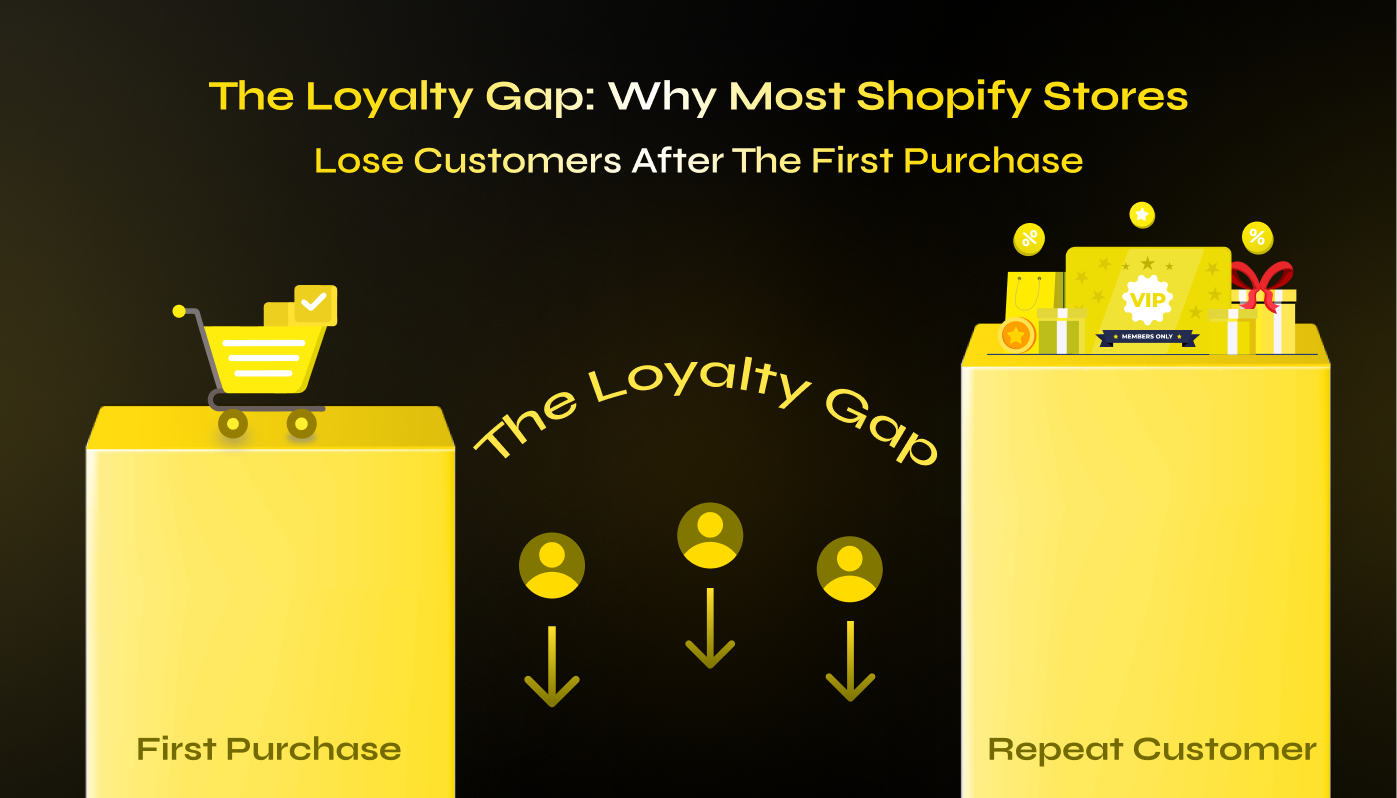


A customer converts, the confirmation email goes out, and for most Shopify stores that’s the last interaction that customer ever has with the brand. That’s rarely a product problem; it’s what happens, or doesn’t happen, after checkout that decides whether someone becomes a repeat customer or a one-time transaction. Getting customer retention right is less about the product and more about what happens in the days and weeks that follow it, and it’s usually the least-instrumented part of a Shopify store’s entire funnel.
The Real Reason Stores Lose Customers
Shopify’s own commerce data has repeatedly shown most stores never break a roughly 20–30% repeat purchase rate, while stores with structured retention programs loyalty, subscriptions, and win-back automation regularly clear 40%+. That gap isn’t the product. It’s the post-purchase system, or the lack of one.
Two grounded reference points worth building a business case around:
| Data point | Source |
| Acquiring a new customer typically costs 5–25x more than retaining one | Bain & Company |
| A 5% improvement in retention can lift profits 25–95% | Bain & Company / Frederick Reichheld |
| Up to ~50% of subscription cancellations are involuntary (failed payments) | Recurly benchmark data |
Verify current figures before quoting any of these externally; they’re occasionally cited with slightly different ranges depending on the source and publication year. What matters more than the exact percentage is the direction: retention economics favor fixing the leaks below before spending more on acquisition.
The 4 Moments Where Stores Lose Customers
| Moment | What’s missing | Why it matters |
| No post-purchase follow-up | Anything beyond order confirmation and shipping notice | No inbox presence until the next promo blast by then, customers forget why they bought |
| No loyalty incentive to return | A points program or VIP tier | No more reason to buy from you twice than from a competitor |
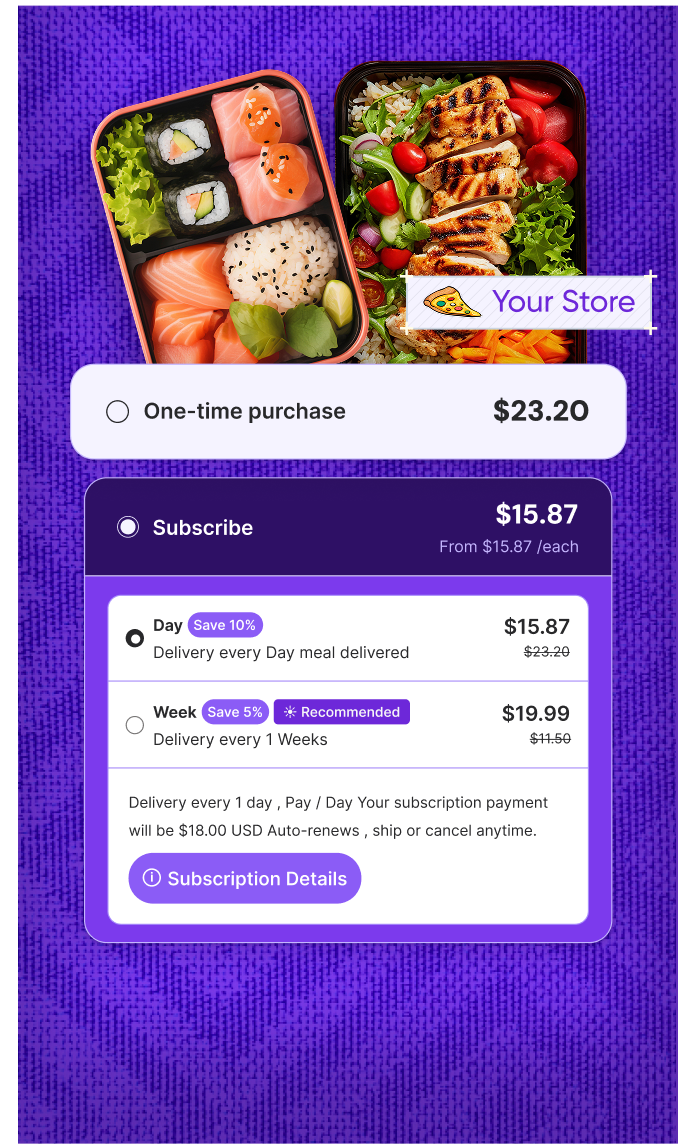
| No subscription offer at the right moment | A “subscribe and save” prompt post-purchase | The single biggest missed opportunity for consumables supplements, coffee, skincare, pet food |
| No win-back flow when engagement drops | A system that notices inactivity | By 60–90 days without an order, silence is the wrong response |
Each of these is fixable independently; you don’t need to solve all four at once, but ignoring any one of them leaves a specific, identifiable leak in your customer satisfaction and retention funnel. Most stores have at least two of the four fully missing; few have all four running well.
What It Actually Costs You
Say your store loses 8% of active customers monthly to the four moments above. Dropping that to 3% compounds fast: fewer customers leak out each month, so a larger base stays active into month 6 and month 12. Here’s what that looks like on a $50 AOV, $40,000/month customer base over a 12-month horizon:
| Monthly loss rate | Active customers remaining at month 12 (illustrative) | Approx. revenue impact |
| 8% (no retention system) | Base shrinks steadily each month | Revenue flat-to-declining without constant new acquisition spend |
| 3% (four moments addressed) | Base holds and compounds | Revenue grows from the same acquisition spend, since fewer customers leave each month |
Run this model against your own numbers rather than treating 8%/3% as a universal benchmark; it’s illustrative, not a target. The point isn’t the exact figures; it’s that a few points of monthly churn rate compound into a very different 12-month outcome.
The two biggest hidden costs are:
- Wasted acquisition spend marketing dollars that convert once and never earn a second return.
- Failed payments for stores with any subscription component, up to roughly half of cancellations are involuntary, caused by a card decline rather than a deliberate choice to leave.
A retention strategy that ignores payment recovery only solves half the problem. See the dunning guide for how retry logic and email sequences recover that revenue automatically, often without the customer ever noticing there was an issue.
How to Measure and Prioritize the Fix
Before building anything, pull three numbers from your own store: your current repeat purchase rate, the split between voluntary and involuntary cancellations (check your payment gateway’s decline reasons), and how many customers currently receive any post-purchase communication beyond shipping updates. Those three numbers tell you which of the four moments to fix first. There’s little value in building a win-back flow if you haven’t yet confirmed whether your churn is mostly voluntary or mostly failed payments, since the fixes are entirely different.
A simple way to prioritize:
- If involuntary churn is high → start with dunning (fastest, most mechanical fix, no customer-facing changes needed).
- If repeat purchase rate is low but churn looks mostly voluntary → start with post-purchase follow-up and a subscription offer, since there’s likely no system giving customers a reason to return at all.
- If you already have follow-up emails but retention still lags → the gap is probably loyalty or win-back automation, not top-of-funnel messaging.
Retention Tactics That Work
| Tactic | What it does | Best for |
| Loyalty programs | Points-per-dollar plus one VIP tier gives customers a running reason to return | Non-consumable or gift-driven categories |
| Post-purchase subscription offers | “Subscribe and save” a few days after delivery, once the customer has experienced the product | Consumables and replenishable products |
| Automated win-back flows | A three-email sequence at 45, 60, and 90 days of inactivity | Any store with a repeat-purchase cycle |
| Proactive dunning | Automated retry logic plus a non-aggressive email sequence | Any subscription or recurring-payment component |
See loyalty program benefits for the full case behind the first tactic.
Shopify implementation checklist:
- Trigger the post-purchase flow on fulfillment, not just order creation
- Install a loyalty app such as Easy Loyalty & Rewards and launch with one simple earn rate
- Add a subscription option via a tool like Easy Subscriptions that handles billing and self-service
- Build a “no purchase in 45+ days” segment directly in your email platform
Common Mistakes
| Mistake | Why it backfires |
| A loyalty program with a confusing points structure | Customers disengage if they can’t tell what a point is worth |
| A subscription discount so steep it erodes margin | Attracts price-sensitive customers who churn at the first price increase |
| Win-back emails that apologize with no offer | Gives the customer no actual reason to return |
| Assuming Shopify Payments’ default retry is a full dunning system | It’s a baseline, not a complete recovery solution most stores need more retry attempts and messaging to meaningfully reduce customer churn |
| Fixing all four moments at once with no measurement in between | Makes it impossible to tell which change actually moved the needle |
Retention Checklist
- Current repeat purchase rate and voluntary/involuntary churn split documented
- Post-purchase flow live within 24 hours of delivery
- Loyalty program with at least a points-per-dollar structure
- Subscription offer visible on relevant product pages
- Win-back sequence triggered automatically at 45–90 days of inactivity
- Dunning retry sequence beyond Shopify’s default
- Repeat purchase rate tracked monthly, not just revenue
First-purchase churn isn’t usually a sign customers disliked what they bought, it’s a sign nothing after the sale gave them a reason to come back. Fix the four moments above, starting with whichever gap your own numbers show costs you the most today, and increase customer retention one system at a time rather than trying to solve everything in a single launch.