 AI-powered, Human-reviewed.




What Bundling Does for a Subscription Business
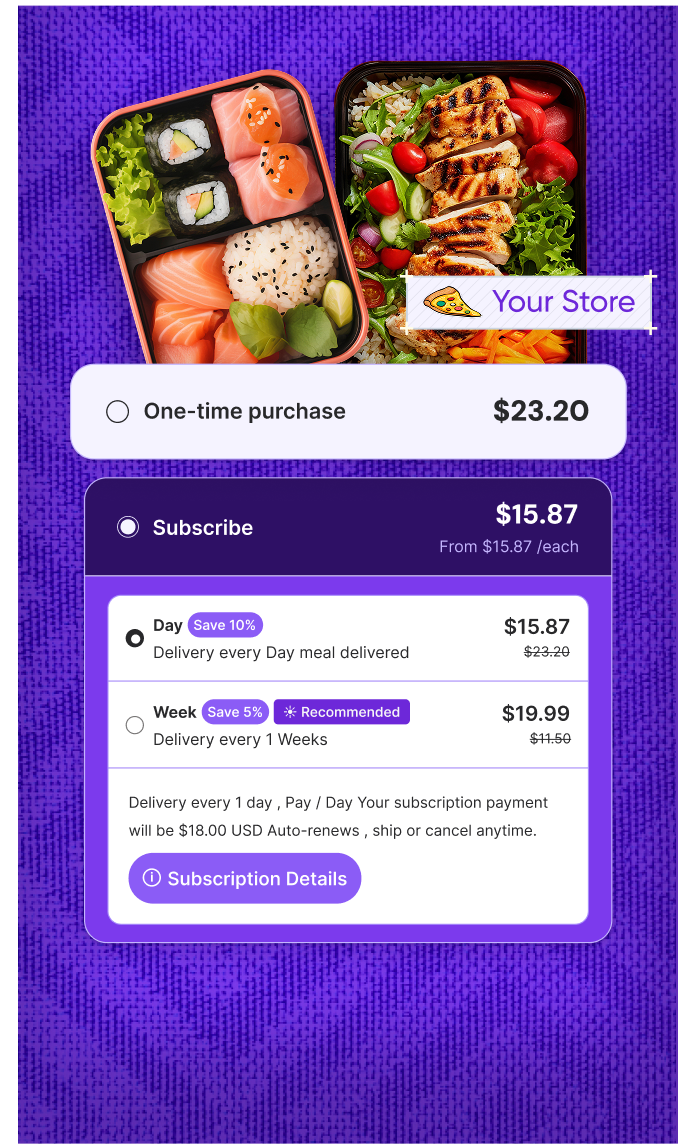
Bundling groups multiple products into a single subscription offer, typically at a modest combined discount versus buying separately. Done well, it raises average order value and gives subscribers more reasons to stay subscribed, since a bundle usually has more variety than a single repeating item and variety, as with the closely related build-a-box format, tends to reduce the “I’m bored of this” cancellation reason that single-SKU subscriptions are especially prone to.
It’s worth being precise about what bundling is and isn’t solving. It isn’t primarily a discounting tactic, even though a modest discount is often part of the offer. The bigger value is the decision it removes from the customer. A well-built bundle answers “which products should I get” on the customer’s behalf, which lowers the friction of the initial subscription decision and gives the merchant more control over what a new subscriber’s first experience actually looks like.
Why Bundling Works Better for Subscriptions Than One-Time Purchase
A one-time-purchase store gets one shot at bundling: the moment of that single transaction. A subscription store gets to define the bundle as the ongoing relationship itself, which changes the economics meaningfully. A bundle that raises AOV by even a modest amount compounds every cycle a subscriber stays active, rather than being a one-time lift that has to be re-earned on the next purchase decision.
That compounding effect is also why bundling and retention aren’t separate goals in a subscription business the way they might be for a one-time-purchase store. A well-constructed bundle does double duty: it raises the immediate order value and it gives the subscriber more reasons to stay, since a multi-product bundle is harder to replace with a single competitor SKU than a single-product subscription is. Getting the bundle composition right is worth more attention here than the AOV lift alone would suggest.
Types of Bundles
Curated bundles you choose the combination (a “starter kit” of 3 complementary products). Lowest complexity, works well for new-customer offers where the goal is a confident first decision rather than an open-ended one.
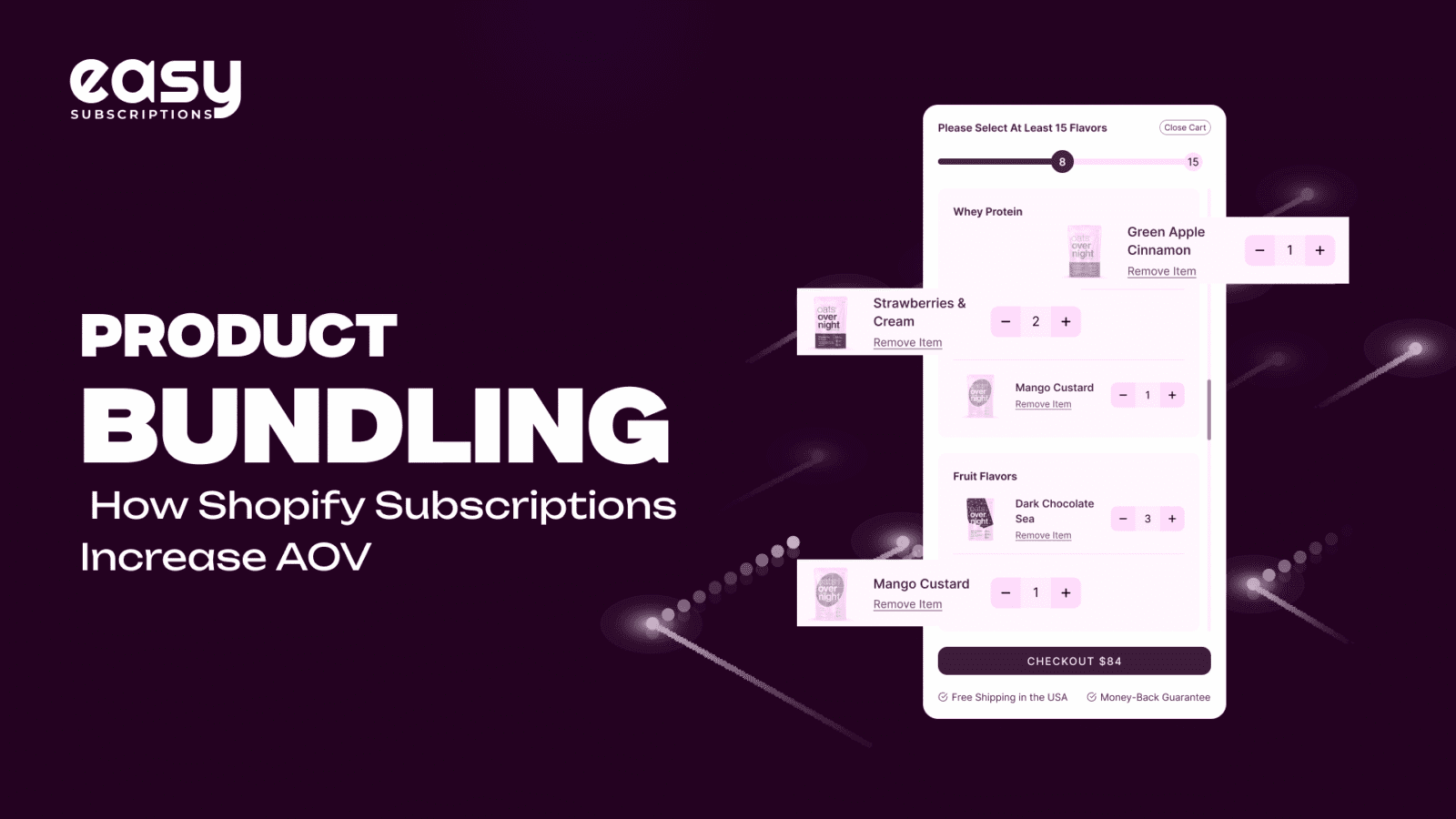
Customizable bundles (build-a-box) the customer picks a set number of items from a larger catalog for a fixed price. Higher perceived value, more operationally complex, and matches real search demand (“Build A Box” is a genuine search term) better than a purely curated approach. See our full build-a-box guide for the operational details specific to this format.
Exclusive/limited bundles available for a limited window or to subscribers only, useful for seasonal offers. See BFCM feature prep for holiday-specific tactics like quantity breaks.
| Bundle type | Complexity | Best for |
| Curated | Low | New-customer offers, simplifying the first decision |
| Customizable (build-a-box) | Higher | Wide catalogs, customers who want ongoing personalization |
| Exclusive/limited | Moderate | Seasonal pushes, subscriber-only perks, urgency-driven promotions |
Bundling vs. Upselling
Both can increase AOV, but they work at different points in the customer journey. Bundling groups products when the customer selects the subscription. Upselling and cross-selling typically happen at checkout or after the subscription has started. They’re complementary, see our upsells and cross-sells guide. Use bundling to define what the subscription is, and upselling to grow what an existing subscriber adds over time. A store that only bundles leaves upsell revenue on the table from subscribers already engaged; a store that only upsells is missing the AOV lift that comes from getting the initial offer composition right in the first place.
Pricing Without Eroding Margin
The common mistake is discounting a bundle so steeply that combined margin is worse than selling items separately. Price the discount against your actual margin on each component, not a flat percentage across everything, and reserve the deepest discount for configurations that include your highest-margin items.
It’s also worth modeling the discount against realistic customer behavior rather than the average configuration. If customers can weight a bundle toward higher-cost items (as with a customizable format), price against something closer to a worst-case selection, not the blended average customers reliably gravitate toward higher-value options once they realize they can, and pricing that ignores this erodes margin quickly once real usage patterns show up.
A simple way to sanity-check pricing before launch: calculate what the bundle would cost you if every subscriber picked the most expensive realistic combination, and confirm the offer still holds acceptable margin at that extreme. If it does, you’re protected against the selection drift that tends to happen once a bundle is live; if it doesn’t, the discount is too deep before a single customer has even had the chance to test it.
Building Your First Bundle
- Identifying 2–4 products genuinely used together with an arbitrary combination undermines the whole pitch, and customers notice when a bundle feels assembled purely to hit a price point rather than to solve a real need.
- Decide curated vs. customizable based on your fulfillment capacity. Customizable formats add real pick-and-pack complexity and don’t commit to one before testing at small scale.
- Price against real per-item margin, not a flat discount, and model against realistic (not average) selection behavior.
- Launch as a limited-time offer first to gauge demand before building it into a permanent catalog configuration.
- Track AOV and retention for bundle subscribers separately from single-product subscribers, so you can tell whether the bundle is actually outperforming, not just assume it is.
Metrics to Track
| Metric | What it tells you |
| AOV: bundle subscribers vs. single-product subscribers | Whether the bundle is actually delivering the AOV lift it’s meant to |
| Retention: bundle subscribers vs. single-product subscribers | Whether the added variety is translating into the retention benefit bundling is supposed to provide |
| Bundle margin vs. sum of individual item margins | Whether the discount depth is still profitable once real selection patterns are in |
| Conversion rate on the bundle offer | Whether the combination and price are resonating, or need adjustment |
| Configuration distribution (for customizable bundles) | Which combinations customers actually choose, which should inform future curated bundles too |
Common Mistakes
| Mistake | Why it backfires |
| Bundling unrelated products just to raise order value | Customers see through it quickly, which damages trust in future offers, not just this one |
| Discounting without checking real margin impact | Combined margin can end up worse than selling items separately, especially once customers weight toward higher-cost items |
| Offering unlimited configurations with no fulfillment testing | Operational strain before the pick-and-pack process is proven at smaller scale |
| Not tracking bundle-subscriber retention separately | No way to confirm whether the bundle is actually driving the retention benefit it’s supposed to |
| Treating the bundle as a one-time launch rather than an iterated offer | Misses the chance to refine composition and pricing based on what configuration data actually shows |
Bundle Launch Checklist
Configuration data reviewed periodically to refine future bundle composition
2–4 genuinely complementary products identified, not an arbitrary combination
Curated vs. customizable decided based on real fulfillment capacity
Pricing modeled against realistic selection behavior, not the blended average
Launched as a limited-time offer to validate demand before going permanent
Bundle-subscriber AOV and retention tracked separately from single-product subscribers