



Meal subscriptions aren’t just a convenience, they’re a booming business model. By 2026, the meal subscription industry is projected to generate over $20 billion in revenue, and Shopify merchants who get in now can ride this growth wave.
For busy consumers, meal subscriptions offer healthy, convenient dining options delivered right to their door. For merchants, they provide predictable recurring revenue, loyal customers, and higher lifetime value.
But in the crowded Shopify marketplace, only apps with the right features stand out.
This guide covers the eight features a Shopify meal subscription app needs in 2026, and how to check an app against each one.
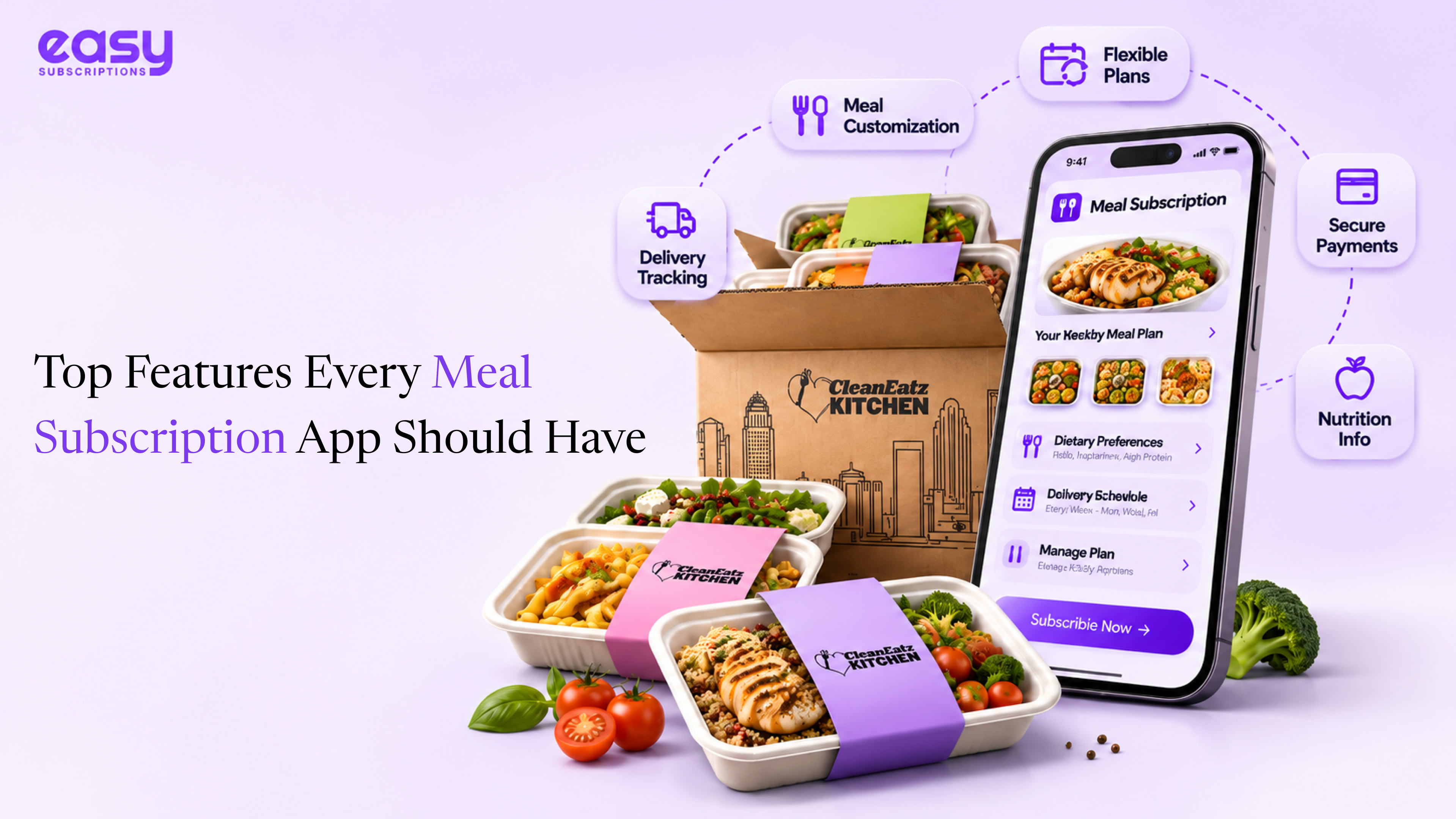
Quick Answer: The most important features of a Shopify meal subscription app are flexible skip, pause, and frequency controls, customizable meal plans, native Shopify checkout integration, a customer self-service portal, automated billing recovery, menu and inventory management, analytics, and bundling. Together, they help reduce churn, cut support tickets, and raise order value.
What features does a meal subscription app need in 2026?
1. Can customers pause, skip, or change delivery frequency?
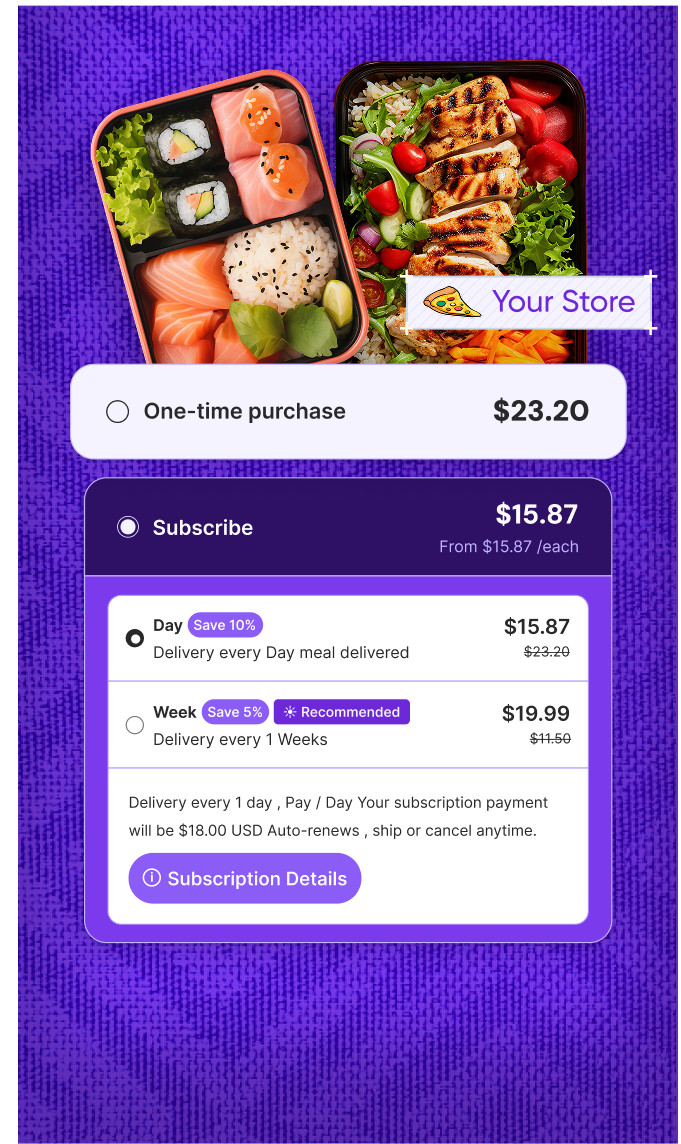
Customers should be able to pause, skip, or cancel without contacting support, and choose weekly, bi-weekly, or monthly deliveries. Also check for prepaid and series subscriptions, such as a fixed 4-week or 12-week meal program, alongside open-ended plans.
Why it matters: An easy skip often keeps a customer subscribed through a busy week. See subscription management.
2. How do you offer customizable meal plans on Shopify?
Meal customization on Shopify is built from products, variants, and subscription groups. Common setups:
- Diet-specific plans (vegan, keto, gluten-free, paleo) as separate products or groups
- Portion sizes as variants
- Meal swaps within an active subscription
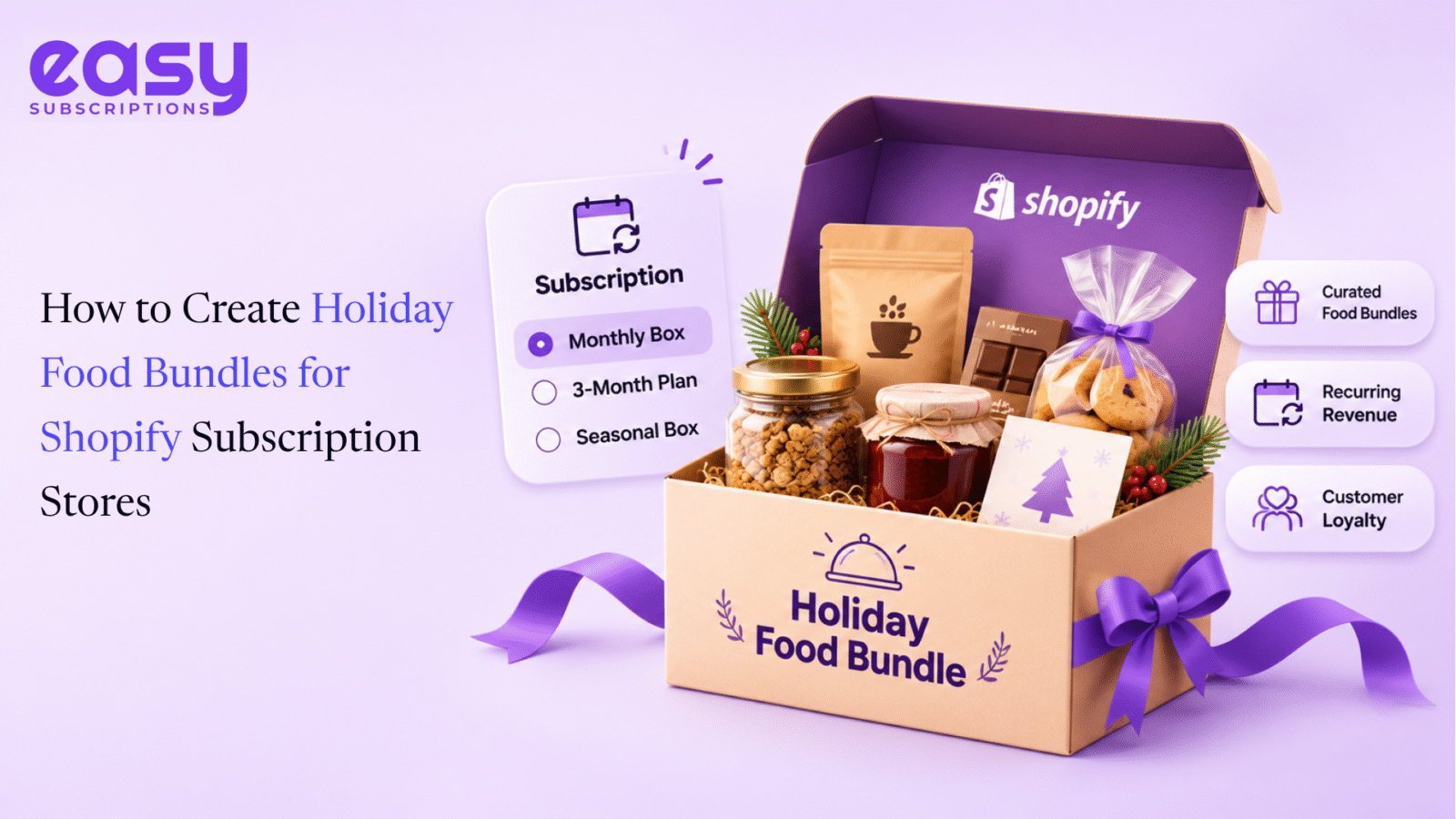
- Build-a-box for customers who choose their own meals
For allergens, state ingredients on every product page and follow your region’s food-labeling rules. An app should support your process, not replace it.
Impact: Personalized plans give customers a reason to keep reordering.
3. Does the app integrate with Shopify Checkout, themes, and rewards?
The app should feel like part of your store. Check for native checkout compatibility, theme and payment-gateway support, and a loyalty connection such as Easy Loyalty & Rewards. If you’re switching apps, ask about migration support.
Benefit: Fewer moving parts and a consistent shopping experience.
4. What should a customer self-service portal include?
At minimum: upcoming deliveries, past orders, skip/pause/cancel, address and payment updates, and product swaps. See the customer portal.
Result: Every task a customer completes alone is a support ticket you don’t answer.
5. How do you reduce failed payments and missed deliveries?
Failed card payments are a leading cause of involuntary churn. The fix is dunning: automated payment retries plus customer messages asking for a card update. Add reminders before billing and delivery dates, so skips are intentional. See dunning management and retention management.
Why it matters: Recovering a failed payment is cheaper than winning a new customer.
6. How do you manage menus and inventory for perishable meals?
Meals expire, so menu accuracy matters more than in most subscriptions. Look for:
- Inventory linked to Shopify stock levels
- Product updates inside existing subscriptions, with bulk contract changes when an item is discontinued
- Seasonal and limited-time items
- Shipping profiles and delivery-day rules for perishable goods (see estimated delivery date apps)
Outcome: Fewer stockouts and less waste.
7. Which analytics matter for a meal subscription?
Track these:
- Churn rate: subscribers lost ÷ subscribers at the start of the period
- Skip rate: a high rate often signals menu fatigue
- Lifetime value and recurring revenue
- Failed-payment recovery rate
- Most popular and most swapped meals
Why it helps: These numbers show which meals to keep, which to drop, and where customers leave.
8. How do bundles and upsells raise average order value?
Offer build-a-box kits, quantity breaks, and post-purchase add-ons like desserts or sides. For example, a customer on a 6-meal plan could be offered 4 extra meals at a tier discount. Learn how with quantity-based bundles and upsell & cross-sell.
Impact: Higher revenue per subscriber without extra acquisition cost.
How does Easy Subscriptions cover these features?
Easy Subscriptions is a Shopify subscription app. Its feature hub includes subscription management, a customer portal, dunning management, retention tools, a bundle builder, upsell and cross-sell, series subscriptions, multilingual subscriptions, and subscription analytics. It’s used across food & grocery and other industries. Compare options in The 9 Best Shopify Subscription Apps or check pricing.
Quick merchant checklist
- Skip, pause, frequency, and prepaid options
- Customizable meal plans (variants, swaps, build-a-box)
- Native Shopify Checkout, theme, and rewards integration
- Customer self-service portal
- Dunning and automated reminders
- Inventory-aware menus and shipping rules
- Churn, skip-rate, and LTV reporting
- Bundling and upselling
Does your current app check all eight?