

Growing a Shopify store is not just about acquiring new customers. It is also about encouraging repeat purchases, delivering consistent value, and building a business that can grow profitably over time.
One important decision is whether to sell products through one-time purchases, subscriptions, or both.
A one-time purchase lets customers buy whenever they need a product. A shopify subscription allows customers to receive products or services on a recurring schedule, with billing based on the agreed terms.
Both models can support ecommerce growth, but they serve different customer needs. Understanding their advantages, limitations, and use cases helps Shopify merchants choose the right approach for their products.
Quick Answer: Are Subscriptions Better Than One-Time Purchases?
Subscriptions are often suitable for products customers need regularly, while one-time purchases work well for occasional purchases and first-time buyers. For many Shopify stores, offering both options can balance customer flexibility with opportunities for recurring revenue.
Subscriptions can simplify repeat ordering and make revenue forecasting easier when customers continue renewing. One-time purchases allow customers to try products without an ongoing commitment.
The best model depends on your product category, customer buying habits, margins, fulfilment capabilities, and retention performance. A subscription does not guarantee loyalty or profit, and a one-time customer can become a valuable repeat buyer.
What Is the Difference Between a Subscription and a One-Time Purchase?
A one-time purchase is a transaction in which a customer pays for a product once. A subscription allows customers to purchase a product or service repeatedly according to a defined schedule and the applicable terms.
Subscription vs. One-Time Purchase: Key Differences
| Factor | Subscription | One-Time Purchase |
|---|---|---|
| Payment | Recurring according to agreed terms | Paid for each individual order |
| Repeat orders | Scheduled automatically, depending on the setup | Customer generally places another order manually |
| Revenue forecasting | Can make future revenue easier to estimate | Depends on future customer purchases |
| Customer commitment | Ongoing until the subscription ends under its terms | No recurring commitment |
| Convenience | Useful for products needed regularly | Useful when customers prefer to buy as needed |
| Retention | Requires continued value and customer satisfaction | Depends on repeat-purchase behaviour |
| Best suited for | Consumables, replenishable products, memberships | Gifts, occasional purchases, trial orders |
The main difference is how repeat purchases are organised. Subscriptions can reduce the effort involved in reordering, while one-time purchases give customers greater control over when they buy again.
Neither model is automatically better for every business.
Why Do Shopify Merchants Use Subscription Models?
Subscriptions can help merchants organise repeat purchases and build longer-term customer relationships. They are especially relevant when customers have an ongoing need for a product.
1. More Predictable Revenue Planning
Recurring orders can provide a clearer view of expected subscription billings than relying entirely on customers to return and place new orders.
For example, a store with 500 active monthly subscribers paying $20 per billing cycle has $10,000 in scheduled gross subscription billings for that cycle, assuming all subscribers renew at that price.
This is an illustration, not a revenue guarantee. Actual collections may be lower because of cancellations, failed payments, refunds, discounts, and other adjustments.
Merchants should forecast using renewal patterns and historical data rather than treating all scheduled payments as guaranteed income.
2. Convenient Repeat Purchases
Customers who regularly use coffee, skincare, pet supplies, supplements, or household essentials may prefer scheduled deliveries.
Subscriptions can reduce the need to remember to reorder. When delivery frequency matches actual product usage, this convenience can improve the overall customer experience.
3. Opportunities to Improve Customer Retention
Subscriptions create recurring opportunities to communicate with customers, collect feedback, and improve the product experience.
However, recurring billing alone does not create loyalty. Product quality, reliable delivery, transparent pricing, and helpful support are important reasons customers choose to stay.
4. Better Opportunities for Product Recommendations
A subscription relationship may help merchants understand customer preferences and recommend relevant complementary products.
For example, a skincare store could suggest a compatible cleanser to a customer who regularly orders moisturiser.
Recommendations should be relevant and optional. Adding products that customers do not need can increase costs and reduce trust.
5. More Useful Inventory Signals
Recurring orders can help merchants estimate future demand and plan inventory purchasing.
However, inventory planning should also account for cancellations, seasonality, changes in subscription frequency, and new customer acquisition. Recurring orders make planning easier only when the underlying data is reliable.
Why Are One-Time Purchases Still Important?
One-time purchases remain valuable because not every customer wants an ongoing commitment. They can also introduce new customers to products before those customers decide whether to buy again.
1. An Easier First Purchase
New customers may want to test a product before agreeing to recurring billing.
A one-time purchase gives them an opportunity to evaluate product quality, packaging, delivery, and customer service with less commitment.
2. Flexibility for Occasional Buyers
Products such as gifts, seasonal merchandise, limited-edition collections, and durable goods may not need to be purchased regularly.
For these products, a one-time purchase can be more appropriate than a subscription.
3. Opportunities for Seasonal Promotions
One-time purchases work well for holiday campaigns, product launches, special collections, and limited-time bundles.
These purchases can introduce new customers to a store and create opportunities for future repeat purchases where appropriate.
4. A Way to Build Trust
Customers who have not experienced a brand may be reluctant to commit to recurring payments.
Offering a one-time purchase option lets customers experience the product before considering a subscription. Merchants can then present subscription options to customers whose buying habits make recurring orders useful.
Should Shopify Stores Offer Both Subscriptions and One-Time Purchases?
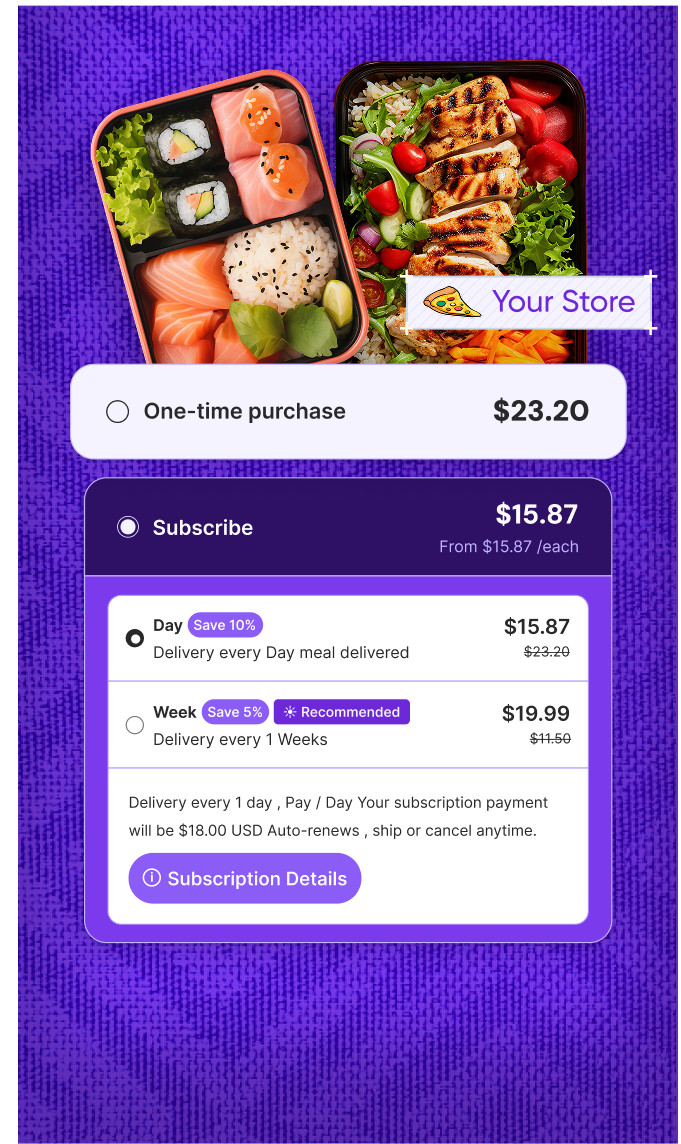
For many stores, offering both options is worth testing when the product is suitable for repeat purchases. A hybrid model allows customers to choose how they buy while creating an opportunity to convert suitable repeat buyers into subscribers.
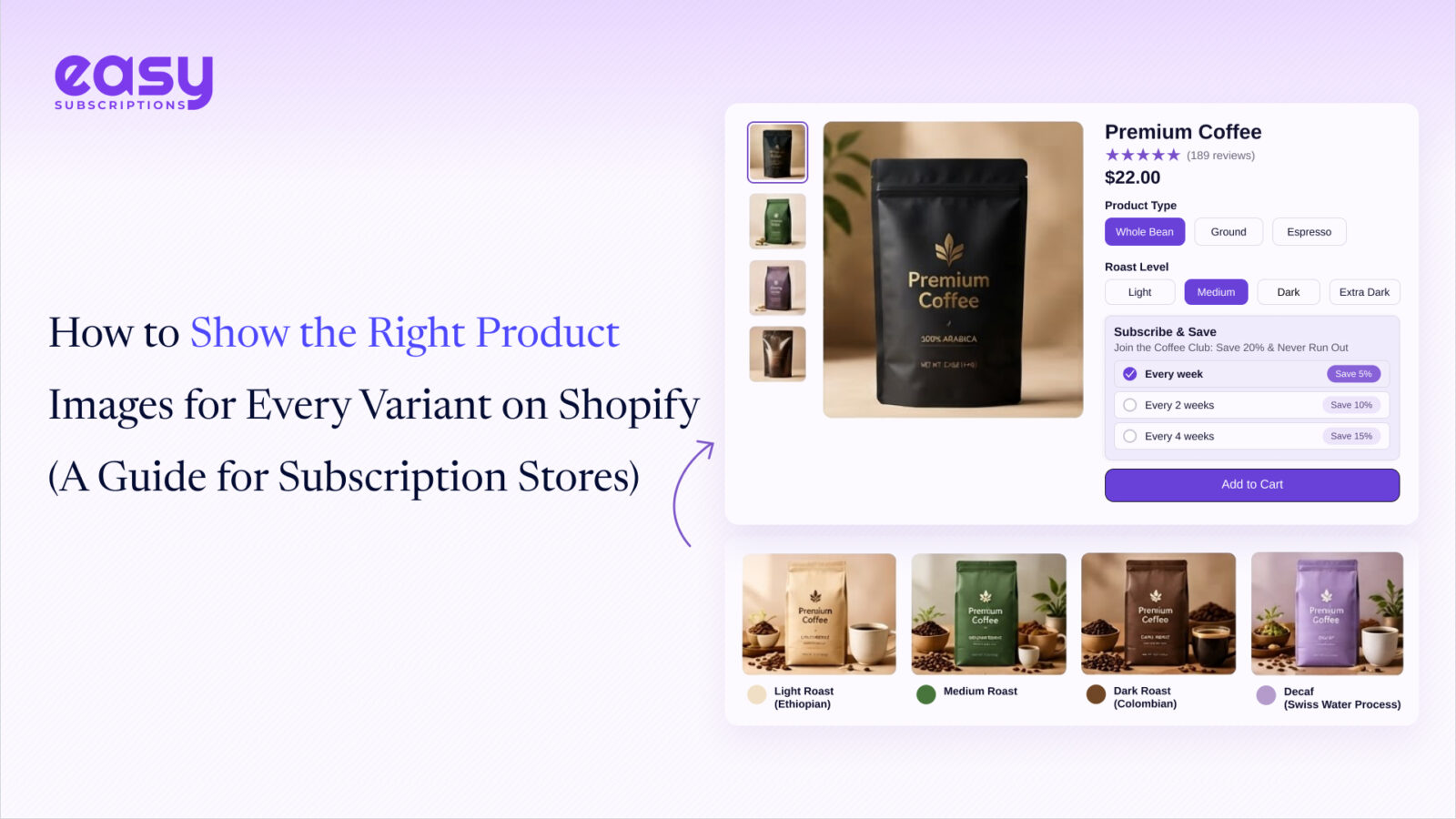
Consider a Shopify coffee store that sells the same coffee beans as both a one-time purchase and a monthly subscription.
- A new customer can buy one bag to test the flavour.
- A regular customer can subscribe to receive coffee every month.
- A customer whose needs change can use the available subscription-management options, where supported.
This approach gives customers flexibility without requiring the merchant to abandon recurring sales.
How to Build a Hybrid Purchase Strategy
- Identify suitable products. Start with products customers naturally replenish or use regularly.
- Display purchase options clearly. Explain the one-time price, subscription price, billing frequency, and applicable terms.
- Communicate genuine subscription benefits. These may include convenience, suitable savings, or scheduled delivery.
- Keep recurring terms transparent. Clearly disclose renewal frequency, recurring charges, and cancellation terms before checkout.
- Follow up after one-time purchases. Once customers have had time to experience the product, explain the subscription option if it is relevant.
- Measure performance. Compare subscription selection, repeat purchases, retention, refunds, and profitability.
Do not assume every one-time buyer should become a subscriber. The objective is to match the purchase model to the customer’s needs.
Which Shopify Products Are Best for Subscriptions?
Subscription suitability depends on how often customers use a product, whether they need regular replenishment, and whether recurring delivery provides meaningful value.
| Product category | Potentially suitable model | Example |
|---|---|---|
| Coffee and beverages | Subscription and one-time | Scheduled coffee deliveries or individual bags |
| Skincare | Hybrid model | One-time cleanser purchase or recurring replenishment |
| Pet supplies | Subscription and one-time | Regular pet food orders or occasional accessories |
| Supplements | Depends on customer usage | Scheduled replenishment where appropriate |
| Household essentials | Subscription and one-time | Regular deliveries or individual purchases |
| Gifts and seasonal products | Often one-time | Holiday gifts and limited-edition products |
| Furniture and durable goods | Often one-time | Occasional furniture purchases |
These are general guidelines, not fixed rules. Product demand, purchase frequency, shelf life, margins, and customer preferences should determine the final decision.
How Can Shopify Merchants Measure Subscription Growth?
Subscription performance should be measured using several metrics rather than subscriber count alone.
Monthly Recurring Revenue (MRR)
Monthly recurring revenue represents the normalised recurring revenue associated with active subscriptions over a month, using a consistent reporting definition.
For example, 200 active monthly subscriptions priced at $25 each represent $5,000 in scheduled monthly subscription billings before relevant adjustments.
Customer Churn Rate
Customer churn rate measures the proportion of customers lost during a period relative to the number of customers at the beginning of that period.
Formula:
Customer churn rate = (Customers lost during the period ÷ Customers at the beginning of the period) × 100
For example, if a store begins a month with 500 subscribers and 25 cancel, its simplified monthly customer churn rate is 5%.
Use consistent definitions when accounting for paused subscriptions, reactivations, and other subscriber changes.
Subscriber Retention
Retention measures the proportion of customers who continue their relationship with the business over a defined period.
Track retention by signup cohort, product, or subscription plan where possible. This can help reveal whether certain offers attract customers who stay longer than others.
Average Order Value (AOV)
AOV measures the average value of orders. Comparing AOV across subscription and one-time purchases can help merchants understand purchasing patterns.
However, a higher AOV does not automatically mean greater profit. Discounts, shipping costs, fulfilment, and product mix also affect profitability.
Customer Lifetime Value (CLV)
Customer lifetime value estimates the value a customer generates over their relationship with a business.
A useful analysis considers revenue, gross margin, acquisition costs, retention, and the time period being measured. Avoid assuming that subscription customers always have a higher lifetime value without reviewing your own data.
How Can Shopify Stores Manage Subscriptions Efficiently?
Managing subscriptions involves more than setting a billing frequency. Merchants need to coordinate subscription plans, customer communication, payment issues, and recurring fulfilment.
Shopify supports subscription purchase options through compatible subscription functionality and apps. Merchants can configure products as subscription-only or offer both subscription and one-time purchase options, depending on their setup.
A subscription app can help merchants manage recurring orders and customer subscriptions. The available functionality varies by app, plan, payment setup, and configuration.
When evaluating a subscription app, check whether it supports the workflows your store needs, including:
- Flexible billing frequencies
- Clear subscription options on product pages
- Customer self-service for eligible subscription changes
- Renewal notifications
- Failed-payment recovery
- Subscription reporting and analytics
- Support for your payment and fulfilment requirements
Official setup guidance is available in the Shopify Help Center: Setting up subscriptions.
How Easy Subscriptions Can Help Shopify Merchants
Easy Subscriptions is a Shopify app designed to help merchants offer recurring purchases alongside or instead of one-time purchases.
Depending on the features and configuration used, merchants can create subscription plans, display subscription options on their storefront, and provide customer subscription-management tools.
Before selecting any app, review its current feature documentation, pricing, compatibility, and support for the workflows your store requires.
Explore Easy Subscriptions to learn more about offering subscriptions on Shopify.
Summary: Subscription vs. One-Time Purchase
Subscriptions can help Shopify stores organise repeat purchases, improve revenue forecasting, and build ongoing customer relationships. One-time purchases offer flexibility, attract customers who prefer occasional orders, and provide an accessible way to try a product.
For many Shopify merchants, a hybrid model is worth testing. Offer subscriptions for products customers regularly need while keeping one-time purchases available for customers who prefer flexibility.
Track recurring revenue, churn, retention, and profitability to understand which model works best for your business. The goal is not to maximise subscriptions at any cost, but to build a purchase experience customers value and a business that can grow sustainably.