 AI-powered, Human-reviewed.





What Is a Mystery Box?
A mystery box is a themed bundle of products a customer buys without knowing exactly what’s inside. Beauty, gaming gear, snacks, collectibles, the theme is fixed; the contents are a surprise.
That surprise is the whole business model. Customers aren’t just buying products; they’re buying the moment they open the box. That’s why unboxing videos exist, every customer becomes a bit of free marketing the second they hit record.
How it works, in short:
- A seller curates items around a theme (monthly, quarterly, or one-off)
- The customer buys blind, based on trust in the brand, not the specific contents.
- They open it, often film it, and share it.
- Repeat buyers come back for the next surprise, not a known product.
Mystery Box vs. Mystery Scoop: What’s the Difference?
Since late 2025, a smaller cousin of the mystery box has exploded on TikTok: the mystery scoop. Sellers scoop small items, beads, charms, crystals, and stationery; from a bin, and the ASMR-style packing video is the content itself. One related hashtag on Douyin pulled over 310 million views (NYTimes, 2026).
| Mystery Box | Mystery Scoop | |
| Format | Curated box, recurring cadence | Scooped items, per order |
| Price | $20–$80+ | $5–$15 per scoop |
| Model | Mostly subscription | Mostly one-off, now shifting to subscription |
| Platform | Shopify, own site | TikTok Shop, Etsy, Instagram |
| Content | Unboxing hauls | ASMR packing, reveals |
The opportunity for scoop sellers: turn one-time impulse buys into a “scoop of the month” plan. That’s a recurring billing problem, not a content problem – solve it with the right Shopify subscription setup and you keep the viral appeal while adding predictable revenue.
Top Mystery Box Niches for 2026
Pick one audience and serve it well. Here are the categories with the strongest repeat-purchase economics right now:
Beauty & Skincare : Curate full-size and sample skincare, makeup, and fragrance products, often sourced from indie brands looking to increase product visibility and reach new customers.
Food & International Snacks: Artisan and imported snacks customers can’t find locally. Low churn: food novelty renews itself every month, and the “disappointment rate” is close to zero.
Wellness & Self-Care : Supplements, aromatherapy, and mindfulness tools. The wellness market continues to grow as consumers spend more on preventive self-care.
Pet Boxes: Treats, toys, and grooming products for dogs and cats. Pet spend is famously recession-resistant, and owners who feel “understood” become repeat buyers fast.
Hobby and Craft Supplies for knitting, candle making, and model kits. Hobbyists spend consistently and belong to communities that amplify word-of-mouth for free.
Build-Your-Own / Customizable Boxes Subscribers set dietary needs, sizes, or interests, and the box is assembled to match. This removes the biggest risk in the category, getting something irrelevant, while keeping the surprise. It’s also the easiest niche to execute well on Shopify, using a box-builder tool that lets shoppers pick their items inside a themed structure.
How to Start a Mystery Box Business: Step-by-Step
Step 1: Pick Your Niche and Price Point
Choose your audience, theme, and cadence (monthly, quarterly, one-off). Check what comparable boxes charge before you set your own price, most mystery boxes land between $30 and $60 a month.
Step 2: Source Reliable Suppliers
Line up wholesalers, artisans, or brand partners, many will trade product placement for exposure. Negotiate bulk pricing early and keep at least two months of inventory as a buffer.
Step 3: Build a Brand People Trust Blind
Customers pay before they see the product, so the brand is the product guarantee. You need:
- A name and logo that fit your specific audience
- Consistent visual identity across packaging, site, and social
- A clear, recognizable voice, the personality behind every box
Step 4: Set Up Shopify With Subscription Management and Build-a-Box
Shopify is the standard platform here: strong app ecosystem, subscription integrations, and checkout tools built for recurring orders. Two tools are responsible for the majority of the work:
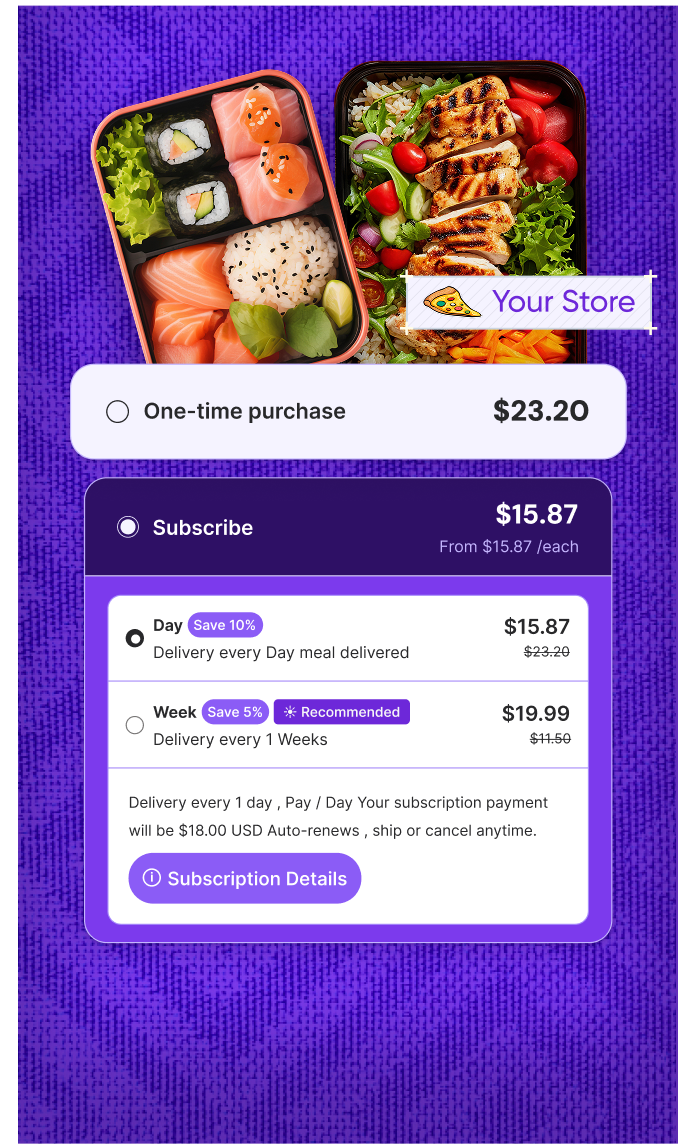
- Subscription management handles the operational side, recurring billing with payment retry, flexible monthly/quarterly/annual plans, subscriber self-service (skip, pause, and cancel), renewal reminders, and retention analytics. This is what keeps a box business running without you manually chasing failed payments every week.
- Build-a-Box lets customers assemble their own box from a curated set of items instead of receiving a fixed selection, pick a base, add extras, and set limits per step. It’s the direct fit for the customizable-box niche above, and it also works as an add-on inside a themed box: let subscribers swap out one or two items each month so the surprise stays, but the mismatch doesn’t.
Run them both together, and you cover the two failure points that kill most mystery box stores: billing friction and box-content complaints.
Install Easy Subscriptions for free on Shopify to set up subscription plans and Build-a-Box on your store
Shopify storefront screen showing a customer selecting individual items to build their own mystery box
Step 5: Plan Fulfillment, Then Launch Small
Decide between self-fulfillment vs. a 3PL at volume, a 3PL saves you from shipping-day chaos. Before a full launch, run a pilot cohort of 50 subscribers. Their feedback and unboxing content will teach you more than any market research.
Step 6: Market With Unboxings, Micro-Influencers, and Referrals
- Unboxing content seeded to creators is usually the highest ROI channel you have.
- Micro-influencers in your exact niche convert better than big names with broad reach.
- Referral programs turn existing subscribers into your cheapest acquisition channel.
Common Challenges (and How to Fix Them)
Customer expectations. If the box doesn’t feel worth the price, people cancel. Fix: publish a guaranteed minimum retail value and put one “hero” item in every shipment.
Inventory and shipping. Over-order and you tie up cash; under-order and fulfillment breaks; ship late and it feels like a broken promise. Fix: use subscriber data to forecast demand, keep buffer stock, and communicate proactively the moment a delay happens.
Market saturation. Most niches already have multiple players. Fix: compete on curation and brand personality, not price, a price war kills margin and, eventually, the brand.
Subscription churn. The most persistent problem in this model. People leave when boxes feel repetitive or money gets tight. Fix: rotate themes, add customization, and give subscribers an easy skip-or-pause option instead of a hard cancel, that single feature alone typically saves a meaningful share of at-risk subscribers every month.
Conclusion
The mystery box model has real structural advantages: high engagement, word-of-mouth built into the unboxing itself, and done right, predictable recurring revenue. The market backs this up: the global subscription box category is on track for roughly $49.7 billion in 2026 (The Business Research Company).
What separates the brands that scale from the ones that stall is infrastructure: consistent value, genuine niche focus, and billing that doesn’t leak subscribers through friction.
Ready to launch? Start your mystery box subscription today.