 AI-powered, Human-reviewed.



You’ve already cracked recurring revenue. Here’s the move that locks in retention—and leaves your competitors behind.
Quick answer: Why do subscription brands need a mobile app?
A mobile app reduces the friction that causes churn, gives you a direct push notification channel that outperforms email, keeps your brand visible between orders, and makes subscription management a one-tap habit. Brands with apps see 10–30% of revenue through the app channel and app users return 2–5x more frequently than mobile web visitors.
In this guide
- Why subscription brands have a retention problem
- What changes when you have a mobile app
- Push notifications, one-tap reordering, home screen presence, upselling
- How to actually launch a mobile app on Shopify
- Frequently asked questions
If you’re running a subscription business on Shopify, you’ve already solved the hardest problem in e-commerce: getting customers to commit. Recurring revenue is the dream model. But because it’s such a strong way to run a business, the bar is higher than ever.
Competition is fierce. CAC is brutal. And retention, real, lasting retention—is what separates the brands that scale from the ones that stall.
That’s where your focus needs to be. And one of the most underrated tools for keeping subscribers engaged? Your own mobile app.
Do Subscription Brands Really Have a Retention Problem?
Yes, even the good ones. Launching a subscription doesn’t automatically mean customers stick around. Here’s the reality:
3–5% average monthly churn for subscription e-commerce brands
~40% of your subscriber base lost annually at 4% monthly churn
75%+ of e-commerce traffic happens on mobile
3–7x longer session time for app users vs mobile web visitors
At 4% monthly churn, you’re losing close to 40% of your subscriber base every year. You’re constantly backfilling just to stay flat. And most of that churn is preventable, it’s not about your product.
Here’s the friction that’s actually driving cancellations:
- Subscription management is buried behind email links and login walls
- Payment failure notifications get lost in crowded inboxes
- Your brand goes completely invisible between delivery cycles
Most cancellations aren’t because customers hate your product. They canceled because managing the subscription felt like too much work at the wrong moment. That’s a solvable problem.
Some brands think the solution is to be as quiet as possible and hope customers let their subscription run. This is backwards. You want more contact with your customers, not less.
What Changes When a Subscription Brand Has a Mobile App?
A mobile app isn’t a magic fix. But paired with a strong subscription management tool, it becomes a genuine retention machine. Here’s exactly what changes.
Push notifications that actually reach people
Getting a message in front of a customer today is harder than ever. But some messages are too important to miss—a failed payment, a shipping update, a reminder that their next box ships in three days. These are time-sensitive. They need to land.
Mobile apps let you send native push notifications that hit the lock screen instantly, with near-guaranteed visibility. For subscription brands, this single capability alone can meaningfully reduce involuntary churn.
Examples of high-impact push notifications for subscription brands:
“Your next order ships Thursday—want to add anything?”
“Your payment method needs updating. Tap to fix it.”
“Your reward points are about to expire—here’s what you can redeem.”
Each of these is a touchpoint that either prevents churn or drives incremental revenue. And it costs nothing to send.

Reordering becomes a one-tap habit
On mobile web, managing a subscription means finding an email, clicking through, logging in, and navigating a portal. It’s not terrible, but it’s enough friction that many customers put it off until they’re frustrated enough to just cancel.
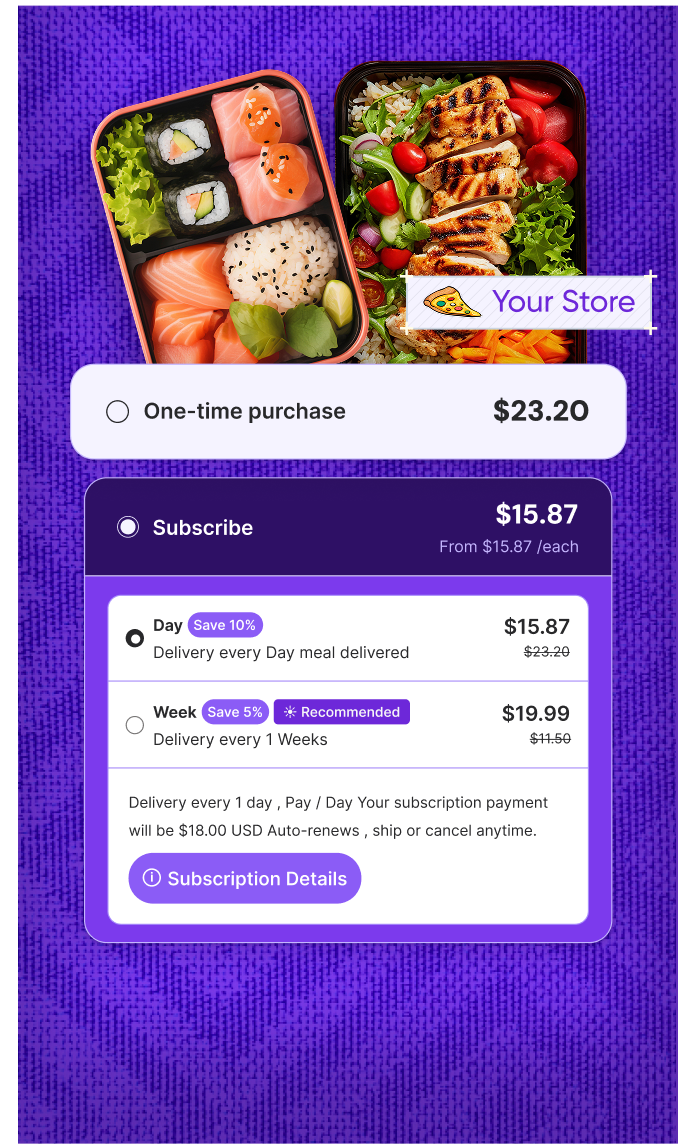
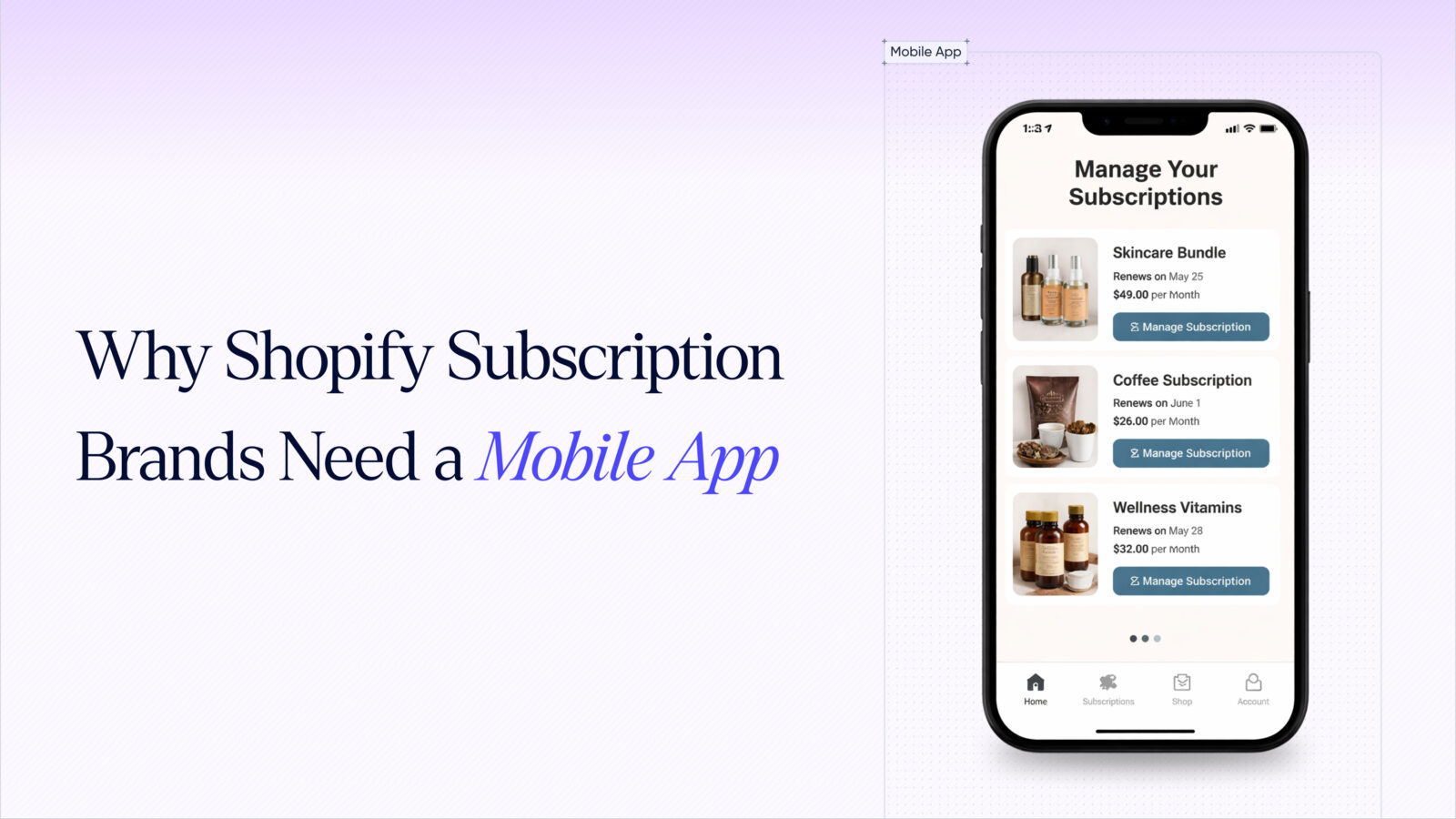
In an app, customers are already logged in. Payment info is saved. The subscription dashboard powered by Easy Subscriptions—loads instantly. Skip, swap, pause, reorder: one or two taps and done. The easier you make routine actions, the less likely subscribers are to reach for the nuclear option.
Your brand stays on their home screen
Between deliveries, most subscribers aren’t thinking about you. They’re not checking your site or opening your emails. An app icon sitting next to Instagram and their banking app changes that—it’s a persistent, passive reminder that you exist, and coming back to your store is one tap, not a multi-step process.
App users return 2–5x more frequently than mobile web visitors and spend 3–7x longer per session. For subscription brands, that extra engagement means more add-on purchases, subscription upgrades, and product discovery between cycles.
Upselling that feels helpful, not pushy
Subscription brands sit on uniquely valuable data. You know what someone orders, how often, and what they’ve tried. In an app, surfacing a personalized recommendation feels like a natural part of the experience “New flavor just dropped, want to add it to your next box?” feels like a service. In an email, it feels like marketing.
Average order values for app shoppers run 25–30% higher than mobile web. For subscription brands, that shows up as one-time add-ons, between-cycle purchases, and tier upgrades that compound over time.
How Can Shopify Subscription Brands Launch a Mobile App?
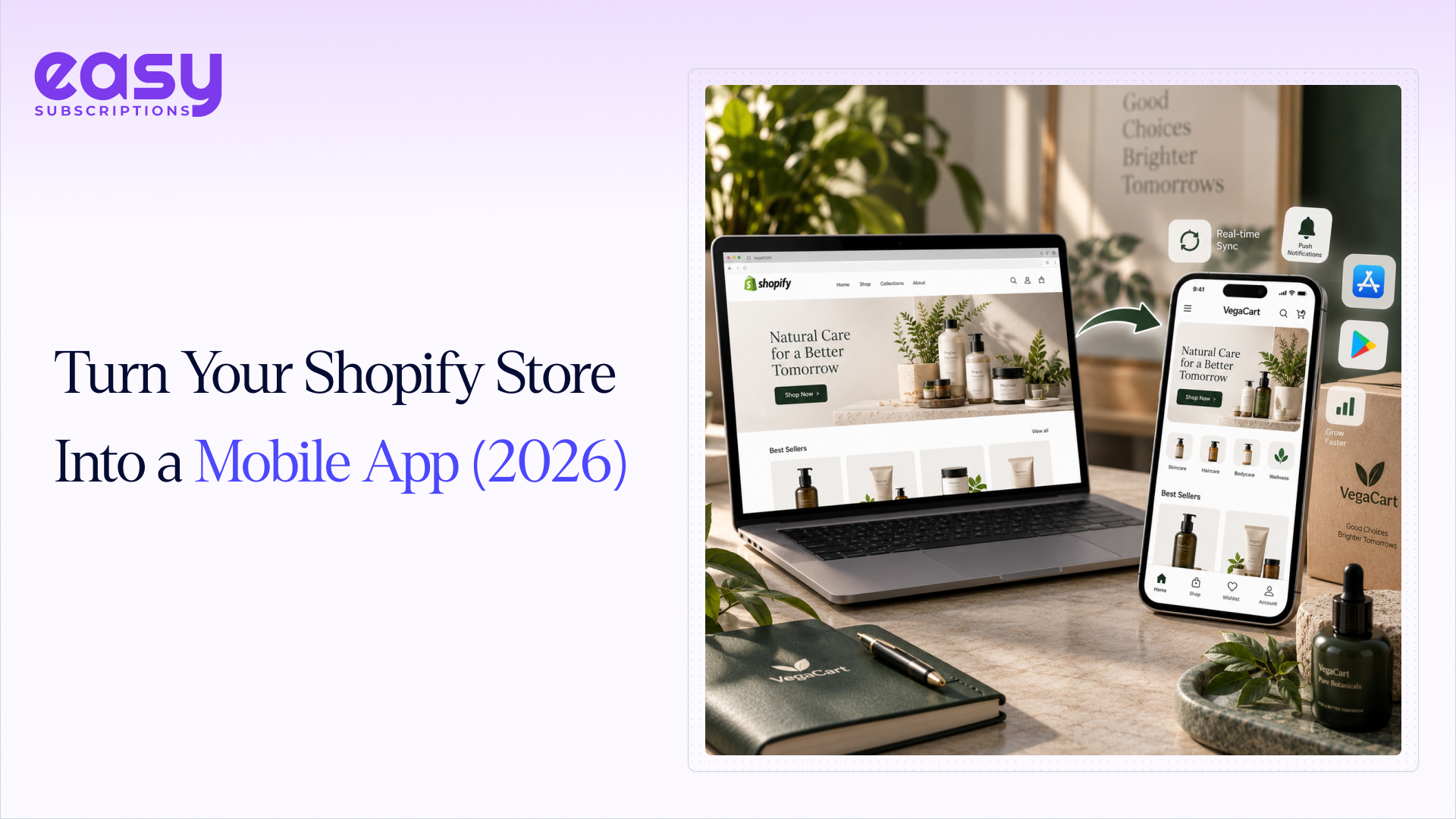
Most brands assume a mobile app means a six-figure dev project. It doesn’t—not anymore. There are platforms built specifically to help Shopify brands launch mobile apps, without hiring developers or writing code, typically running $150–$1,500/month.
Brands with apps see 10–30% of revenue flowing through the app channel on average. For subscription brands, the impact is amplified—because every small lift in retention goes further when you have recurring revenue compounding behind it.
Two main routes to consider:
- Managed service (e.g. MobiLoud)—full-service conversion of your Shopify store into a native app, premium priced but genuinely hands-off
- DIY app builder—drag-and-drop builders in the Shopify App Store, more flexibility, lower cost, but more work on your end
A tool like Apploy makes this an easy first move. It’s a no-code mobile app builder built specifically for Shopify stores – you publish on iOS and Android in minutes, and it runs directly on your existing theme, so your app stays in sync with your products, content, and discounts automatically. No dev team, no rebuild, no six-month timeline.
Either way: get a demo, compare options, and start now. The compounding value of a mobile channel kicks in from day one, the sooner you launch, the sooner it pays off.
Running subscriptions on Easy Subscriptions?
Your subscriber dashboard is already built. Pair it with a mobile app and watch retention compounds.
See how it works →
Conclusion
You’ve done the hard part—building a product people love and a subscription model that generates real recurring revenue. A mobile app makes that investment compound.
It reduces the friction that causes churn. It gives you a direct line to subscribers that outperforms email. It keeps your brand alive in the moments between orders. And it turns subscription management from a hassle into a habit.
Mobile apps aren’t just for Nike and Sephora anymore. They’re for any Shopify brand serious about retention, and serious about building a subscription business that actually scales.
The time to explore this is now.