 AI-powered, Human-reviewed.

10 High-Converting Shopify Product Bundle Ideas
Published On: March 17, 2026 - 19 min read
If you sell on Shopify, product bundles are one of the fastest ways to lift your average order value and simplify choices for customers. The key is pairing items that already go together, setting clear value, and making the path from one‑time purchase to repeat order feel effortless. This article shares 10 high‑converting bundle ideas for 2026, from BOGOs and mystery bundles to cross‑brand collaborations and AI‑curated product sets. Let’s check them out!
What makes a Shopify bundle convert?
A successful bundle does more than just group random items. It actively removes barriers to purchase. Here are the 4 key elements that drive conversions:
- Clear value perception: Shoppers need to understand the benefit instantly. Whether it is a direct discount, a free gift, or unlocked shipping, the exact savings or extra value must be obvious at first glance.
- Natural product pairing: Products must logically belong together. Instead of randomly grouping items just to increase the total quantity, you should combine products that genuinely solve a shared problem or complete a specific routine.
- Low-friction choice: Too many options will paralyze your buyers. Keep the purchase process simple by minimizing variations or by offering a controlled, custom-bundle experience where customers can only pick from a carefully curated list.
- Flexible continuation path: The best bundles build loyalty. If it fits your niche, give buyers an easy way to upgrade their single purchase into a recurring subscription, a prepaid plan, or an exclusive subscriber perk.
If you are looking for a way to create a product bundle on Shopify, read this detailed guide from the BOGOS team: Shopify Product Bundles Completed Guide: Strategies, Best Apps & Tips
10 Practical Shopify Product Bundle Ideas That Actually Move the Needle
#1 Frequently Bought Together (FBT) Bundle
At its core, the Frequently Bought Together strategy involves grouping 2-4 complementary items that naturally support the main product, allowing shoppers to add the entire set with a single click.
This tactic shines because it behaves like a smart checklist exactly when a shopper is ready to commit. Instead of forcing them to remember every necessary accessory, you surface the obvious companions so the purchase feels complete and requires minimal effort.
This approach works particularly well for products that rely on compatible accessories or setup items, such as sports gear, electronics, grooming kits, or hobby equipment. It tends to be less effective for highly personalized purchases or luxury goods where shoppers prefer to choose each item individually.
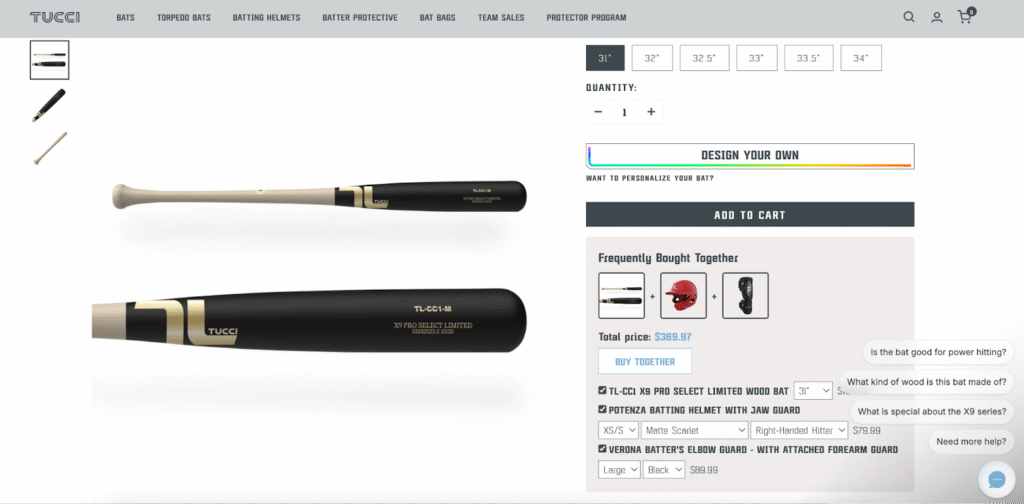
Take Tucci as a prime example. On their bat product page, a dedicated section pairs the main wood bat with protective gear like a helmet and elbow guard right next to the buy button. This framing feels like a genuine, helpful recommendation for a complete baseball setup rather than a random upsell attempt.
Execution tips:
- Start with real order data and build bundles around the item that usually initiates the purchase journey.
- Keep the set tight so it reads instantly, ideally two to four items at most.
- Prioritize compatibility and utility add-ons such as protection, refills, storage, or setup essentials.
#2 The All-in-One Starter Kit
Think of this as a ready-made package designed specifically for first-time buyers. It curates everything a beginner needs to use your core product properly without requiring any extra research.
What makes it highly effective is the pure confidence it gives the consumer. A starter kit tells the customer exactly what to buy, removes the fear of missing a critical piece, and drastically shortens the time from initial interest to checkout.
This strategy performs best for products that require multiple components or a clear routine to get started, such as cleaning systems, skincare routines, coffee brewing gear, or fitness equipment. They are less useful for simple single-use products where customers already understand exactly what they need.
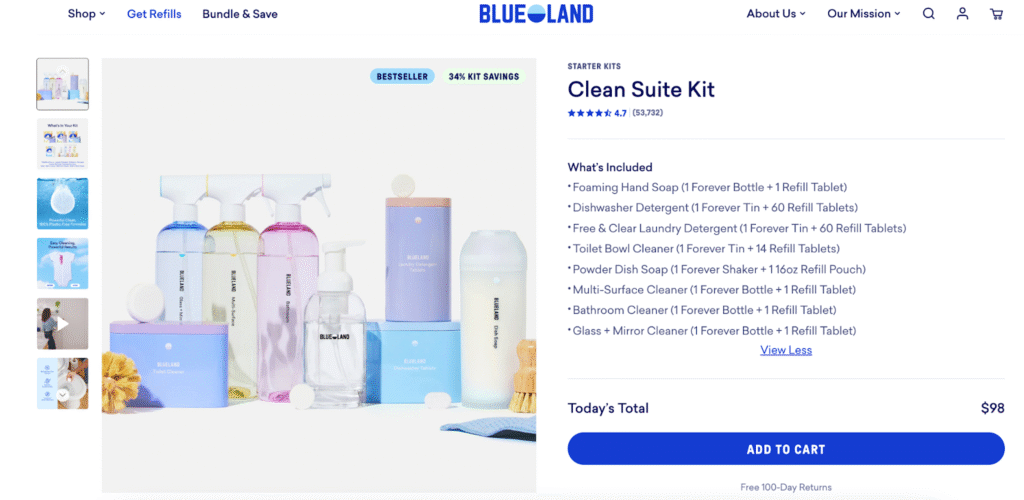
Blueland illustrates this perfectly with its Clean Suite Kit. They package hand soap, dish detergent, and multiple surface sprays into one comprehensive set while boldly highlighting a 34 percent kit savings. By doing this, the brand successfully sells an entire household cleaning system rather than forcing the user to piece together a routine item by item.
Execution tips:
- Name the package around the desired outcome, not the SKUs, so it feels like a guided starting point.
- Show one image with the full kit spread out to create an immediate feeling of completeness.
- Put a short list of “what’s inside” near the top so shoppers understand the exact value in seconds.
#3 Volume Discounts (Quantity Breaks)
This approach relies on tiered pricing for a single product. As customers add more units to their cart, their discount increases automatically, such as buying 2 to save 10% or 3 to save 15%.
Volume discounting performs exceptionally well for consumable or frequently replaced items (such as supplements, skincare, apparel basics, or household essentials), turning a single-item decision into a logical stock-up opportunity. It gives shoppers a practical reason to add one more unit without feeling heavily pressured by aggressive marketing.
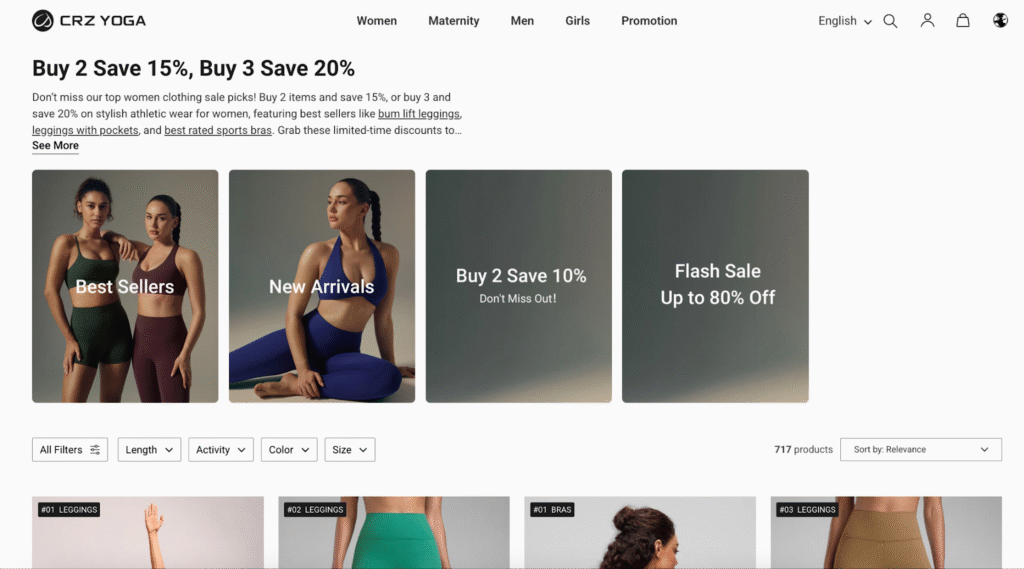
Looking at CRZ Yoga, you can see how straightforward this looks in practice. The brand promotes a clear “Buy 2 Save 15%, Buy 3 Save 20%” message directly on their collection page. Catching the buyer’s attention early means the financial incentive feels like a built-in perk rather than a hidden coupon code they have to hunt for later.
Execution tips:
- Limit the pricing ladder to 2-3 tiers so the customer can process it instantly.
- Surface the tiered offer on the product page and collection page, not just in the cart.
- Use this format on products customers already trust, because quantity breaks work best when the buying decision is mostly made.
#4 Buy One, Get One (BOGO) & Buy X Get Y
Here, you offer a conditional reward based on the contents of the cart. When a shopper buys a qualifying item or reaches a specific quantity threshold, they unlock a second item for free, at a deep discount, or receive a special gift.
BOGO style offers still convert because the value proposition is immediate. Customers do not need to do much calculation, and the reward feels tangible in a way that a generic percentage discount often does not.
This format is particularly useful for products with healthy margins and relatively low shipping costs (such as cosmetics, snacks, apparel accessories, or small consumer goods). They tend to be less suitable for bulky, expensive, or luxury items where heavy discounts can erode margins or brand perception.
Harry and David showcases the power of a bold conditional offer beautifully. Their site features a highly visible “Buy one, get one 50% off” promotional banner right at the top of the browsing experience. This kind of absolute clarity pulls shoppers into a multiple-item mindset long before they ever reach the checkout page.

Execution tips:
- Make the exact reward visible before checkout so shoppers understand the ultimate benefit while they are still browsing.
- Pair your hero item with an easy choice reward, such as a top seller variant or a sample of a new release.
- If possible, use an app to automatically add the reward to the cart so customers do not need to manually recreate the deal.
#5 Mix-and-Match (Build Your Own Bundle)
This tactic revolves around controlled customization. You allow customers to handpick a set number of items from a curated collection, and a fixed bundle price or specific discount applies automatically once they reach the requirement.
It tends to convert beautifully because it strikes a balance between personalization and structure. Shoppers get the deep satisfaction of choosing their perfect set, while you keep the path tight enough that they actually finish building the bundle instead of abandoning it halfway.
This works particularly well in product catalogs with many flavors, styles, or variants such as cosmetics, snacks, apparel basics, or gift boxes. They are less effective for stores with very small product ranges or items that require strict compatibility rules.
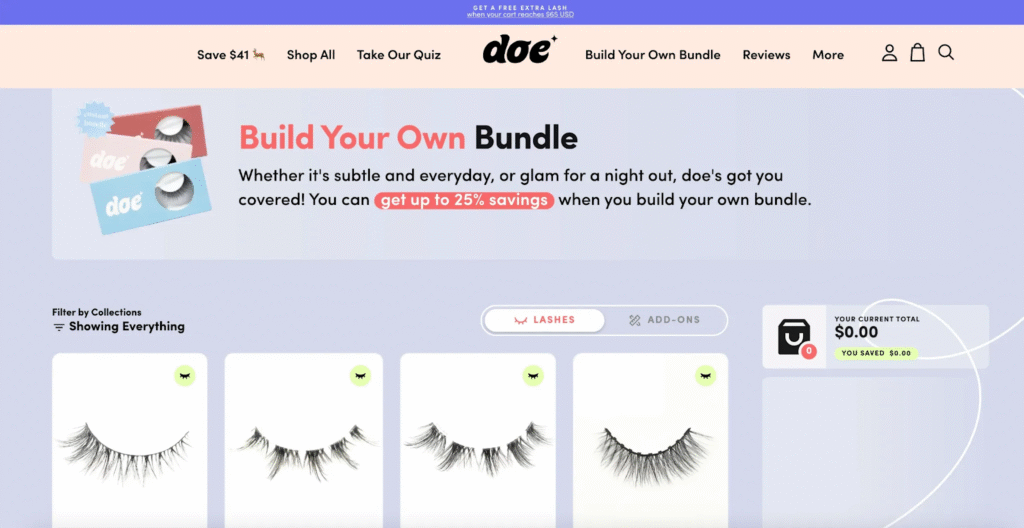
Doe provides a stellar example with their Build Your Own Bundle page. The interface guides visitors through a structured selection of lashes and extra items while displaying potential savings of up to 25%. Separating the core products from the extras quietly reduces choice overload and keeps the personalization process entirely stress-free.
Execution tips:
- Give a clear frame, like pick 3 or pick any 4 for a fixed price, so customers always know where the finish line is.
- Organize choices by style, need, or step so scanning the catalog feels incredibly quick.
- Show running totals and savings while they build, because seeing visible financial progress keeps shopping momentum high.
#6 Themed & Seasonal Gift Sets
This format groups products around a moment, recipient, or occasion, so the offer feels like a ready-made answer rather than a random collection of SKUs. Instead of asking shoppers to build a gift from scratch, you give them a bundle that already aligns with the purchase context.
That is exactly why it tends to perform well during holidays and special occasions. The real win is not just convenience, but relief: the customer no longer has to figure out what pairs well, what looks thoughtful, or whether the gift feels complete.
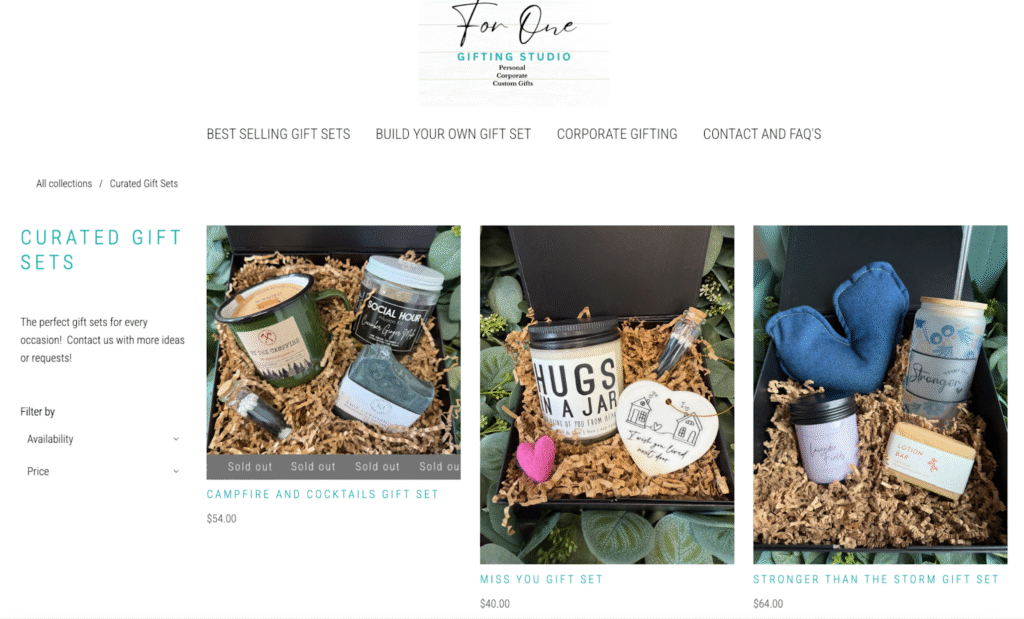
As you can see with For One Gifting Studio, the store sells curated sets like “Campfire and Cocktails,” “Miss You,” and “Stronger Than the Storm,” which make shoppers feel they are choosing the right sentiment, not just buying products. This is why themed gift sets work across beauty, food, home fragrance, wellness, and lifestyle categories, especially when the purchase is emotional or time sensitive.
Execution tips:
- Build the bundle around an occasion or recipient first, then choose products that support that story.
- Invest in gift-ready packaging, because presentation plays a part in the conversion here.
- Name the set in a way that instantly signals the use case, such as Mother’s Day, New Baby, Thank You, or Work From Home Reset.
#7 Gift With Purchase (GWP) Tiers
Here, the whole cart becomes a dynamic offer. As shoppers spend more, they unlock rewards one by one, turning an ordinary checkout into a mini progression system.
What makes this one so effective is momentum. Once customers can see they are close to unlocking a gift, many will add one more low-friction item to avoid “wasting” the progress they have already made.
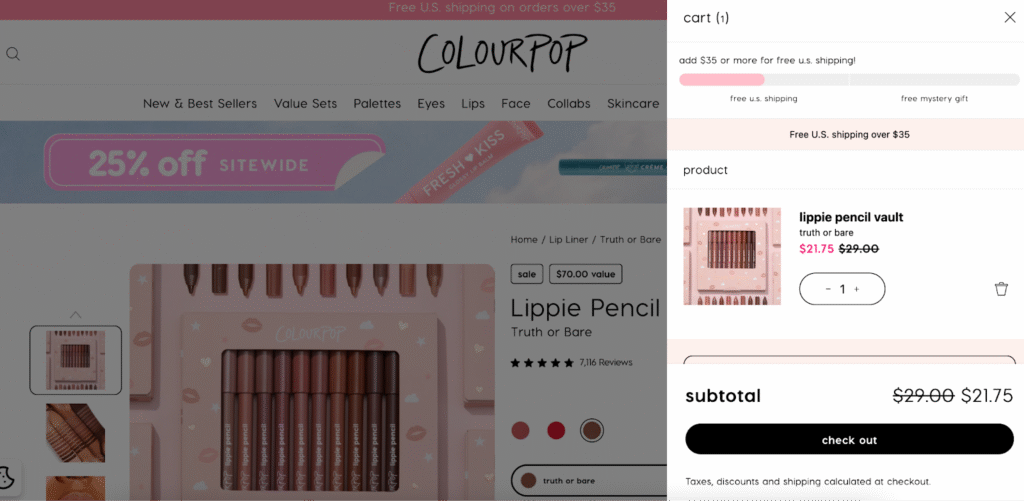
ColourPop clearly shows this mechanic in its cart drawer, where shoppers can track progress toward free U.S. shipping at $35 and a free mystery gift at the next milestone. The progress bar does more than explain the promotion. It gives the customer a visible target, and that target can quietly lift cart size without making the experience feel pushy.
Execution tips:
- Put the progress bar in the cart drawer or sticky cart area so it stays visible while shoppers browse.
- Choose threshold items that are easy to add, such as lip liners, socks, sheet masks, or travel sizes.
- Keep the reward ladder simple, because two strong milestones usually outperform a cluttered set of tiny perks.
#8 The Mystery Bundle
With a mystery bundle, the customer pays a fixed price for a surprise assortment, usually with a stated value that feels higher than the purchase price. The exact contents stay hidden, but the theme, category, or quality level should still be clear enough to make the offer feel safe.
This model thrives on curiosity, but the stronger driver is anticipation. Shoppers are not only buying products. They are buying the experience of discovery, which makes the bundle feel more entertaining than a standard discount.
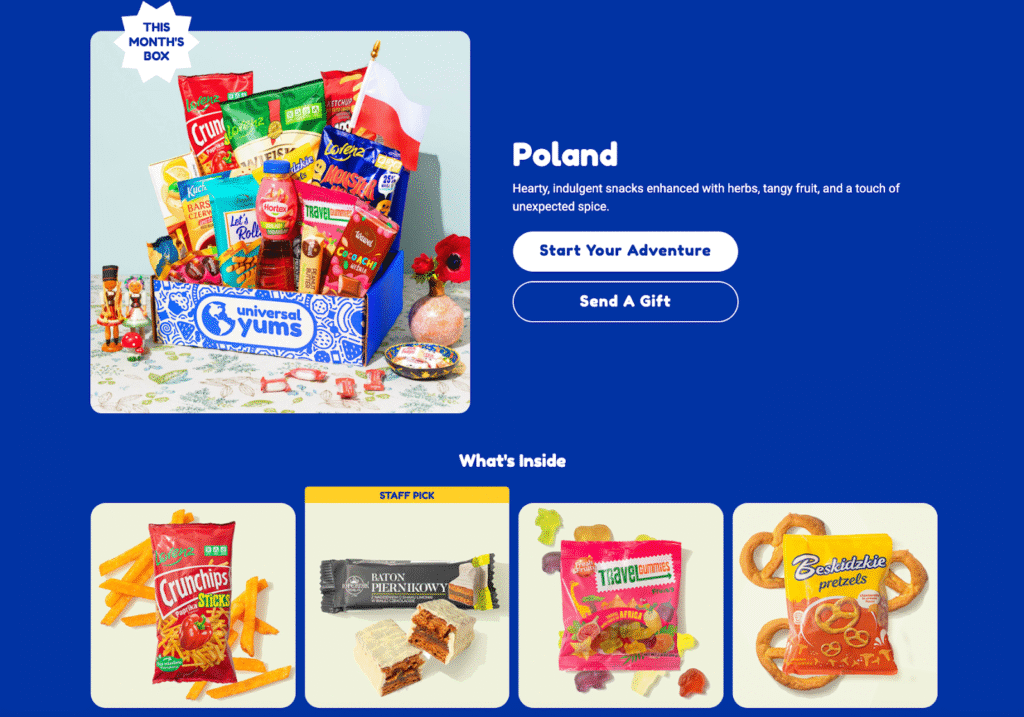
Universal Yums is a useful example of this logic. Its monthly country boxes reveal the theme, such as a Poland box, while keeping the exact snack mix a surprise. That balance matters because customers get enough context to say yes, while still enjoying the “what will I get?” feeling that makes mystery bundles appealing in the first place.
Execution tips:
- Always anchor the box with a clear promise, such as category, style, season, or minimum value.
- Make sure at least one item is a proven favorite, so the bundle feels curated rather than like leftover inventory.
- Use mystery bundles for end-of-season clearance carefully, because surprise works best when trust stays intact.
#9 The Cross-Brand Partnership Bundle
This is where 2 non-competing brands with a similar audience come together to create a limited offer, gift set, or co-branded product that feels more distinctive than either brand’s standalone assortment. When done well, the partnership does not just add products together. It merges identities, communities, and reasons to buy now.
The appeal here comes from borrowed trust and built-in novelty. Shoppers already know one brand. The second brand adds fresh interest, and the limited nature of the collaboration makes the offer feel more collectible and less interchangeable.
Apple Watch Nike is one of the clearest mainstream examples of this playbook. Apple describes it as the result of a long-standing partnership, combining Apple Watch hardware with exclusive Nike Sport Bands and Nike watch faces designed around runners.
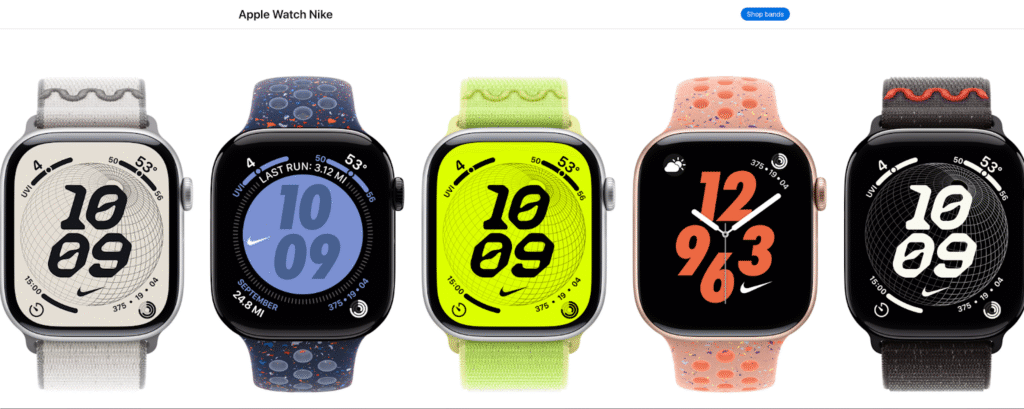
You can see the same logic in other well-known collaborations, including Starbucks x Stanley insulated drinkware. There’s also the limited-edition Target x Levi’s collection, which brought the Levi’s brand into home, apparel, pets, and lifestyle categories for Target shoppers. Different categories, same principle: each brand helps the other feel more desirable, while the collaboration itself creates a reason to pay attention now rather than later.
Execution tips:
- Use virtual bundle apps when 2 brands are fulfilling separate items, so inventory stays clean and orders can be split correctly.
- Choose partners with audience overlap, but avoid direct substitutes, because the bundle should feel additive.
- Launch with a fixed time window or limited run, since exclusivity is a big part of the conversion lift.
#10 Subscription/ Subscribe & Save
This strategy takes a product or bundle people already need repeatedly, then gives them a lower-friction path to keep buying through a recurring plan. In many stores, it works best after a strong starter kit or replenishment bundle has already introduced the routine.
The reason it performs differently from a normal one-time offer is simple: it reduces future decisions. Once the customer believes the products fit their routine, convenience often matters more than squeezing in one more comparison-shopping session.
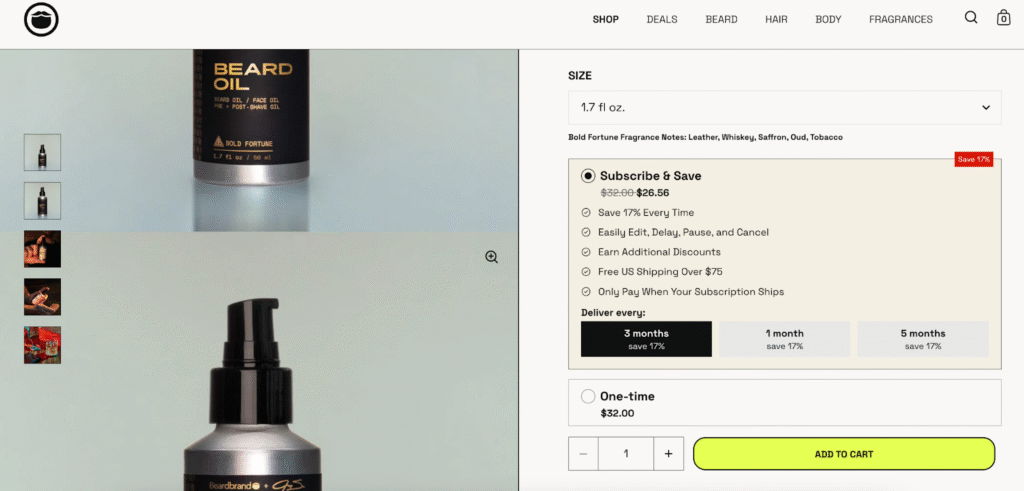
Beardbrand is a strong example of this setup. On its beard oil product page, the brand places “Subscribe & Save” directly next to the one-time purchase option, highlights a 17% discount, and spells out practical benefits like pause, edit, delay, and cancel controls, plus selectable delivery frequencies. That framing matters because it shifts the pitch from “buy this again later” to “set this up once and let it run,” which is exactly what recurring revenue offers should do.
Execution tips:
- Lead with products that are genuinely replenishable, such as oils, supplements, pet consumables, coffee, or skincare basics.
- Let shoppers choose frequency clearly, because rigid plans often reduce trust.
- Add subscriber-only perks beyond price, such as early access, free shipping, or exclusive add-ons, so the plan feels better, not just cheaper.
3. Shopify Bundle Apps Worth Shortlisting in 2026
As bundling gets more sophisticated, many merchants no longer want an app that only handles one fixed offer type. They want one tool that can support upsells, quantity breaks, gift logic, and cleaner on-page merchandising without turning the storefront into a mess. Below are the top 3 winners.
#1 Easy Subscriptions Bundles Quantity Break

- Pricing: Free to install. Paid plans start at $39/month and scale up to $399/month.
- Best for: Shopify stores that want to combine product bundles with recurring revenue through subscription plans.
Easy Subscriptions Bundle focuses on turning one-time bundle purchases into long-term recurring orders. Instead of selling a bundle only once, merchants can offer customers the option to subscribe and receive the same bundle regularly with added perks like discounts, free shipping, or subscriber-only bonuses.
This model works especially well for products that follow a natural replenishment cycle, such as supplements, skincare routines, coffee, grooming products, or pet supplies. By packaging these items into a routine-based bundle, stores can simplify repeat purchases while increasing customer lifetime value.
One advantage of Easy Subscriptions is that it allows merchants to place subscription options directly alongside standard bundle offers, giving shoppers the flexibility to choose between a one-time purchase or a recurring delivery plan. This reduces friction for customers who already know they will need the products again.
Bundle features:
- Subscription bundles: Create bundles that customers can receive on a recurring schedule, such as every 30, 60, or 90 days.
- Subscribe & save discounts: Offer automatic discounts for customers who choose a subscription instead of a one-time purchase.
- Flexible delivery schedules: Customers can choose their preferred delivery frequency and easily update, pause, or cancel their subscription.
- Routine-based bundles: Combine products that form a repeatable routine, such as skincare systems, grooming kits, or supplement stacks.
Easy Subscriptions Bundle is particularly useful for brands focused on retention and recurring revenue, as it transforms bundle offers from a one-time upsell into a long-term customer relationship.
#2 BOGOS: Free Gift Bundle Upsell
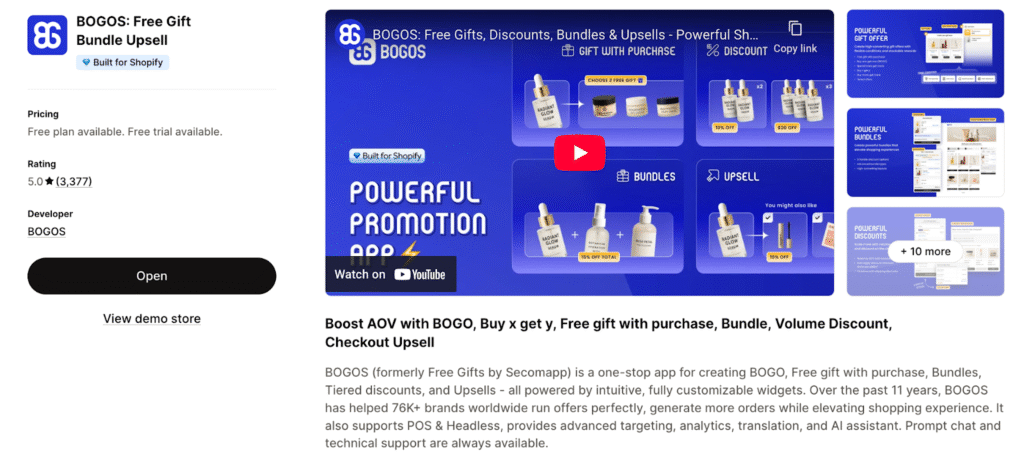
- Pricing: Free to install. Paid plans start at $29.99/month and scale up to $109.99/month.
- Best for: Stores that rely heavily on free gifts, advanced Buy X Get Y rules, and more granular promotion logic.
BOGOS is the most powerful bundle app in this top, built around advanced rule logic. While it supports multiple bundle formats, the app particularly excels at gift-based promotions and conditional offers. Merchants who want deeper control over how gifts, discounts, and shipping rewards behave will usually find BOGOS more flexible than most bundle apps.
Bundle features:
- Classic bundles: Supports several discount styles, including free product rewards and combined free shipping incentives.
- Mix-and-match bundles: Customers can build bundles by selecting items from predefined product groups or using step-based bundle builders.
- Volume discounts: Apply quantity-based discounts to individual products or product groups, with optional free shipping.
- Buy X Get Y/ free gift: Advanced BOGO logic including gift selection, “same product gift,” multiple gift rules, and one-time gift limits.
- Customer targeting: Promotions can be limited to specific customer segments.
- Frequently bought together: AI or manual product suggestions for cross-sell bundles.
In general, this is the strongest option here if your bundle strategy depends on gift logic and more advanced promotional control. The downside is cost, especially for smaller stores, and pricing can feel heavier as you move up the Shopify plans.
#3 Kaching Bundles Quantity Break
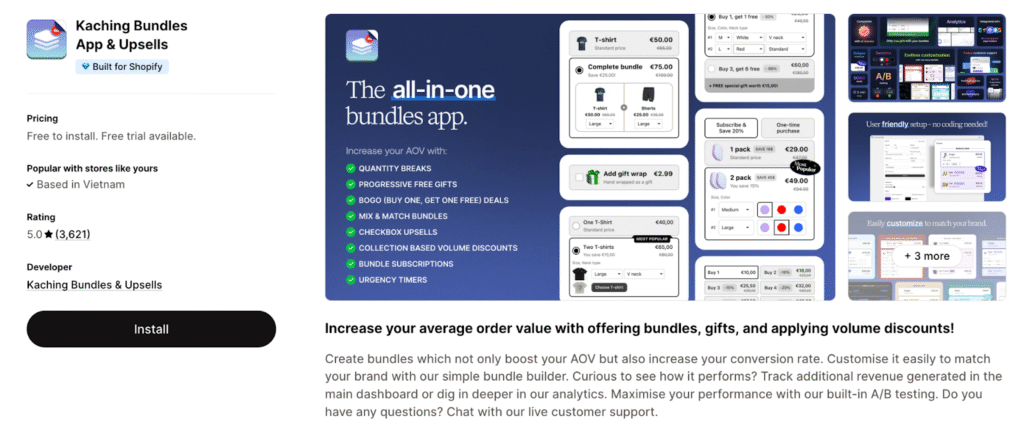
- Pricing: Free to install. Paid plans start at $14.99/month (with a free trial).
- Best for: Stores that want a clean PDP and prefer showing multiple offers in a single compact widget.
Kaching is built around a single widget, which is its main selling point. Instead of placing separate offer blocks all over the page, it lets merchants present several promotions in one consolidated area. That makes it especially useful for stores that care about fast setup, simple presentation, and minimal visual clutter before getting deeper into advanced promotion logic.
Bundle features:
- Multi-offer widget: A single widget can display multiple promotions, such as Buy X Get Y, Complete the Set, and Progressive Gifts in one block.
- Volume discounts: Apply quantity-based discounts to individual products or product groups, with optional add-ons like free shipping or free gifts per tier.
- Classic bundles (Complete the Set): Fixed bundles with pre-selected items, adjustable quantities, and per-item discounts.
- Progressive gifts: Unlock rewards such as free shipping or gifts when customers reach specific spending thresholds.
- Widget customization: Multiple widget layouts with customizable colors, fonts, and text.
Kaching’s biggest advantage is simplicity: one widget can carry a lot of merchandising weight without making the PDP feel crowded. The disadvantage is that some features are still fairly basic, and the setup logic may feel a little unintuitive for first-time users.
#4 Fast Bundle Product
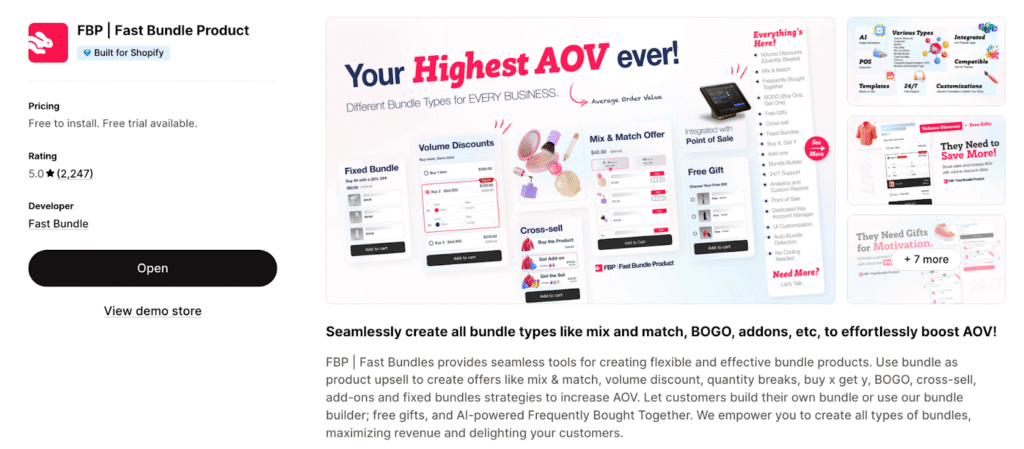
- Pricing: Free to install. Paid plans start at around $19/month (with a free trial).
- Best for: Merchants who want broad bundle coverage in one app and want more control over how offers appear on the storefront.
Fast Bundle is closer to a full suite of bundles than to a single-purpose promotion app. It covers most of the bundle mechanics Shopify stores typically need, which makes it attractive if you do not want to stitch together several separate apps.
Bundle features:
- Classic bundles: Discount individual items or apply a discount to the entire bundle. Bundles can appear as split items, separate line items, or a single bundled product.
- Volume discounts: Multiple widget templates with support for different discount types, such as cashback credit or free shipping.
- Buy X Get Y: Supports tiered BOGO offers and combinations of discounts plus free gifts.
- Mix-and-match bundles: Customers can build their own bundle from a product collection with different discount styles, including “cheapest item free.”
- FBT: Upsell products can be assigned manually or automatically based on order history data.
- Flexible display options: Offers can appear on product pages or in bundle-builder popups.
Fast Bundle is a strong fit when you need variety and storefront flexibility in one place. Its weak spot is free gift depth, which still feels lighter than more promotion-focused apps, and its analytics are not especially robust.
The Future of Product Bundling: AI-Personalized
Fixed bundles are not going away, but AI is reshaping what effective bundling looks like. Instead of showing the same preset combinations to every visitor, AI bundle engines use product relationships, browsing signals, and cart behavior to generate more relevant offers for each shopper.
In practice, AI bundle builders already handle several important tasks:
- Analyze order patterns and product relationships to identify items that naturally belong together, without relying entirely on manual merchandising rules.
- Adapt recommendations in real time based on browsing activity, clicks, and cart behavior, allowing the suggested bundle to evolve during the shopping session.
- Optimize bundles for different goals, such as increasing basket size, improving accessory mix, or reducing the time merchants spend manually configuring bundles.
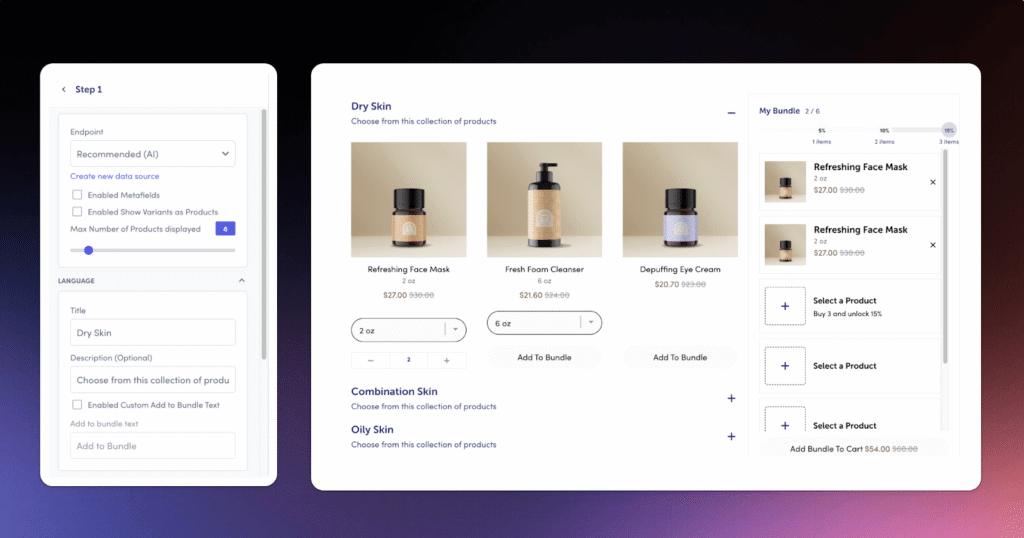
An AI-powered bundle builder that adapts product suggestions and discounts as the shopper builds their bundle. (Source: Rebuy)
Evidence from early case studies is also difficult to ignore:
- Particular Audience: product bundles increase units per transaction by 30–60%.
- digiDirect: AI bundle recommendations increase items per cart by 30% year over year.
- Target: AI-powered recommendations deliver 1200x attributed sales ROI and 384x incremental uplift ROI in A/B testing.
Taken together, these results highlight a broader advantage. AI bundling improves performance in 2 directions at once. For shoppers, it reduces the effort required to figure out which products work well together. For merchants, it reduces manual bundle planning and makes it easier to test more combinations quickly, then keep the ones that actually improve AOV and conversion.
Ultimately, the practical takeaway is simple: AI bundling becomes most valuable once your catalog grows large enough that manual bundle logic stops scaling. At that point, personalized bundle suggestions can turn bundling from a static merchandising tactic into a dynamic growth engine.
Bottom Line
Ultimately, while the future of Shopify bundles is leaning toward AI personalization, you don’t need complex tech to see a lift right now. We suggest starting simply: look at what your customers already buy together and turn that into an effortless, one-click offer. Just pick a format that fits your catalog, remove the friction, and let the convenience do the selling.
FAQs
- Are product bundles still effective in 2026?
Yes. Customers always look for convenience and value. Bundling reduces decision fatigue and consistently increases your average order value when the product pairings make logical sense.
- Do bundles actually increase average order value?
Yes absolutely. By offering a slight discount or an extra perk on a set of products, you give shoppers a compelling reason to spend more upfront than they originally planned.
- What is the best Shopify bundle app right now?
BOGOS is the best option for most merchants. It offers advanced rule logic, deep control over free gifts, and handles complex promotions much better than basic bundle widgets.
- Should I discount every bundle I create?
No. Convenience can be just as valuable as a discount. Starter kits and curated gift sets often sell well at full price because they save customers time and effort.
Written by

You might also like...
Easy Subscriptions vs Loop (2026): Which is Better for Your Shopify Store ?
Choosing the best Shopify subscription app can directly impact your recurring revenue, customer retention, and...
Lara Joe
March 27, 2026
Best Shopify Subscription Apps (2026): A Professional Guide for Shopify Merchants
A Practical Guide for Shopify Merchants Subscriptions aren’t just a trend anymore—they’ve become one of...
Lara Joe
March 26, 2026